

Grade Cricket Explained: The Club System Behind Australia
By CricketTaken EditorialPublished Cricket in Australia11 min read
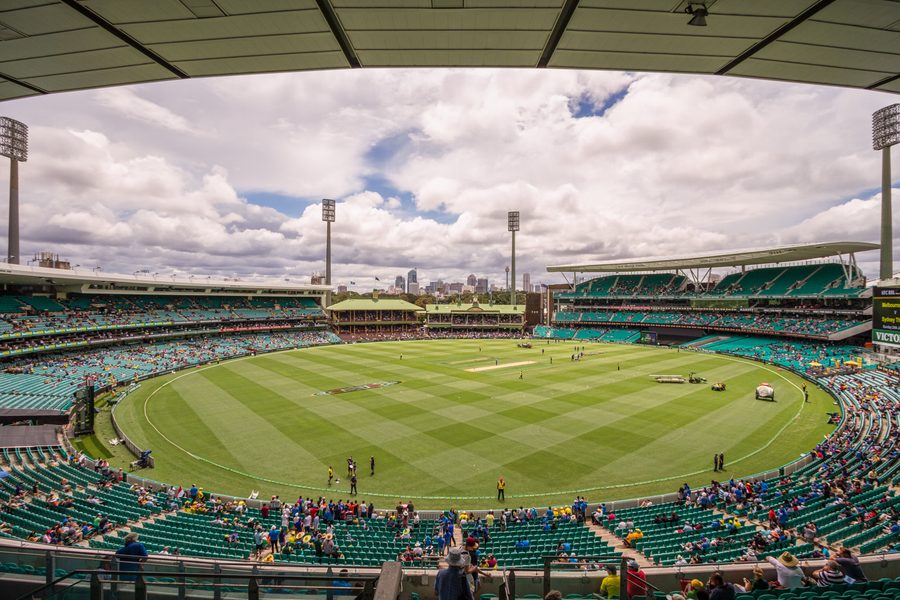
Ask an Australian cricketer where they learned the game and the answer is a club with a suburb's name on it. Grade cricket — district cricket originally, Premier Cricket in its current official dress — is the club system that runs beneath the professional game in each state capital, and it has performed the same function without interruption for about one hundred and thirty years: it takes every ambitious cricketer in a city, sorts them by performance into ranked teams, and pushes the best of them upward towards the Sheffield Shield and, eventually, Australia. Every Australian Test captain learned the game inside it. Most still turn out for their clubs when the calendar allows.
The claim regularly made for it — that it is the strongest club cricket in the world — is impossible to prove and widely believed, including by the many English professionals who have spent northern winters being roughed up in it. What can be shown is the machinery: how the clubs work, why the structure took the shape it did, and why a system with no promotion, no relegation and almost no money has outlasted every fashion in the professional game above it.
From private clubs to electorate cricket
The system was built by a deliberate reform. In the 1890s, cricket in the Australian colonies was organised around private clubs that picked whoever they pleased, which in practice meant the same social circles picking each other. The associations in Sydney and then the other capitals replaced this with what was called electorate cricket: clubs were tied to residential districts, and a player had to play for the club whose district he lived in. Sydney's competition reorganised on these lines in the mid-1890s, and the other capitals followed.
The effects were profound and mostly intended. Talent could no longer pool in two or three society clubs; every district's best players strengthened that district's club, which levelled the competition. A working-class teenager in a poor suburb had a club that was obliged to look at him. And because the residential rule distributed players evenly, the standard of an average first-grade match rose to something close to the first-class game — which was the point, since the colonies' representative sides needed a proving ground. The residential qualification has long since loosened, but the district identities, the club names and the levelling logic all survive. The fuller story of the game's arrival and early organisation is told in the origins of cricket in Australia; grade cricket is where that early structure still lives.
How a grade club actually works
A Premier club is not one team but a stack of them. A typical club fields four or five senior XIs on a Saturday — first grade down to fourth or fifth — plus junior sides, and increasingly a parallel stack of women's teams. Every player in the club is, in principle, competing for a place in the grade above. Selection committees meet each week, and performance moves players up and down the ladder with a bluntness professional sport rarely matches: a first-grader with a lean month will find himself in seconds, and a sixteen-year-old making runs in thirds will be promoted over adults twice his age.
That ladder is the system's engine. It means a club can absorb anyone — the eleven-year-old, the club legend at forty-five, the state player returning from injury, the England professional over for the winter — and give each of them cricket at exactly their level, in the same cap. It also means the pathway is legible from the bottom: a boy in the under-14s can see first grade from where he stands, and first grade can see the Shield.
Off the field, clubs run on volunteers, canteen revenue, sponsorship from local businesses and modest player payments at first-grade level in some clubs, nothing at most. Nobody is playing for money. This is frequently offered as the system's weakness and is closer to its strength: the incentive to play grade cricket is advancement or love, and both produce serious cricket.
The season and the two-day format
The defining ritual of grade cricket is the two-day match played across consecutive Saturdays. Side A bats on the first Saturday; everyone returns a week later, Side A completes its innings or declares, and Side B chases. A week of rain, selection changes and overthinking sits between the halves of a single match. First-innings points, outright points and quotient decide the ladder, and the top sides play finals in late March, with the premiership decided in a final that club people remember for decades.
Nothing else in cricket schedules quite like this, and the format shapes the players it produces. Batting on the second Saturday against a week-old total teaches match arithmetic; captaining a declaration you have had seven days to worry about teaches nerve; and a bowler who has to back up a five-wicket first Saturday with another long spell a week later learns what a body can be asked to do. Australian players raised on it arrive in professional cricket already fluent in the long game's decisions, which is a large part of why the country's first-class cricket has needed so little remedial teaching of fundamentals.
The format is regularly questioned and has been repeatedly diluted — every competition now mixes in one-day rounds, and Twenty20 fixtures have their own windows — but the two-day game survives because the professional tier above wants it to. It is the only cricket below first-class level that teaches batting time, bowling long spells, captaincy declarations and the patience the Sheffield Shield demands. A capital-city summer of grade cricket therefore looks like the professional calendar in miniature: red-ball cricket as the spine, white-ball forms arranged around it, exactly as the guide to Australia's domestic one-day competition describes at state level.
Six cities, six competitions
There is no national club competition. Premier Cricket is six parallel city systems, each run by its state association and each feeding its state's professional sides.
| City | Competition | Feeds |
|---|---|---|
| Sydney | NSW Premier Cricket | New South Wales |
| Melbourne | Victorian Premier Cricket | Victoria |
| Brisbane | Queensland Premier Cricket | Queensland |
| Adelaide | South Australian Premier Cricket | South Australia |
| Perth | WA Premier Cricket | Western Australia |
| Hobart | Tasmanian Premier League | Tasmania |
Each competition carries somewhere between a dozen and twenty clubs, so the whole country's elite club tier amounts to perhaps a hundred first-grade teams — a small, dense funnel for a cricketing nation. Country cricket sits alongside rather than beneath it: regional associations run their own competitions, and the traditional route for a talented country cricketer is to move to the city and join a grade club, a migration that has been supplying Australian cricket with hardened teenagers since before federation. How the state associations and the national body divide these responsibilities is covered in the guide to how Cricket Australia is structured.
The pathway, rung by rung
The route from grade cricket to a baggy green has stayed remarkably stable. Perform in first grade and the state's talent managers already know your scores — every grade competition's statistics are tracked, and state second XI sides are picked substantially from them. Perform for the second XI and a rookie contract follows; perform in the Shield and the national selectors take over. At every rung, grade cricket remains the fallback and the proving ground: a contracted player out of the state side is sent back to his club to make his case, and a Test player short of form will sometimes do the same.
The system's flexibility shows in its famous relocations. Adam Gilchrist could not displace the incumbent wicketkeeper in New South Wales, so he crossed the country to Perth, kept wicket in WA Premier Cricket, and went from there to the state side and then to the most destructive wicketkeeper-batting career Test cricket has seen. Moving clubs, moving cities and moving states are all ordinary transactions in Australian cricket, and grade clubs are the receiving stations that make the market work.
Two other names bracket the system's history neatly. Don Bradman came down from country New South Wales in the 1920s to play grade cricket for St George, commuting from Bowral while he made the scores that forced Sydney to notice. Nine decades later Steve Smith came through Sutherland's grades as a leg-spinning all-rounder before batting took over; he has returned to play club fixtures between international commitments, as Michael Hussey famously did in Perth across a career that began with mountainous club and state run-making long before a Test cap arrived at thirty. When Pat Cummins was rested from international duty and wanted overs, the overs he bowled were for Penrith. The traffic between the top of the game and its club floor is real and constant, and it is the single feature visiting cricketers find most foreign.
The culture, which is its own subject
Grade cricket has a folklore of hardness. The stereotype — sledging from slip, no easy runs for anyone, the returning Test player greeted with special hostility — is exaggerated in the retelling and grounded in something true: the system's whole logic is that nothing is given. A first-grade attack gains nothing by letting a sixteen-year-old settle, and a teenager who can score runs anyway has learned the one lesson the pathway most values. Generations of Australian players have credited their toughness to precisely this apprenticeship, and generations of overseas professionals have gone home from Australian club seasons better and slightly traumatised.
The same culture has gentler features that get less press. Clubs are genuine community institutions: junior programmes on Saturday mornings, canteen rosters, life members who have scored for fifty years. A club that has stood in the same suburb since the 1890s carries its district's history — premiership boards, honour rolls of members lost to wars, the names of Test players who were once the club's under-15 wicketkeeper. The professional game above changes format and branding yearly; the clubs do not move.
The overseas winter apprentices
Grade cricket has long doubled as a finishing school for the rest of the cricket world. Because the Australian season fills the northern winter, young professionals from England and elsewhere have for decades taken club seasons in Sydney, Melbourne, Perth or Adelaide: cheap accommodation arranged by the club, a part-time job, and a summer of cricket harder than most of what they left behind. English county systems have actively encouraged the practice, and a striking number of England's best players across the generations spent formative winters in Australian club cricket, learning to bat on true, fast pitches against bowling that gave them nothing.
The traffic is a compliment the system rarely bothers to return. Australian players go the other way for league cricket in England, but the developmental flow runs mostly southward, and grade clubs have learned to price it accordingly: an overseas player takes a spot a local junior might fill, so clubs choose their imports for genuine quality rather than novelty. When the arrangement works, everyone profits — the club gets a season of professional-standard performance, and the visitor goes home a measurably better cricketer with stories he will retell for the rest of his career.
The women's stack
The most significant structural change of the last decade is that the club stack has doubled. Every state's Premier competition now runs a women's tier — first grade and lower grades, the same clubs, the same colours — and the pathway logic transfers exactly: club cricket to state squads to the professional leagues, with the Women's Big Bash League at the top. Australia's sustained dominance of the women's international game rests on the same foundation as the men's, applied earlier and more deliberately than anywhere else: a dense, ranked, city-wide club competition that finds talent young and gives it hard cricket every Saturday.
For the clubs themselves, the women's sections have been straightforwardly good business — new members, new volunteers, new juniors — and the sight of a club fielding ten senior teams across two competitions on a weekend is now ordinary in every capital. A structure invented in the 1890s to sort men by suburb has turned out to scale to half the population it previously ignored, which is the kind of quiet adaptability that explains the system's longevity better than any single reform.
Strains on the system
The modern pressures are easy to list. The Big Bash League and full-time professionalism have pulled contracted players almost entirely out of club cricket, thinning the first-grade standard the system depends on. State talent pathways now identify players young and school them in academies and underage squads, which can make grade performance feel less decisive than it was — a recurring complaint from club stalwarts who watch pathway-anointed teenagers promoted past weight-of-runs club players. Participation patterns have shifted towards shorter formats and school commitments, and volunteer labour is harder to find in every sport.
Against all that, the system keeps producing. The state associations have repeatedly reaffirmed Premier Cricket as the official base of the pathway, precisely because nothing else generates the same volume of hard, cheap, self-organising cricket. The honest summary is that grade cricket no longer contains the whole of Australian cricket as it once did, but everything above it still rests on it, and everyone in the professional game knows it.
Seeing it for yourself
Grade cricket is free to watch. Every Saturday of the season, first-grade matches proceed on well-kept suburban grounds in six cities, with a few dozen spectators, no gate and a canteen. For a visitor who wants to understand Australian cricket, an afternoon at one is more instructive than a stadium tour — this is where the history of Australia cricket actually gets manufactured. The cricket in Australia hub collects the rest of the site's Australian coverage, and career records for the players named above are in the player index.
Sources and method
This guide is based on the published structures of the six state Premier Cricket competitions, the documented history of the 1890s district and electorate reforms in the Australian capitals, and the well-established biographical record of the named players' club careers — Bradman at St George, Gilchrist's move west, Smith at Sutherland, Hussey and Cummins turning out for their clubs. Club counts, payment arrangements and format mixes vary by state and season and are described in general terms rather than enumerated. Nothing here relies on statistics computed for this article or on unverifiable anecdote.