

T20 Blast: History and Format of County Cricket's Original T20
By CricketTaken EditorialPublished Cricket in England12 min read
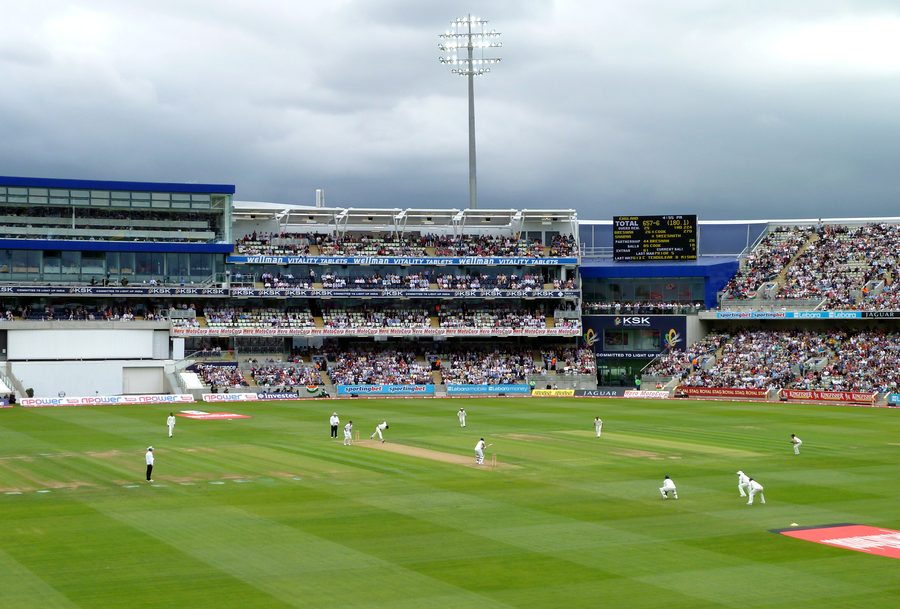
Every Twenty20 competition on earth — the Indian Premier League, the Big Bash League, all of it — descends from a decision taken by eighteen English county chairmen in a meeting room in 2002. The format that now shapes the world game was not designed by a broadcaster or a franchise investor. It was invented by county cricket, the oldest professional domestic structure in the sport, as an attempt to solve the most unglamorous problem imaginable: nobody was coming to watch.
The competition those chairmen approved has been through five names and several formats since, and today it is the T20 Blast. It is no longer the biggest T20 league in the world, or the richest, or even the most prominent short-format competition in its own country in high summer. But it was first, its Finals Day remains one of the best single days in the English season, and the counties still depend on it financially to a degree that explains much of modern English cricket politics.
The 2003 gamble
By the turn of the century English domestic cricket had a visible audience problem. Championship attendance had been thin for decades, and the one-day competitions that once filled grounds were fading too; the Benson and Hedges Cup, a fixture of the calendar since 1972, played its last edition in 2002 and left a hole in the schedule and the finances.
The England and Wales Cricket Board went looking for a replacement with market research rather than nostalgia. The work, driven by the board's marketing manager Stuart Robertson, surveyed thousands of people — crucially, people who did not attend cricket — and asked what kept them away. The answers were consistent: matches took too long, finished too late, and were scheduled when working people and families could not come. The proposed remedy was a twenty-overs-a-side match, roughly three hours long, played on summer evenings.
The counties were not unanimous. The proposal survived a genuinely close vote of the first-class counties, with the sceptics arguing that a shortened novelty would cheapen the game and cannibalise the existing competitions. What settled the argument, in the end, was arithmetic: the counties needed revenue, and the research said this would sell.
The first Twenty20 Cup was played in June 2003. It sold.
The first seasons
The new competition worked immediately in the way its designers had hoped and in some ways they had not predicted. Grounds that saw a few hundred spectators for Championship cricket filled for evening matches. The early seasons carried a funfair energy the county game had never attempted — music between overs, family zones, assorted gimmickry that varied from ground to ground — and traditionalists winced at most of it. The counties took the receipts and kept going. Within a couple of summers the gimmicks had thinned out and the crowds had not, which settled the question of what people had actually been paying for. Surrey won the first title on a Finals Day staged at Trent Bridge. The following July, a Twenty20 match between Middlesex and Surrey filled Lord's with the largest crowd the ground had seen for a county fixture, final apart, in roughly half a century — the single result that ended any internal argument about whether the format had a future.
What nobody at the ECB fully anticipated was the export market. Other boards watched English counties selling out evening fixtures and drew the obvious conclusion. Within five years the format had a World Cup and India had built the IPL around it; within a decade Australia had the Big Bash. The competition that invented the format spent those same years arguing about its own group structure, which is a very county cricket way to handle having changed the sport.
The names the competition has carried
Sponsorship has renamed the tournament repeatedly, which makes its history read as more discontinuous than it is. It has been one competition throughout, always contested by the eighteen first-class counties.
| Years | Name |
|---|---|
| 2003-2009 | Twenty20 Cup |
| 2010-2013 | Friends Provident t20, then Friends Life t20 |
| 2014-2017 | NatWest T20 Blast |
| 2018 onwards | Vitality Blast |
The word "Blast" arrived with the 2014 rebrand and has outlived the sponsor that introduced it; most followers of the county game now use it as the competition's ordinary name regardless of the prefix, and this guide does the same.
How the T20 Blast works
The format has been adjusted many times — group sizes, quarter-final formats and fixture counts have all shifted — but its settled modern shape is straightforward.
The eighteen counties are split geographically into a North Group and a South Group. Each side plays fourteen group matches, home and away against most of its group, concentrated heavily on Thursday and Friday evenings and weekend afternoons through the early and middle summer. The top four in each group advance to quarter-finals, played as single matches at the home ground of the higher-placed side. The four quarter-final winners then meet at Finals Day.
Group-stage scheduling is the competition's quiet science. Friday night is the Blast's natural habitat — the research that created the tournament said so in 2003 and the attendance figures have said so ever since — and local derbies are stacked deliberately: Yorkshire against Lancashire, Surrey against Kent, Somerset against Gloucestershire. A well-drawn Friday derby remains the most reliable full house in the domestic game.
Overseas players have been part of the fabric from the start, though the Blast's slot in the global calendar means counties often sign players for portions of the group stage rather than full campaigns, and the biggest names drift toward leagues that pay franchise wages. The compensating pleasure is that the Blast is where county-produced players get to be the stars.
The format experiments along the way
The settled shape described above took a decade of trial and error to reach, and the detours are instructive about what the competition is for.
The 2003 original was a sprint: three regional groups, a short burst of matches inside a fortnight, and a Finals Day at the end of it. That compactness was deliberate — the tournament was an experiment, and a failed experiment should at least be a brief one. When it succeeded, the counties did what counties always do with a success, which is ask for more of it. The group stage grew steadily through the 2000s.
In 2010 the competition swung to the opposite extreme, expanding to sixteen group matches per side in a season-long league. The expansion was driven by revenue logic — more home fixtures, more Friday nights — and it overshot. Crowds thinned across a bloated fixture list, players complained of T20 fatigue, and the sense of event that had made 2003 work was diluted. Subsequent seasons trimmed the format back, and the eventual landing point of fourteen matches in two geographic groups has held for most of a decade, surviving even the pandemic season of 2020, when a compressed schedule and regionalised groups briefly rearranged everything.
The lesson the competition learned, expensively, is that scarcity was part of the product. Twenty-over cricket sells in England as an occasion — a specific summer evening, a derby, a full ground — and not as wallpaper. Every format argument since has really been an argument about how much Blast cricket the market wants, and the honest answer has stayed remarkably close to the one Stuart Robertson's survey produced before a ball was bowled.
What twenty overs did to county craft
The Blast also changed how county cricketers play, which was not in the prospectus.
Batting adapted first and most visibly. The format legitimised strokes the county game had coached out of players for a century — the scoop, the reverse, the premeditated charge — and then fed them back into the fifty-over and even the first-class game. A generation of English batters learned range-hitting as a trainable skill rather than a temperament flaw, and the free-scoring England Test sides of recent years are downstream of that change in ways their coaches openly acknowledge.
Bowling adapted by fragmenting. The Blast created demand for skills the Championship barely rewards: the wide yorker, the slower-ball bouncer, the ability to defend eight off the final over. Counties began developing white-ball specialists who play little red-ball cricket, a career type that simply did not exist in England before 2003. Spin changed most of all — the format proved that slow bowling in the powerplay could be an attacking weapon rather than a concession, and mystery spinners became Blast currency.
Fielding standards rose across the board, because twenty-over margins are thin enough to make a saved boundary visible in the result. It is a common observation among long-serving county watchers that the athleticism of an ordinary Blast fixture would have looked exotic in a 1990s one-day final.
Not all of it was gain. The counties still argue about whether the crowded white-ball summer starves young batters of the long-innings habit, an argument that belongs to the Championship's scheduling war and is covered in the county game's structural guide. But the skills ledger, read honestly, runs well into credit.
Finals Day
Finals Day is the Blast's signature invention: both semi-finals and the final, played back to back at one ground on a single Saturday. Edgbaston in Birmingham has become its settled home and stakes a fair claim to hosting the best-attended, loudest day in English domestic cricket.
The day has a specific character that separates it from a franchise final. It starts before noon and ends under lights, so a spectator watches close to nine hours of knockout cricket. The crowd is substantially fancy dress by mid-afternoon. Between innings there is a mascot race that is taken exactly as seriously as it should be. And because four county sides arrive with four sets of travelling supporters, the ground divides into genuine partisan blocks in a way English cricket otherwise rarely manages.
Sporting logic says a one-day triple-header is a brutal way to decide a title — the semi-final winners get no recovery, and sides have visibly run out of petrol in evening finals. The counties have never seriously considered changing it. Some things are worth more than optimal scheduling.
For players, Finals Day carries a weight out of proportion to the size of the trophy. A county cricketer can go a whole career without a Lord's final, but a good T20 side gives him a realistic shot at one enormous day a season in front of a full house, and reputations are made there in an afternoon. Careers have turned on a Finals Day over: a death bowler who defends six, a finisher who takes twenty off the eighteenth, gets remembered by every franchise scout in the ground. The day doubles as English cricket's most efficient shop window, and the counties know it — it is not unusual for a Finals Day performer to be holding an overseas franchise deal within the year.
The roll of honour spreads wider than the Championship's. Leicestershire, rarely a force in first-class cricket in the modern era, won three of the early editions and remain one of the competition's most successful sides; Hampshire, Somerset and Northamptonshire have all built white-ball identities around the short format that their red-ball histories would not predict. That breadth is part of the design: twenty-over cricket resets the advantages of playing staff depth that govern the County Championship.
What the Blast did to world cricket
The competition's global legacy is larger than its domestic standing, and it is worth stating plainly: Twenty20 as a professional format was proven here first. The 2007 World Twenty20 existed because the county experiment had worked; the IPL was founded on the back of that tournament; the Big Bash and every subsequent league followed the IPL. English county cricket, so often cast as the conservative old man of the sport, produced the most disruptive innovation in its modern history.
England's national side eventually collected on the investment too. The white-ball specialists England produced through the 2010s learned their trade substantially in this competition, and England's first global title, at the 2010 T20 World Cup, was won by a squad steeped in county T20. The longer story of how England rebuilt its limited-overs cricket is told in the guide to England's white-ball revolution.
At the individual level the Blast has been the launch pad for a recognisable type: the county batter who hits harder than orthodoxy recommends and turns out to be an international opener. Alex Hales built exactly that career from Trent Bridge. Jos Buttler announced himself with Somerset finishes years before he was England's captain. James Vince has anchored Hampshire's short-format sides for over a decade, and Luke Wright was playing the roving T20 specialist's career out of Sussex before the term existed.
The Blast and The Hundred
Since 2021 the Blast has shared its summer with The Hundred, the board's eight-team, hundred-ball competition, which occupies a prime block of August and employs the best available England-qualified white-ball players during it. The consequences for the Blast were immediate: its fixtures compressed earlier into the summer, and its knockout stages now happen with the country's most marketable short-format cricketers contracted elsewhere.
The relationship between the two competitions is the sorest subject in the county game, and the fault line runs through money as much as scheduling. Blast revenue — gate receipts, hospitality, local sponsorship — flows directly to the eighteen counties and is, for most of them, the difference between solvency and crisis. The Hundred's revenue flows through the central board. How that tension resolves belongs to the future rather than to a history guide; what can be said historically is that the Blast has already survived one existential prediction, made in 2003, that it would be a passing fad.
Watching the Blast
Group matches run through early and middle summer, concentrated on Friday evenings; tickets for ordinary fixtures are cheap by professional sport's standards and bought most easily from the host county. Finals Day sells out well in advance. Broadcast coverage sits mostly behind subscription television, with streams and highlights filling the gaps — the practical details, which change with each rights cycle, are covered in how to watch cricket in the UK.
For the wider architecture the Blast sits inside — the Championship, the one-day cup, the women's game and the recreational pyramid — see the guide to English domestic cricket's structure. The longer national story is in the history of England cricket, and everything else English lives on the cricket in England hub.
Sources and method
This guide draws on the ECB's published accounts of the Twenty20 Cup's creation, including the market research programme that preceded the 2003 launch, contemporary reporting of the competition's early seasons, and the board's playing conditions for the current Vitality Blast. Sponsorship eras and the roll of early winners are matters of public record. Attendance claims are stated in general terms rather than as precise figures, and financial relationships between the counties and the central board are described structurally rather than with numbers, because both change year to year. CricketTaken is an independent publication with no affiliation to the ECB or any county.