

AB de Villiers: the Widest Tempo Range in Cricket
AB de VilliersSouth Africa
By CricketTaken EditorialPublished Player analysis7 min read
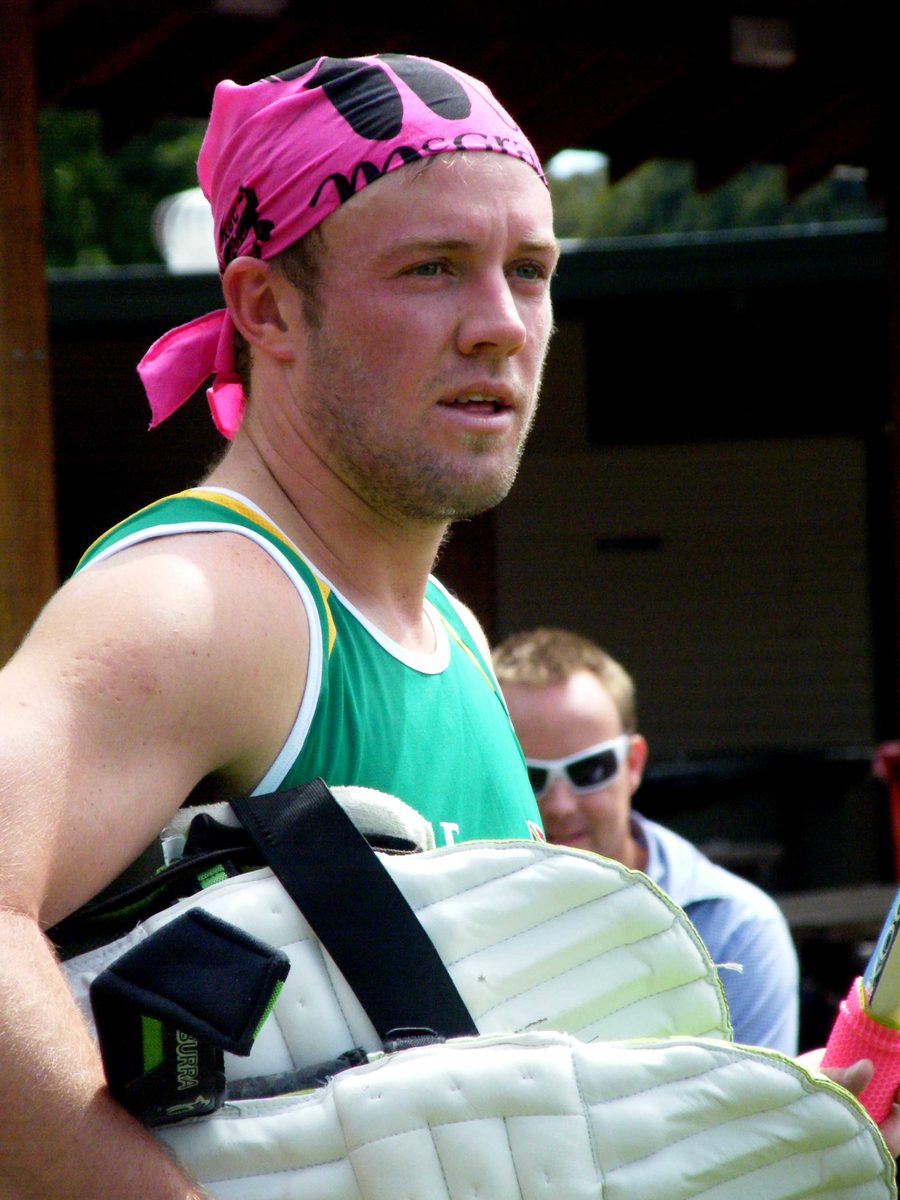
On 18 January 2015 at the Wanderers, AB de Villiers reached fifty from sixteen balls and a hundred from thirty-one, and finished with 149 from forty-four. Both the fifty and the hundred were the fastest in the history of one-day international cricket. Twenty-six months earlier, at Adelaide, he had faced 220 balls for 33 not out to save a Test match against Australia. Those two innings are the outer edges of a range no other batter of the modern era has demonstrated, and they explain more about de Villiers than the nickname does. Mr 360 describes where he hit the ball. The more remarkable thing was how quickly, or slowly, he chose to.
The Wanderers innings, and what it required
The 31-ball hundred is usually filed under freakishness, which slightly misses the point. AB de Villiers came in that day at 247 for 1 in the thirty-ninth over against a West Indies attack that had nothing left to try, and the situation was as favourable as any batter will get. What made the innings unrepeatable was not the situation but the shot selection: sixteen sixes, a world record at the time, and 92 of the first hundred runs in boundaries.
Sixteen sixes means sixteen deliveries hit cleanly, from a variety of lengths, in multiple directions, without a mishit going to hand. He hit good balls for six behind square on both sides. That is the actual skill on display — not the ability to swing hard but the ability to make contact repeatedly with a bat travelling at maximum speed and a pre-meditated area in mind, which is what separates the shot-maker from the slogger.
He held the record for the fastest ODI fifty and hundred simultaneously, having taken the century mark off Corey Anderson, who had held it for barely a year. Almost nobody since has approached it in a fifty-over international.
Adelaide, and the innings that proves the argument
Now the other end. In November 2012 South Africa were on the fifth day at Adelaide, well behind, needing to bat out most of a day to keep the series alive. De Villiers batted 220 balls for 33, and it remains the definitive example of a naturally attacking batter subordinating everything he does well.
He put on 89 with Faf du Plessis, who was making his Test debut, and du Plessis then batted through with an injured Jacques Kallis for another 99 to finish 110 not out and save the game. It was the first time since 1921 that Australia and South Africa had played two consecutive drawn Tests. South Africa went on to win the series in Perth and, with it, to hold the number one Test ranking.
Take the two innings together and the interesting statistic is not either one on its own. It is that the same batter produced a strike rate of 338 in one match and a strike rate of 15 in another, in the same three-year window, and was correct both times. Very few players have been able to do the slow one at all. Most who could do the slow one could never have done the fast one.
The Test record, which is better than remembered
Because the highlight reels are white-ball, the Test career gets underrated. De Villiers played 114 Tests for 8,765 runs at 50.66, with 22 centuries and a highest score of 278 not out against Pakistan at Abu Dhabi in 2010. An average above fifty over that many matches puts him in the small group of batters who sustained the standard rather than touching it.
He did it while moving around the order and, for a substantial stretch, while keeping wicket. South Africa in that period had an unusual problem: a batting order deep enough that fitting everybody in required somebody to take the gloves. De Villiers took them, in Tests and in one-day cricket, for years — not as a specialist and not brilliantly by the standards of a full-time keeper, but well enough to let the side pick an extra batter or an extra seamer. That is precisely the balance argument that the keeper-batter revolution had opened a decade before, applied by a team that had a surplus rather than a shortage.
His Test career also contains the more difficult subplot in his story: the 2015 World Cup semi-final in Auckland, when he was captain and South Africa lost a match they had led, and the general question of the Proteas' knockout record in the years he was their best player. He made 162 not out against the West Indies in the group stage of that tournament and had one of the great individual World Cups. The team lost the game that mattered, again, and he was the captain.
Range as a technical property
It is worth being specific about what the 360-degree label describes, because it is often used loosely. De Villiers scored a very high proportion of his runs behind the wicket on both sides — the ramp over the keeper, the reverse-sweep off pace, the paddle from outside off stump to fine leg — using shots that require the batter to make a decision before the bowler releases and then not be wrong.
Two things made it work. The first was an unusually stable head, which is a boring answer but the true one: he could commit to a premeditated shot late because he was still seeing the ball at release. The second was athleticism — he was a serious junior sportsman in several disciplines, and the strength and balance that let him hit from an unorthodox base were not battling technique but supporting it.
The tactical consequence was that a captain could not set a field. Conventional T20 and ODI fields are built on the assumption that a right-hander scores predominantly between mid-wicket and extra cover. De Villiers removed the assumption, and the responses — leg-side traps, wide yorkers, the deep third fielder that is now standard in the T20 game — were developed in part because of him.
The RCB years
The IPL career belongs in any assessment because of how long it lasted and how good it was: 5,162 runs from 184 matches with three centuries and a highest score of 133 not out. Most of it, roughly 4,500 runs from 157 matches at an average above 41 and a strike rate above 158, was made for Royal Challengers, after two seasons at Delhi at the start.
The pairing with Virat Kohli was the most productive in the tournament's history, and in 2016 the two of them put on 229 in a single innings, still an IPL partnership record. That season is the high-water mark of the partnership: Kohli made 973 runs and de Villiers most of 700, and Royal Challengers still lost the final, which is a summary of the franchise as much as of the players.
What made him valuable to Bangalore was not just volume but position flexibility. He batted three, four and five as required, finished innings when the top order had gone slowly and rebuilt when it had collapsed, and he was doing it into his late thirties, in the seasons after he had stopped playing international cricket.
The retirement, and the argument it started
De Villiers retired from international cricket in May 2018, aged 34, saying he was running out of the energy required and did not want to pick and choose formats. That last phrase is the pointed one. In the years afterwards he continued to play franchise T20 cricket around the world, which produced a long and unresolved argument in South African cricket about availability, the 2019 World Cup squad he did not play in, and whether a late offer to return had been made and refused.
The argument is real and this is not the place to settle it. What it does not touch is the cricket. Across fourteen years he averaged over fifty in Tests, over fifty in one-day internationals, kept wicket for both, captained in all three formats, and finished with the fastest fifty and hundred in ODI history.
The measure
If you want a single line on de Villiers, do not reach for the sixes. Reach for the fact that in a fourteen-year career he was, at different times, both the fastest scorer in the history of his format and one of the most obdurate defensive batters his country produced, and that neither was a novelty act. That range is the whole thing. Power can be trained and orthodoxy can be coached; the judgement to know which the match requires, and the technique to deliver either on demand, is what puts him in the short list of great South African batters rather than merely the entertaining ones.
Sources and method
Match details, records and career aggregates come from published scorecards, ICC records and Cricket South Africa sources, cross-checked against contemporary match reports of the innings described. Career totals are published figures. The technical account of his shot selection and the tactical responses to it is descriptive rather than computed.