

Kane Williamson's 2018: One Season Carried a Career
Kane WilliamsonNew Zealand
By CricketTaken EditorialPublished Player analysis7 min read
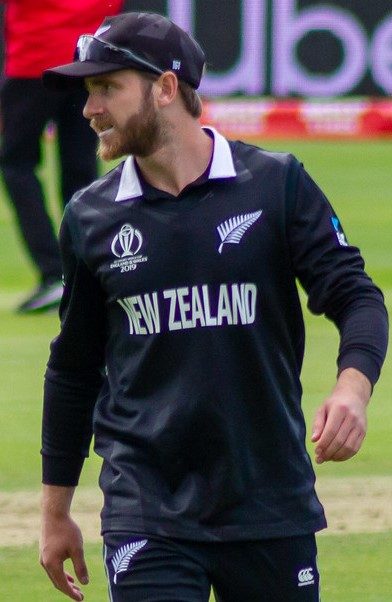
Kane Williamson's IPL career reads as nine seasons, 2,128 runs, an average of 35.47 and a strike rate of 125.62. It is a respectable record and, by the standards of the batter who produced it, a strange one. Williamson has a Test average in the mid-fifties, a World Test Championship title as captain, and a reputation as one of the four best batters of his generation. In franchise cricket he was a good overseas signing who occasionally was not selected.
The record has one enormous exception, and almost everything interesting about his franchise career is inside it. In 2018 he captained Sunrisers Hyderabad, scored 735 runs in seventeen innings at an average of 52.5 and a strike rate of 142.4, won the Orange Cap as the tournament's leading run-scorer, and took the side to the final. That season accounts for 35 per cent of his entire IPL run aggregate and every one of his best seasonal figures.
The rest of the record, for context
| Season | Team | Inns | Runs | Avg | SR |
|---|---|---|---|---|---|
| 2015 | Sunrisers Hyderabad | 2 | 31 | 31.0 | 114.8 |
| 2016 | Sunrisers Hyderabad | 6 | 124 | 20.7 | 101.6 |
| 2017 | Sunrisers Hyderabad | 7 | 256 | 42.7 | 151.5 |
| 2018 | Sunrisers Hyderabad | 17 | 735 | 52.5 | 142.4 |
| 2019 | Sunrisers Hyderabad | 9 | 156 | 22.3 | 120.0 |
| 2020 | Sunrisers Hyderabad | 11 | 317 | 45.3 | 133.8 |
| 2021 | Sunrisers Hyderabad | 10 | 266 | 44.3 | 113.2 |
| 2022 | Sunrisers Hyderabad | 12 | 216 | 19.6 | 93.5 |
| 2024 | Gujarat Titans | 2 | 27 | 13.5 | 100.0 |
Two things stand out beside 2018. The first is that Williamson played only six innings in his first two seasons combined — an early career of being the reserve overseas batter. The second is 2022, which is one of the more remarkable lines in the record of any high-class batter: twelve innings, 216 runs at 19.6, struck at 93.5. A strike rate below 100 in the modern IPL, over a full season, from a captain, is close to unrepeatable.
He was replaced as Sunrisers captain after that season and released, played two innings for Gujarat Titans in 2024, and has not featured since.
What 2018 actually was
The season needs its context restored, because it was built on an absence. Sunrisers went into 2018 without David Warner, their captain and leading run-scorer, who was unavailable following the ball-tampering suspension. The franchise handed the captaincy and the top-order load to Williamson, who had been a bit-part player for them in three previous seasons and had never scored 300 runs in a campaign.
What followed was a season of holding a side together. Sunrisers had the best bowling attack in the competition that year — Rashid Khan and Bhuvneshwar Kumar at their peak, with Siddarth Kaul — and a batting order that was thin behind Williamson and Shikhar Dhawan. The pattern of their season was to make 140 to 160 and defend it, and Williamson's job was to guarantee that a total existed at all.
He did it with three fifties in the first five matches and eight across the season, batting mostly at three. A strike rate of 142.4 was well above anything he had managed before or would manage again, and it demolishes the lazy characterisation of Williamson as a batter constitutionally incapable of scoring quickly. Given the responsibility of an entire batting order, at 27, he scored faster than he ever did with less on him.
Sunrisers beat Kolkata in the second qualifier and lost the final to Chennai Super Kings by eight wickets. Williamson was only the fourth overseas batter to pass 700 runs in an IPL season, and the first New Zealander to take the Orange Cap.
Why the rest did not follow
There are three explanations available and all three carry weight.
The first is scheduling. Williamson is the most heavily used player of his generation in the two long formats: a Test captain from 2016, a fixture in every New Zealand squad, and a batter whose value to his country was overwhelmingly in Tests and ODIs. He missed IPL seasons or arrived late in others for national duty, and lost 2023 entirely: fielding on the boundary in his first match for Gujarat, against Chennai, he palmed a six back into play, landed badly and ruptured his ACL. That was his only appearance of the season.
The second is method. Williamson's batting is built on precision placement, working the ball into gaps and an almost complete absence of risk. That produces enormous value across fifty overs and five days and less across twenty, where the requirement is to hit boundaries rather than to avoid dismissal. His IPL career shows 185 fours and 64 sixes — a ratio close to three to one — which is a middle-order accumulator's profile in a competition that pays for the opposite.
The third is that the competition changed around him. His last full season, 2022, coincided with the largest single jump in IPL scoring rates in the tournament's history. A batter striking in the 120s was serviceable in 2018 and a liability by 2022, and Williamson happened to be 31 and captaining a poor side at exactly the wrong moment.
The career this was a footnote to
Reading Williamson through franchise cricket is, admittedly, reading him through the least representative part of his record. His Test career is the substantial one: an average above fifty, more than 30 hundreds, and three double centuries as captain, matching the New Zealand record.
He captained the side in 40 Tests, winning 22 — a win percentage of 55, the highest for any New Zealand captain — and in June 2021 led them to the inaugural World Test Championship title, beating India at Southampton with an unbeaten fifty in the fourth innings. That match remains the most significant result in the modern history of New Zealand cricket: a country of five million, with no professional pathway comparable to India's or England's, winning the game's newest global title.
He also captained New Zealand in the 2019 World Cup final — decided on boundary count after both the match and the super over were tied — and was Player of the Tournament in that competition. He relinquished the Test captaincy in December 2022.
The comparison that makes the point
The interesting version of Williamson's franchise record is what it says about the specialisation of formats rather than about him.
Of the four batters usually grouped together as the best of their era, three have substantial IPL careers and Williamson does not. Virat Kohli and Steve Smith both built long franchise records, and Joe Root — the other member of the group — has an even thinner one than Williamson's. The pattern is not about talent. It is that the two of them whose games are built on placement and low risk found the shortest format the least hospitable, and both had national commitments that made the trade-off easy.
Twenty years ago that would have been unremarkable, because a great batter's record was his Test record. What has changed is that a franchise career is now most players' largest earning window and, increasingly, the record the public knows. Williamson is among the last major batters whose reputation was made almost entirely outside it, and whose IPL figures — 2,128 runs at 125.62, with one season doing a third of the work — read as an afterthought to a great career rather than a description of one.
The 2018 season on its own terms
Strip away everything else and the season still stands up. Handed a side without its best batter and its captain, in a competition he had never dominated, Williamson made 735 runs at 52.5 while striking faster than at any point in his career, and took a one-dimensional team to a final. It is one of the best individual campaigns in the IPL's history and it is barely mentioned in accounts of him.
That it happened once and never again is the honest end of the story. The record does not support the claim that Williamson was an outstanding T20 batter who was unlucky. It supports something narrower and more interesting: that for one season, given a job nobody else could do, one of the great orthodox batters of the age proved he could do the modern one as well, and then went back to the formats where he was irreplaceable.
Sources and method
IPL season and career figures are taken from official competition records and cross-checked against this site's own match dataset. The 2018 Orange Cap, the final result against Chennai Super Kings and the circumstances of the captaincy follow official tournament records and contemporary reporting. Test and one-day career figures, the 2021 World Test Championship final and the 2019 World Cup final follow ICC and New Zealand Cricket sources and official scorecards. Nothing in this article has been computed from ball-by-ball data.