

National Cricket League: Bangladesh's First-Class Competition
By CricketTaken EditorialPublished Cricket in Bangladesh11 min read
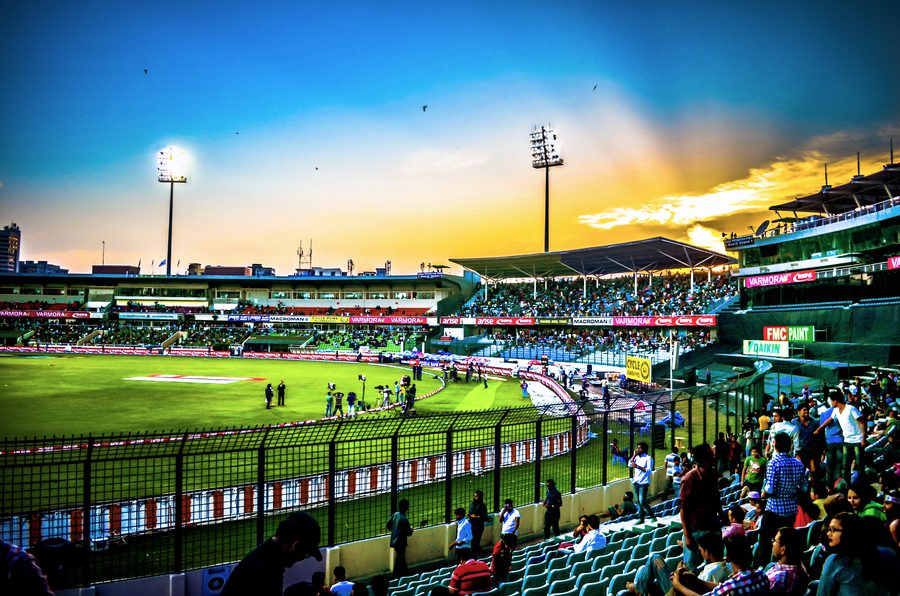
Every November, while the country's cricket attention is somewhere else entirely, eight divisional teams begin playing four-day cricket in front of almost nobody. This is the National Cricket League, Bangladesh's first-class competition, and it occupies a strange position: it is the oldest continuous competition in the country's professional game, the formal foundation of its Test cricket, and simultaneously the least glamorous thing in the entire domestic season.
Understanding the NCL means holding two ideas at once. The first is that it matters enormously — it is where first-class cricket lives, where a Test batter's technique is supposed to be built, and where a selector looks when a squad needs a new opener. The second is that almost every force in Bangladeshi cricket — money, fame, scheduling, television — pulls players away from it. The tension between those two facts explains nearly everything about how the competition works.
Where the NCL came from
The National Cricket League was created for a purpose, and the purpose was Test status. In the late 1990s Bangladesh was pressing its case for elevation to full membership of the game's world governing body, and one of the standing objections was that the country had no structured multi-day domestic competition. The NCL was the answer. It began in the 1999-2000 season as a competition between divisional teams, and from the 2000-01 season — with Test status secured in 2000 — its matches carried first-class status.
That origin still shapes the tournament's character. The NCL was not the product of a century of organic club rivalry, the way first-class cricket evolved in England or the Caribbean; it was built top-down, quickly, to satisfy a requirement. The organic, century-old part of Bangladeshi cricket is the Dhaka club scene, whose history is told in the origin of cricket in Bangladesh, and the relationship between that older club world and the newer first-class structure runs through everything below. The fuller story of the country's rise to Test cricket is covered in the history of Bangladesh cricket.
The divisional teams
The NCL's teams are the administrative divisions of the country — a deliberate choice, made so that first-class cricket would formally represent the whole map rather than only the capital.
| Team | Base |
|---|---|
| Dhaka Division | Dhaka |
| Dhaka Metropolis | Dhaka (the city itself, separate from the division) |
| Chittagong Division | Chattogram |
| Rajshahi Division | Rajshahi |
| Khulna Division | Khulna |
| Barishal Division | Barishal |
| Sylhet Division | Sylhet |
| Rangpur Division | Rangpur |
The competition began with the divisions as they then stood and expanded as the country's administrative map changed, reaching its familiar eight-team shape when Rangpur and Dhaka Metropolis entered in the early 2010s. The divisional principle has held throughout: unlike almost every other competition in the country, the NCL has never been sold to franchises, renamed for sponsors beyond title sponsorship, or relocated to wherever the television money pointed.
That stability is the NCL's quiet virtue. A cricketer from Rajshahi or Rangpur has a first-class team that is actually his, with a home ground in his own city — a genuine regional identity in a cricket economy that otherwise concentrates relentlessly in Dhaka. The grounds themselves, from the Test venues down to the divisional outgrounds, are covered in the Bangladesh cricket grounds guide.
The format: two tiers and four days
For its first decade and a half the NCL ran as a single league, everyone playing everyone. Since the 2015-16 season it has been split into two tiers of four teams each, with promotion and relegation between them: the bottom team of Tier 1 drops, the top team of Tier 2 rises, and the Tier 1 champions are the national first-class champions.
The two-tier design was an attempt to fix the competition's oldest complaint — that too many matches meant nothing. In a single league of eight, a mid-table side in February has little to play for; in a tier of four, nearly every match touches either the title or the relegation place. The change concentrated the standard as well: Tier 1 gathers the strongest divisional squads, which makes runs and wickets there easier for selectors to read.
Matches are played over four days, the same length as everywhere else in the first-class world, with a points system that rewards outright wins and first-innings leads. The captains' real calculations, though, are shaped less by the points table than by the surfaces — which deserve their own section.
The pitch problem
The most consequential criticism of the NCL has never been about its format. It is about its pitches.
Bangladesh's national side built its home Test record on slow, sharply turning surfaces, an approach examined in the guide to how home advantage works in Bangladesh. The NCL, for most of its history, has been played on something quite different: flat, slow, batting-friendly pitches on which seamers toil, spinners contain rather than attack, and patient batters accumulate large scores at low intensity. Groundsmen preparing for a four-day divisional match have every incentive to make the game last four days.
The consequences run in both directions. Batters arrive in Test cricket with big first-class averages built on surfaces that never examined their defence against the turning ball, and find the step up brutal. Bowlers learn containment rather than the art of taking twenty wickets. And the selectors, knowing all this, discount NCL statistics — which weakens the competition's core function, because a first-class tournament whose numbers cannot be trusted is doing only half its job. The periodic pushes to order livelier, more sporting NCL pitches are, in effect, attempts to make the domestic game rehearse the questions Test cricket actually asks.
Money, and where the players' attention goes
The NCL's second structural problem is financial, and it is best understood through the competition it lives beside. The Dhaka Premier League, the city's List A club competition, pays the wages that most Bangladeshi professionals actually live on; the Bangladesh Premier League, the franchise T20 tournament, pays the sums they dream about. First-class match fees have historically been a fraction of either, though they have been raised repeatedly as the board has come under pressure about the imbalance.
The result is a predictable hierarchy of effort. A player's DPL contract is negotiated fiercely; his NCL season is, for some, an obligation between better-paid engagements. The board has pushed back with the tools available to a central administration — match fee increases, and, notably, mandatory fitness standards that players must meet to be eligible for the NCL at all, introduced to attack the perception that divisional cricket was where standards were allowed to slip. How the board sits over all these competitions, and why it holds the leverage it does, is set out in the guide to the BCB's structure.
The BCL: the tier built on top
In the 2012-13 season the board added a second first-class competition above the NCL: the Bangladesh Cricket League, a four-team tournament in which zonal sides — drawing the country's best cricketers from across the divisions — play each other. The logic is one that several cricket countries have reached independently: if the base competition is too diluted for the very best to test each other, build a smaller, harder competition on top of it and put the national candidates there.
The two competitions are complements rather than rivals. The NCL is broad — eight teams, the whole map, the place a young divisional cricketer gets his first hundred. The BCL is narrow — the best of the NCL concentrated into four squads, closer in standard to the gap between domestic and international cricket. A selector watching a BCL match is watching something like a trial; a selector watching the NCL is watching a census.
What the NCL actually produces
Judged by its graduates, the competition has done its job. Every Bangladeshi Test cricketer of the modern era has come through divisional first-class cricket. Shakib Al Hasan, the greatest player the country has produced, was a Khulna divisional cricketer before he was a world-ranked all-rounder. Mashrafe Mortaza came out of Narail into the divisional system and led the national side to its best one-day era. Mustafizur Rahman went from Satkhira through the age-group and divisional pathway to international cricket at startling speed.
The competition's most distinctive export is bowling of a particular kind. The long seasons of slow-pitch cricket that blunt fast bowlers have been an incubator for left-arm spin, of which Bangladesh produces a seemingly permanent supply — a phenomenon with deep club-cricket roots, explored in the guide to the left-arm spin tradition.
What the NCL has historically produced less reliably is Test-ready batting and genuine pace, and both trace back to the pitch problem above. When the national side has looked for those, it has leaned on the BCL, on A-team tours, and on conditioning camps — patches on a first-class system rather than products of it.
Where the season sits
The NCL's place in the calendar is set by two immovable forces: the monsoon and the money. The rains rule out serious outdoor cricket for much of the middle of the year, so the domestic season proper begins once they recede, in the last months of the calendar year — and that is when the NCL plays, in a compressed window of rounds stacked close together, often with only a short gap between one four-day match and the next.
| Part of the season | What is being played |
|---|---|
| After the monsoon, late in the year | The NCL — the first-class rounds, division against division |
| Midwinter | The franchise T20 window, which empties the divisional dressing rooms of stars |
| The first half of the year | The Dhaka club season, where the wages are |
| The monsoon months | International tours, camps and age-group cricket where weather allows |
The ordering matters. Because the NCL comes first, it doubles as pre-season for everything after it: a batter uses divisional cricket to find rhythm before the franchise auction matters, a bowler uses it to prove fitness after an injury. That gives the early rounds a genuine intensity — everyone is playing for something, even if the something is elsewhere. It also means the competition's back end can feel depleted, as national calls and T20 preparation pull the best names out mid-tournament. A reader of NCL scorecards learns to check not just who scored the runs but which round they were scored in, and against whom.
The compressed window has one further consequence: workload. Four-day matches with short turnarounds, on slow pitches that demand long bowling stints, are a genuine physical examination — which is precisely why the board attached its fitness standards to this competition rather than any other. The NCL is where a Bangladeshi professional's season begins, and the board has used that position to make it the gate the whole season must pass through.
The route into a divisional side
A divisional cap is not handed out at trials. The road to it runs through the same few institutions that produce nearly every Bangladeshi cricketer, and it is worth tracing, because it explains who the NCL's debutants are and why they arrive formed the way they do.
The base of the pyramid is age-group cricket — district and divisional teams at under-14, under-16 and under-18 level, feeding the national under-19 programme that has become the country's most reliable production line. Alongside it runs school and club cricket, above all the Dhaka club system, where a promising teenager is often playing hard senior cricket for money before he has played a first-class match. A divisional selector assembling an NCL squad is choosing from exactly these pools: the division's own age-group graduates, its district standouts, and its professionals returning from the Dhaka clubs each winter.
The result is a competition whose debutants are young but rarely raw. A typical NCL newcomer has already survived age-group cricket and a club season or two; what the NCL gives him is the thing none of those can — time. Four-day cricket is the only place in the country's structure where a batter must build an innings across sessions and a bowler must plan a dismissal across spells, and that apprenticeship is the competition's real product, more than any trophy.
In recent seasons the board has also bolted a short T20 tournament onto the divisional structure, played between the same eight teams under the NCL banner from the 2024-25 season — partly to give divisional cricketers a shop window in the format the franchise league recruits from, and partly to give the divisions something the public might actually watch. It is too early to say what it will become, but the design is telling: even the NCL's newest limb exists to connect the unfashionable divisional game to the parts of the season that carry the audience.
How to follow it
Following the NCL takes commitment. Matches are played in daylight on working days, television coverage is minimal, and the tournament shares its window with louder events. Scorecards and the points table are the realistic way in, and reading them with the pitch context in mind — a double hundred in Tier 2 on a flat one is not a double hundred in Tier 1 on a sporting surface — is most of the skill. The careers the competition feeds are all traceable in the player index, and the wider domestic calendar the NCL fits inside is mapped on the cricket in Bangladesh hub.
The honest case for paying attention is the same as for unfashionable first-class cricket everywhere: this is where the next Test team is being assembled, in public, slowly, for anyone patient enough to watch. By the time a player is lifting a trophy in a full stadium, the interesting part of the story — the part the NCL saw — is already over.
Sources and method
This guide draws on the public record of the National Cricket League's establishment in the 1999-2000 season and its first-class status from 2000-01, the documented expansion to eight divisional teams, the introduction of the two-tier format from 2015-16, and the Bangladesh Cricket League's addition from 2012-13. Discussion of pitches, match fees and fitness requirements reflects widely reported board decisions and long-running public criticism, described in general terms rather than with figures, because the specific numbers change season to season. CricketTaken is an independent publication with no affiliation to the Bangladesh Cricket Board or any team named above.