

Sinhalese Sports Club Ground: Sri Lanka's Home of Test Cricket
By CricketTaken EditorialPublished Cricket in Sri Lanka11 min read
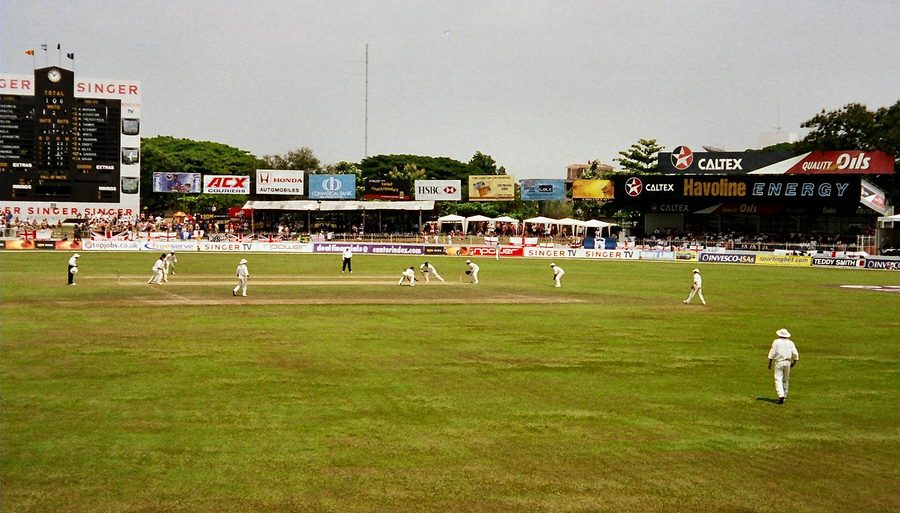
Most Test grounds belong to somebody official. A state association owns the MCG, a county owns Headingley, a government trust stands behind more than one subcontinental stadium. The ground that has staged more Test cricket than any other in Sri Lanka belongs to none of these things. It belongs to a members' sports club founded in 1899, and if you walk through the gates at Maitland Place on a non-match day you will find the ordinary life of that club going on — nets, a bar, committee noticeboards — on the same few acres where the country's most famous Test matches were played.
This page is about that ground: how the Sinhalese Sports Club's home became the de facto national cricket headquarters, what has actually happened on its square, and where it now sits in a venue map that has grown far beyond Colombo. The island's other international venues, and the way each of their pitches behaves, are surveyed in the cricket grounds guide; this is the deep version of one entry in that list.
A club first, a stadium second
The Sinhalese Sports Club was founded in 1899, one of the wave of communal sporting institutions established in Colombo around the turn of the twentieth century, and its full story as an institution — the founding era, the rivalries, the way the Colombo clubs came to run the national game — is told in the guide to Sri Lankan club cricket. What matters for this page is the consequence: the SSC ground is not a stadium that acquired a tenant club, it is a club that acquired international status.
The ground sits at Maitland Place in Cinnamon Gardens, the garden suburb of central Colombo, directly alongside the ground of the Nondescripts Cricket Club. The setting is part of the character. There are no towering stands, no ring of floodlight pylons dominating a skyline. There are trees, low pavilions, a scoreboard, and a playing area maintained to a standard that visiting players have praised for decades. Sri Lankans have long called it their Lord's, and the comparison is about function rather than looks: like Lord's, it is a private club's ground that the national game treats as its ceremonial centre.
That double identity runs through everything below. On a Test morning the SSC is the national stage. The rest of the year it is a first-class venue in the club tournament, hosting the SSC's own matches in the competition described in the guide to domestic first-class cricket. Very few countries ask one square to do both jobs, and none asks it as routinely as Sri Lanka does.
How the SSC became a Test ground
Sri Lanka entered Test cricket in 1982, and its first Test was played not at the SSC but at the P Sara Oval, the Tamil Union's ground across the city. The SSC joined the Test roster two years later, staging its first Test in March 1984 against New Zealand, and from that point it moved steadily to the centre of the home programme. Through the late 1980s, the 1990s and the 2000s, when a marquee series came to the island, the Colombo Test generally meant the SSC.
The arithmetic followed. Because the ground was the default venue in the capital for a quarter of a century, it accumulated more Tests than any other Sri Lankan venue, a lead built up long before Galle and Pallekele existed as international grounds. The early years of that accumulation belong to the formative period of the national side — the sequence of near-misses, first wins and slow consolidation traced in the history of Sri Lanka cricket — and the ground's rise mirrors the team's. A side that began the 1980s as everyone's practice opponent ended the 1990s as world champions in one format and genuinely hard to beat at home in the other, and a large share of that home record was compiled at Maitland Place.
One match from the climb deserves its date remembered. In March 1993, Sri Lanka beat England in a Test for the first time, and the venue was the SSC. For a cricket culture that had learned the game in colonial-era schools and clubs, beating the country that brought the sport, at home, eleven years into Test status, carried a symbolic charge that a neutral scorecard cannot convey. The ground has hosted larger totals and grander occasions since; it has not hosted many results that meant more.
The pitch and the cricket it produces
The SSC surface has a reputation, examined ball by ball in the grounds guide, that can be compressed here into a sentence: it has historically been the truest, most patient batting pitch in the country, offering the bowlers little early and the spinners something late. This page is concerned with what that character did to the ground's history, because a pitch is an author. Flat, slow surfaces write long books.
The SSC's records are therefore batting records, and they are enormous. Its Test matches have tended toward attrition: first innings that last into a second day, series decided by which attack can take twenty wickets on a surface that concedes them grudgingly, and a premium on the specifically Sri Lankan skills of patience in heat and spin bowling that extracts life where none is advertised. It is no accident that the great home spinners measured out much of their careers here. Muttiah Muralitharan bowled marathon spells at the SSC across two decades, and the ground rewarded exactly what made him singular — the ability to attack on a pitch that defends the batter. Why the island keeps producing bowlers of that kind is the subject of the spin bowling tradition guide, and the SSC is one of that tradition's classrooms: a spinner who can take wickets at Maitland Place can take them anywhere.
July 2006: the partnership
Every famous ground has one match that becomes shorthand for it, and the SSC's is the Test against South Africa in July 2006. Sri Lanka were 14 for 2 when Kumar Sangakkara joined Mahela Jayawardene at the crease. They were not parted until the stand was worth 624, the largest partnership for any wicket in the history of Test cricket.
The numbers around the stand are worth setting down plainly. Jayawardene made 374, the highest individual Test score by a Sri Lankan. Sangakkara made 287. The innings closed at 756 for 5 declared, and Sri Lanka won the match by an innings. The partnership overtook a record that was itself Sri Lankan — the 576 added by Sanath Jayasuriya and Roshan Mahanama against India in 1997, across town at the R Premadasa Stadium — which means the two largest stands in Test history were both built in Colombo, by Sri Lankan pairs, a few kilometres apart.
What the 2006 match demonstrates about the ground is exactly what the previous section claimed. The SSC does not give bowlers a match-shaping morning; it gives batters a fair contract and holds them to the terms, which are concentration, fitness and time. Two of the finest players the country has produced signed that contract for the better part of two days. The ground's plaque-worthy moments are mostly of this kind — innings and partnerships rather than spells — and the careers of the men who built them can be followed in the player index.
Farewells at Maitland Place
Because the SSC is the ceremonial centre of Sri Lankan cricket, it is where the game stages its goodbyes. The most resonant of them came in August 2014, when Jayawardene played his final Test on the ground, against Pakistan — a one-club, one-city cricketer of the classical Sri Lankan type ending his Test career on his own club's ground, in front of members who had watched him since his school days. The symmetry was not manufactured; it is simply what happens when a country's flagship venue is also a club that its best players actually belong to.
The pattern extends beyond individual retirements. Anniversary Tests, series deciders against the oldest opponents, occasions when the board wants the game's history in the frame — the instinct is to put them at the SSC. The P Sara Oval holds the specific distinction of the inaugural 1982 Test, and the two grounds divide the heritage between them: the P Sara has the birth certificate, the SSC has the family home.
The headquarters ground
Alongside the playing area sits the office of Sri Lanka Cricket, the governing body, which makes Maitland Place the administrative as well as the sporting centre of the island's game. The full machinery of that administration — the club electorate, the elected board, the recurring reform arguments — is set out in the guide to how Sri Lankan cricket is run, but the geography deserves a moment here, because it is genuinely strange and genuinely consequential.
The national board conducts its business within sight of a members' club ground; the club whose ground it is belongs to the electorate that chooses the board; and the ground on which the board's showpiece product is staged is lent, not owned. Nothing about this arrangement would survive first contact with a management consultant. It has instead survived a century of everything else, and the reason is the one that recurs throughout Sri Lankan cricket: the clubs were there first, they own the assets, and institutions that own their own ground negotiate from strength. When the national side plays a Test at the SSC, the governing body is, in the most literal sense, playing at home and away at once.
What the ground hosts when the Tests leave
An international venue's calendar has perhaps thirty days of marquee cricket in a good year. The SSC's square works far harder than that, and the rest of its year explains why the ground matters to the development of players and not merely to the display of them.
The SSC's own first-class side competes on the ground through the domestic season, and the club's honours list in the premier tournament is among the longest in the country. School fixtures of standing are staged there. A-team and emerging matches use it. The practical effect is that a promising Colombo cricketer can plausibly play a schools final, a club championship and a Test match on the same few squares of turf before he is twenty-five — a compression of the pathway that countries with segregated international stadiums cannot offer. The routes into that pathway, from the school game upward, are mapped in the under-19 cricket pathway guide.
There is a cost, and groundstaff pay it. A square in near-continuous use, in a tropical climate, maintained to Test standard by a club rather than a national stadium authority, is a small ongoing miracle of turf management, and the flatness the SSC is famous for is partly the signature of surfaces prepared for durability as much as for drama.
The SSC in the modern venue map
The ground's share of the international calendar has declined from its peak, and the reasons are structural rather than any fall from grace. Galle became the island's signature Test venue after 1998 and takes the matches every touring broadcaster wants. Pallekele gave the hill country a modern stadium. The R Premadasa Stadium absorbed the white-ball programme almost entirely, for the reasons of lights and scale covered on its own page. In an era when a home Test series is often just two matches, a schedule of Galle plus one other leaves the SSC competing with Pallekele and the P Sara for a single slot.
So the flagship sails less often. When it does, the occasion tends to be chosen deliberately — a heritage series, a farewell, a fixture the board wants staged at the game's traditional address. The SSC has settled into the role that suits a ground of its kind: no longer the default venue, still the definitive one.
| Aspect | The SSC in brief |
|---|---|
| Owner | Sinhalese Sports Club, a members' club founded 1899 |
| Location | Maitland Place, Cinnamon Gardens, Colombo |
| First Test | 1984, against New Zealand |
| Standing | More Tests hosted than any other Sri Lankan ground |
| Defining match | The 624 partnership against South Africa, July 2006 |
| Other role | Home first-class ground of the SSC; Sri Lanka Cricket offices adjoin |
Visiting and following the ground
For a spectator, the SSC's virtues are the old-fashioned ones. Sight lines are close, shade matters more than seat numbers, and a Test crowd there is knowledgeable, modest in size and heavily threaded with club members and old boys of the big schools. Colombo's climate makes the morning sessions the comfortable ones; the afternoon belongs to those who have chosen their tree wisely.
For the follower at a distance, the practical advice is about reading the fixture list. A Colombo Test can mean the SSC or the P Sara, and the difference matters to the cricket: the P Sara has traditionally offered seam bowlers more, the SSC less. A Test allotted to Maitland Place is a signal to expect big first-innings runs, a slow burn, and spin deciding matters late — and to expect the home side to understand those conditions better than anyone. Everything else about the country's game that frames such a match — the clubs beneath it, the tournaments around it, the players who come through it — is gathered on the cricket in Sri Lanka hub.
Sources and method
This guide draws on the public record of Test matches staged at the Sinhalese Sports Club ground from 1984 onwards, including the March 1993 Test against England, the July 2006 Test against South Africa and its world-record partnership and individual score, and the August 2014 Test against Pakistan; the documented founding of the Sinhalese Sports Club in 1899; and the publicly recorded location of Sri Lanka Cricket's headquarters at Maitland Place. Pitch character is described from the aggregate pattern of results at the venue rather than from any single match, and is stated qualitatively because surfaces change with preparation. No capacity figures, ticketing details or current facilities information are given. CricketTaken is an independent publication with no affiliation to Sri Lanka Cricket or to the Sinhalese Sports Club.