

Abu Dhabi T10: Cricket's Shortest Sanctioned Format Explained
By CricketTaken EditorialPublished Cricket in the United Arab Emirates10 min read
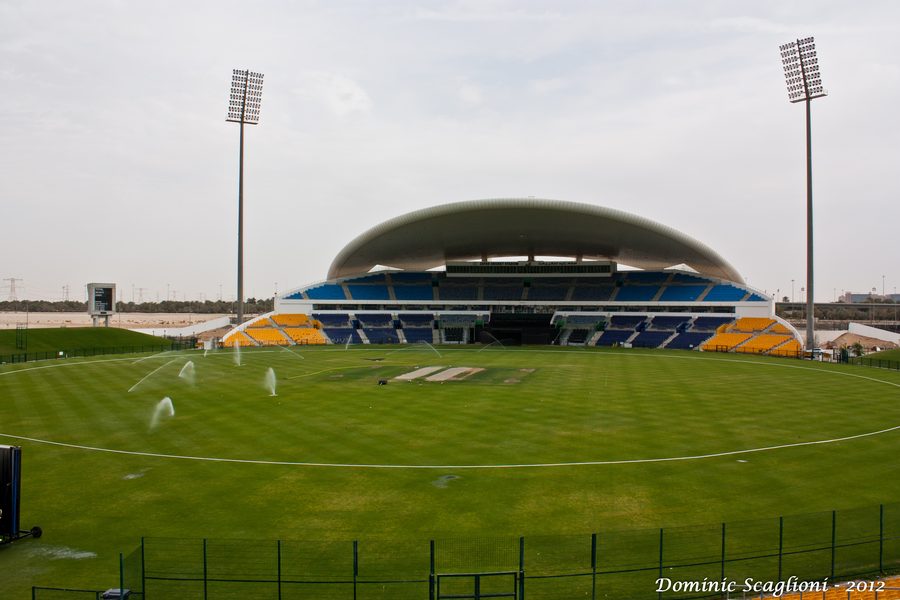
Somewhere below Test cricket's five days and the T20's three hours sits a version of the game that finishes inside an evening's television drama: ten overs a side, roughly ninety minutes, done. The Abu Dhabi T10 is the flagship of that format — the first ten-over league to carry official sanction, played each winter at the Zayed Cricket Stadium with squads full of names any T20 follower would recognise. It is dismissed by purists as hit-and-giggle and defended by its owners as cricket's answer to the attention economy, and both camps tend to argue about it without describing how it actually works.
This guide does the describing. It covers where the league came from — a Sharjah experiment before it was an Abu Dhabi institution — how a ten-over match is structured, who owns and plays for the franchises, what the format does to cricket's skills, and where the T10 sits within the Emirates' wider hosting economy, which is mapped across the cricket in the UAE hub. It is written for the reader who wants to understand the thing itself, whatever they end up thinking of it.
What a ten-over match actually is
Strip cricket down far enough and a question emerges: how short can a match get before it stops being cricket? The T10's answer is ten overs a side — sixty legal deliveries per innings, a match completed in about ninety minutes, an entire evening's double-header fitting into the window a single T20 occupies. Each bowler is limited to a maximum of two overs, so a captain needs at least five bowlers, exactly as a T20 captain needs five for twenty. Powerplay fielding restrictions apply for a short burst at the top of the innings, timeouts and interval faff are cut to almost nothing, and the format's operating principle is that no ball should be dead time.
The arithmetic changes everything downstream. A T20 batting side has resources to manage — an innings can absorb a quiet spell and recover. A T10 side has none: sixty balls, ten wickets, which means wickets are almost worthless as a resource and every delivery not attacked is a delivery wasted. Par scores at Abu Dhabi have generally sat around 100 to 120, a run rate that would count as frantic in any longer format and is simply normal here. Chases are shallow enough that one over can decide them, and matches swing on margins — a dropped catch, a misfield on the rope — that longer formats have time to absorb.
A comparison makes the compression visible:
| Test | ODI | T20 | T10 | |
|---|---|---|---|---|
| Overs per side | unlimited | 50 | 20 | 10 |
| Typical duration | up to 5 days | ~8 hours | ~3 hours | ~90 minutes |
| Max overs per bowler | unlimited | 10 | 4 | 2 |
| Wickets' value | everything | high | moderate | marginal |
The last row is the format's soul. In ten-over cricket a batter's dismissal costs the side almost nothing except that batter's hitting, so the rational approach is to swing from ball one — and everyone does.
From Sharjah experiment to Abu Dhabi institution
The league began life in December 2017 as the T10 League, played at the Sharjah Cricket Stadium — a ground whose decades of tournament hosting are part of the story told in the guide to how the UAE became cricket's neutral venue. The choice of venue was fitting: Sharjah's whole history is of privately promoted cricket finding an audience the official calendar ignored, and the T10 was exactly that — a private sports-management venture, sanctioned by the Emirates Cricket Board, betting that a shorter game would find viewers the longer one bored.
The first two seasons ran at Sharjah, with Kerala Kings winning the inaugural title in 2017. In 2019 the league moved down the coast to the Zayed Cricket Stadium and rebranded as the Abu Dhabi T10, a shift that mirrored Abu Dhabi's broader push to buy into elite sport and gave the emirate a signature cricket property to set against Dubai's stadium and Sharjah's history — the three-venue rivalry described in the guide to the UAE's grounds. It has been an Abu Dhabi fixture ever since, occupying a short window in late November and early December: a compressed festival of a season, group stages and playoffs inside a fortnight, multiple matches a night under lights.
Sanction mattered more than it sounds. Plenty of short-format exhibition cricket had existed before; the T10 was the first ten-over competition run with full board approval and international clearance, which meant established internationals could play it without jeopardising their standing, official records could be kept, and the format entered cricket's legitimate family rather than its carnival fringe. That legitimacy is the league's real founding achievement, whatever one thinks of the cricket.
How the league is built
The Abu Dhabi T10 is a franchise league on the now-universal model: privately owned teams, a player draft and retention system, squads assembled fresh each season from a global pool. The ownership register has leaned heavily toward the subcontinental business diaspora that funds most UAE cricket, with franchises branded to court particular fan communities — South Asian city names, Caribbean flavours, an Abu Dhabi home team — and the register has churned as short-format franchise investments everywhere do. Team names have come and gone; the league's structure has outlived every individual badge on it.
Competition format has varied season to season in detail but not in shape: a group stage in which every side plays several times, then a playoff structure borrowed from other franchise leagues, then a final — all inside roughly two weeks. The compression is the point. A franchise's entire season involves fewer balls than two Test matches, the whole tournament fits inside a school holiday, and a viewer can follow every match of a season for less time-investment than one round of a first-class competition.
Among the franchises, a small set of names has done most of the winning — Northern Warriors and Deccan Gladiators have each taken multiple titles — which hints at something the format's critics do not expect: ten-over cricket is not a lottery. Good sides win repeatedly, because the skills that decide sixty-ball innings are real skills, unevenly distributed, and money buys the players who have them.
Who plays it
The playing pool is the format's most argued-about feature. From the beginning the T10 recruited heavily from two overlapping groups: white-ball specialists in mid-career, and great names near or past the end of theirs. The league's early seasons were a parade of the T20 era's franchise royalty — Shahid Afridi, whose entire batting method might have been designed for a sixty-ball innings, Eoin Morgan after his international retirement, and the Caribbean power-hitting school for whom the format is a natural home, from Chris Gayle to Andre Russell and Nicholas Pooran.
The economics explain the roster. A T10 contract asks a fortnight of a player's year for a competitive fee, sits in a calendar window that clashes with relatively little, and demands the one skill — explosive short-burst hitting or death bowling — that ages best. For a thirty-eight-year-old whose fielding no longer survives a T20 league's scrutiny, ten overs is a viable workplace. The unkind reading is that the T10 is franchise cricket's retirement home; the kinder and equally true reading is that it is a specialist's format that happens to suit veterans, in the way Twenty20 itself was once dismissed as a veterans' circus before it conquered the world.
Alongside the marquee names, squads carry UAE-based players — the league's sanction from the Emirates Cricket Board comes with an expectation that local cricket benefits — and a scattering of Associate-nation internationals for whom the tournament is rare, paid exposure alongside elite company. For UAE players in particular, the T10 joined the ILT20 as one of the two annual windows in which a domestic cricketer can share a dressing room with the game's names, a function whose value the guide to the UAE's domestic system puts in context.
What ten overs does to cricket's skills
The format's most interesting effects are technical. Batting first: with wickets nearly free, the innings-building skills that organise longer cricket — playing yourself in, rotating strike, judging risk against resources — are deleted, and what remains is pure striking. T10 batting is the game's hitting laboratory: range-hitting practice made competitive, every batter effectively a finisher, the entire innings played in what a T20 side would call the death overs.
Bowling is where the format earns its respect. Conventional wisdom expected ten-over cricket to be a bowlers' scaffold for a hitting exhibition; in practice the two-over spell has proved a genuine craft. A bowler gets twelve balls to affect a match, every one of them attacked, and the ones who thrive are the extreme specialists: yorker artists, mystery spinners who cannot be lined up in a dozen deliveries, and — counterintuitively — attacking wrist-spin, because a batter swinging at everything is a batter offering chances. Dot balls are the format's gold. Two consecutive dots in a T10 constitute an event; a maiden is a scandal.
Fielding completes the compression. With totals separated by a boundary or two, a single misfield carries the weight a dropped slip catch carries in a Test, and franchises pick and drill fielders accordingly. The format's defenders make a fair point here: far from abolishing cricket's skills, ten overs isolates a particular set of them — the death-overs set — and stages a fortnight-long examination in nothing else.
The spectacle and who it is for
The T10 is built for broadcast, and honest analysis starts there. Its production grammar is borrowed from franchise T20 and accelerated: two matches a night, innings shorter than a football half, a highlights package practically indistinguishable from the live product. The target audience is explicit — viewers, especially younger and casual ones, whom even three-hour cricket fails to hold — and the league's pitch to broadcasters and sponsors is the pitch of the whole short-format era taken to its limit: maximum event density per minute of attention.
In the stadium the tournament functions as an Abu Dhabi winter festival. Crowds are drawn overwhelmingly from the Emirates' South Asian communities — the same population that fills every cricket event in the country, whose place in the system is described in the domestic cricket guide — with tickets kept cheap and the atmosphere closer to an evening out than a sporting vigil. It shares that character with the great Sharjah tournaments of the 1980s and 1990s, and with the IPL's relocated seasons: cricket in the Emirates has always been an entertainment product staged for a diaspora audience, and the T10 is that tradition at its most concentrated.
The T10 as a brand, and ten-over cricket beyond Abu Dhabi
What began as one league has become a format franchise. The T10's promoters have exported the concept — a Zimbabwe edition launched in 2023, and further ten-over ventures have appeared under related branding in other markets — on the logic that the format's virtues travel: cheap to stage, short to broadcast, undemanding of the packed international calendar. Ten-over cricket has also seeded itself downward into the UAE's own domestic game, where the Emirates Cricket Board's emirate-branded development tournaments use ten-over and similar short formats precisely because they compress many matches, and many trials, into small windows.
The format's ceiling remains an open question. The Olympic door, when cricket walked through it for Los Angeles 2028, was entered in T20 form, not T10; no full member board has adopted ten overs for serious domestic competition; and the format's claim to be cricket's future rests, for now, on one well-run league and its franchises. The more defensible claim is narrower: the T10 has proved that sanctioned cricket shorter than T20 can sustain professional standards, broadcast value and repeat champions. Whether the sport needs that proof is the argument the next decade will settle.
Following the Abu Dhabi T10
The practicalities are simple. The season occupies a short window in late November and December at the Zayed Cricket Stadium, with matches scheduled in the evening for local crowds and subcontinental prime time. Tickets are inexpensive by international sport's standards, the ground's cricket-specific history and facilities are covered in the UAE grounds guide, and broadcast rights are sold widely across South Asia and the cricket world, with digital streaming covering most other markets in most seasons — the arrangements change often enough that the league's own channels are the reliable source in any given year.
For a viewer new to the format, one advisory: do not watch it as a shrunken T20. Watch the bowlers. The batting spectacle is the advertised product, but the format's genuine drama lives in the twelve-ball spells — the yorker under pressure, the wrist-spinner tossed the ninth over of a tight chase — and a fortnight of the T10 will teach a close watcher more about death bowling than a full season of most leagues.
Sources and method
This guide is based on the league's published playing conditions and format announcements, the well-documented history of its 2017 launch at Sharjah under Emirates Cricket Board sanction and its 2019 relocation and rebranding at Abu Dhabi's Zayed Cricket Stadium, its inaugural title and the repeat championships of its leading franchises, and the publicly recorded participation of the named international players. Franchise names, ownership and season formats change frequently and are described as patterns rather than a directory; scores and run rates are characterised in ranges rather than invented precision. No statistics were computed for this article.