

Glenn Maxwell: 19 IPL Ducks and One 201 Not Out
Glenn MaxwellAustralia
By CricketTaken EditorialPublished Player analysis7 min read
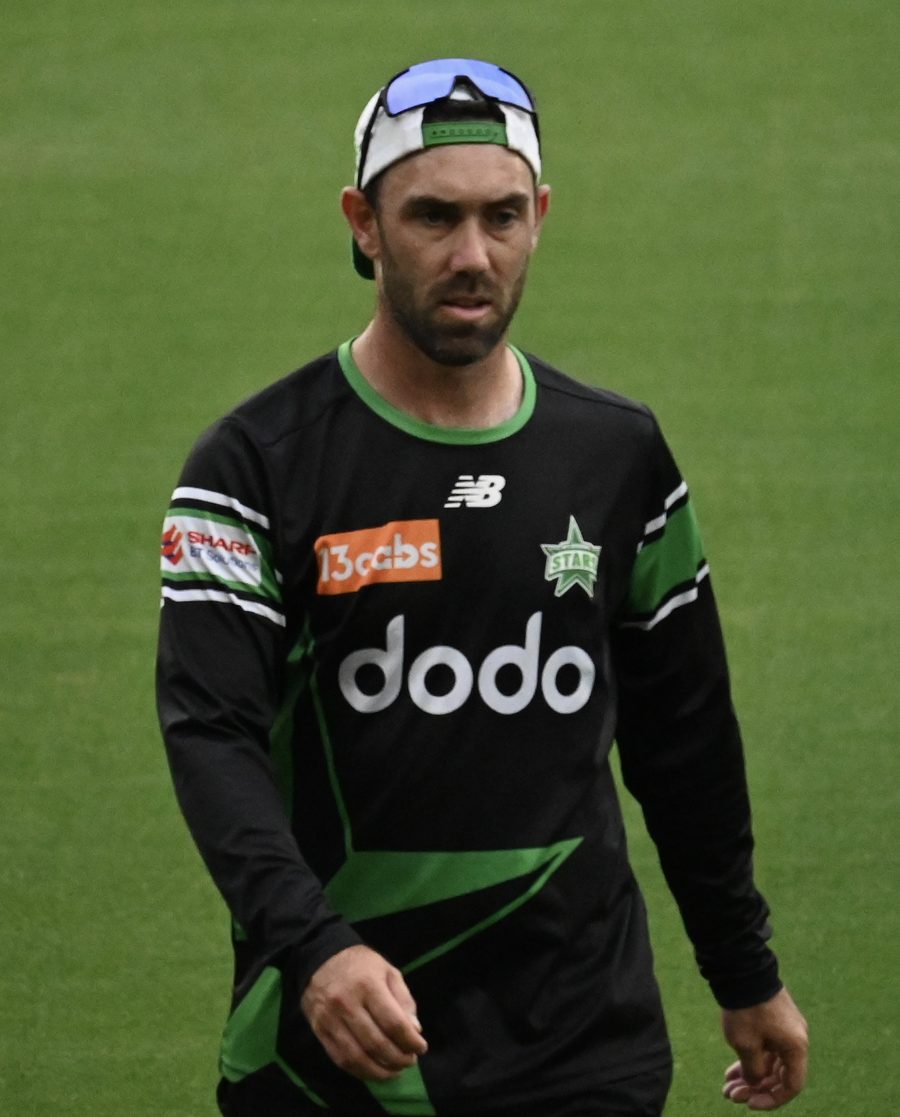
Glenn Maxwell has been dismissed for nought nineteen times in the Indian Premier League, more than any other batter in the competition's history. Ten of those were golden ducks. He has also scored 2,819 runs at a strike rate of 155.15, which puts him among the fastest-scoring batters the league has had across a career of that length. Cricket writing has spent fifteen years treating those two facts as a contradiction to be explained. They are not a contradiction. They are the same decision, counted twice.
What the numbers look like side by side
The most ducks table has Maxwell at the top: 19 in 135 innings, a rate of 14.1 per cent. The best batting strike rate list has him eighth among substantial careers at 155.15, with 238 fours and 161 sixes across 1,817 balls. His average is 23.89.
Put in plain terms: roughly one in seven times Maxwell walked out, he walked back without scoring, and the rest of the time he scored faster than almost anyone. A batter who defends the first over to establish himself does not get out for nought very often, and he also does not average a boundary every four and a half balls. Maxwell chose the second life. The ducks are the invoice.
The 2014 season, which showed what the choice buys
The clearest single-season demonstration came in 2014 for Punjab, then Kings XI. Maxwell made 552 runs from sixteen innings at a strike rate of 187.76 — a figure that still sits high on the list of the best individual seasons the competition has produced, and which was extraordinary for a year when the league average was far below where it is now.
Within that season came 95 from 43 balls against Chennai at Abu Dhabi, with fifteen fours. Punjab Kings reached the final that year and lost it to Kolkata. The team's whole strategy for the campaign — a top order instructed to attack from ball one, with Maxwell at three or four as the accelerant — was built around what a batter of his profile makes possible, and it took a franchise that had never reached a final to within one match of a title.
The RCB years, and a role that never quite settled
Maxwell played for four franchises: Delhi, Mumbai Indians, Punjab and Royal Challengers Bengaluru, with a career spanning 2012 to 2025. His Bengaluru period, from 2021, was in many ways his best-organised: batting at four behind Virat Kohli and Faf du Plessis, he became the side's designated middle-overs attacker and scored 1,780 of his career runs in overs seven to fifteen at 152.3, which the middle-overs runs list records as one of the highest-volume returns in that phase by any overseas batter.
He was also a genuine bowling option that Bengaluru mostly declined to use, and that is worth stating because his all-round profile has been steadily undersold. His off-breaks took 77 wickets in one-day internationals for Australia. In franchise cricket he has bowled far less than his record justifies, largely because sides picked him as a specialist hitter and did not want to complicate the plan.
The Bengaluru years also included his worst runs of form. He was dismissed without scoring four times in the 2024 season, one of three seasons in which he collected four ducks, and there were stretches in which the method produced nothing at all for weeks. Both things belong in the account. A batter who plays this way does not have quiet bad patches; he has visible ones.
Mumbai, 7 November 2023
If the ducks are the invoice, the innings at Wankhede against Afghanistan is the return on the whole investment. Australia, chasing 292 in a World Cup match they needed to win to reach the semi-finals, were 91 for 7 after nineteen overs. Maxwell was cramping so badly he could barely run between the wickets and eventually stopped trying, playing almost entirely in boundaries from a standing position.
He made 201 not out from 128 balls. Australia won by three wickets with Pat Cummins contributing 12 not out in an unbroken partnership of 202, of which Maxwell scored 179. It was the first ODI double century by an Australian, the first made while chasing, the highest score by anyone batting at number six or lower in the format's history, and the first by a non-opener.
The reason it belongs in an argument about method rather than a highlights reel is that a batter with a conventional approach could not have played it. Maxwell could not run, so singles were unavailable; the only route to 200 runs from that position was to hit boundaries almost exclusively, off good bowling, for two hours, on one leg. That is only possible for someone who has spent a career practising the shot selection that produces nineteen ducks.
The rest of the international record
Maxwell retired from one-day internationals in June 2025 with 3,990 runs from 149 matches, four hundreds, 23 fifties and 77 wickets, at a strike rate around 126 — behind only Andre Russell among batters with substantial ODI careers. He had earlier hit a 51-ball hundred against Sri Lanka at Sydney in the 2015 World Cup, then the fastest by an Australian in the format. He stayed available for Twenty20 international cricket after the ODI retirement, prioritising a format his method suits more naturally.
The pattern in the ODI figures repeats the franchise one. A strike rate of 126 in fifty-over cricket during that era was unusual to the point of eccentricity, and it came attached to an average in the low thirties. Australia decided, correctly, that the trade was worth making, and were rewarded in Mumbai.
The two things nobody counts
Two parts of Maxwell's value never appear in a batting table, and both are large.
The first is the fielding. He has spent fifteen years as one of the best two or three fielders in world cricket in any position — genuinely quick, with a flat throw from the deep and hands good enough to be used at slip and in the ring interchangeably. In a format where a saved boundary is worth as much as a hit one, a side fielding Maxwell is running a different arithmetic from one that is not, and none of it shows up next to his average.
The second is the effect on the batters around him. A middle-order attacker who might score 60 from 25 balls changes what the batter at the other end is allowed to do, and it changes what the bowling side must set up for. Bengaluru's approach with Maxwell at four was legible: Kohli and du Plessis could bat with a measure of caution in the powerplay precisely because the innings had someone downstream capable of taking twenty from a single over. When Maxwell failed, that structure failed loudly. When he worked, the whole order looked better than it was.
Why the volatility argument keeps recurring
Maxwell has attracted more selection debate than almost any Australian of his generation, and the debate has almost always been framed as a question about temperament. That framing is wrong and it has been unfair to him. The correct framing is a question about variance: are you willing to accept a distribution of scores with a fat left tail in order to keep access to a right tail nobody else has?
Australia's answer, across four World Cup squads, was yes, and the history of Australian cricket contains few better vindications of that kind of judgement than a semi-final place won by a man who could not walk. Franchises have generally been less patient, which is why his IPL career reads as four separate stints rather than one long tenure, and why his average of 23.89 sits so far below his obvious quality.
The measure
Maxwell's career resists the usual summary because the usual summary averages things, and averaging is exactly what destroys the information in his record. A player who produces 19 noughts and a 201 not out in a lost cause is not describable by his mean. He is describable by his method, and the method was consistent from the 2014 season in Punjab to the last ball he faced in Mumbai: work out the fastest available route to the total, take it immediately, and accept that some nights it ends in the first over.
There is a reasonable argument that Maxwell should have moderated it, and that a version of him who averaged 32 at a strike rate of 140 would have won more matches. There is no evidence such a version was available.
What can be said with confidence is that the game moved towards him. When Maxwell started, a strike rate of 155 was an eccentricity and a 14 per cent duck rate was a disciplinary matter. By the middle of the 2020s, franchises were deliberately recruiting batters with exactly that distribution and instructing them to accept the failures, because the mathematics of a twenty-over innings had finally been worked out in public. Maxwell spent a decade being criticised for a profile that the sport subsequently decided it wanted. That is the ordinary fate of anyone who is early. Career figures are on the Glenn Maxwell profile.