

The Border-Gavaskar Trophy in Australia: The Series Down Under
By CricketTaken EditorialPublished Cricket in Australia11 min read
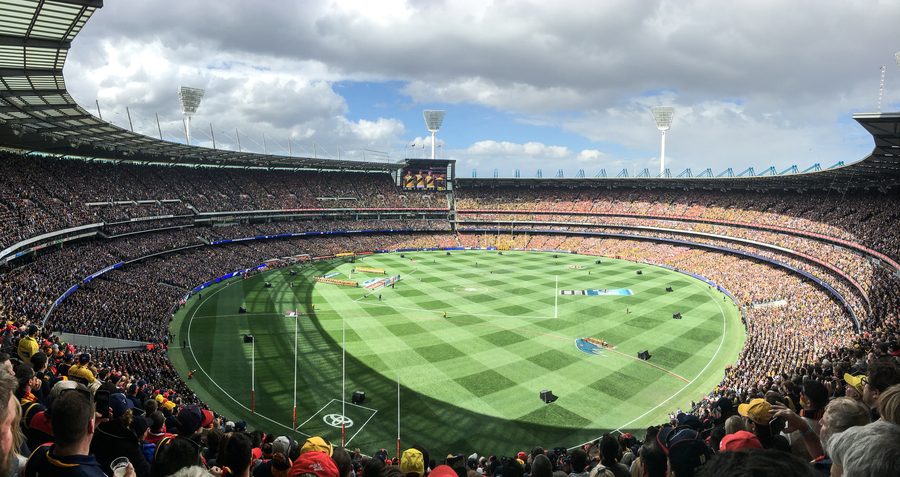
For most of a century, an Indian Test tour of Australia was a fixture with a predictable ending. India first arrived in 1947-48, ran into Don Bradman's final home summer, and lost heavily; across the seven decades that followed, eleven touring sides came and went without one of them winning a series. Then, inside the space of six years, India won two consecutive series in Australia, Australia answered with a five-Test victory of their own, and the Border-Gavaskar Trophy Down Under became the contest the whole Australian summer is now built around. When India are in the country, nothing else in the season — not even an Ashes summer — sells more tickets, draws more eyes or carries more consequence.
This guide covers the Australian half of the rivalry: what an Indian tour of Australia actually looks like, why the fixture resisted India for so long, and what happened across the three extraordinary series from 2018 to 2025. The rivalry's full arc, including everything that happens in Indian conditions, is told in the companion guide to the India-Australia rivalry; this page stays on Australian soil.
Why Australia was the hardest tour in cricket
The record before 2018 needs explaining, because it was not built on Indian weakness. Indian sides containing some of the finest batters the game has produced toured Australia and lost: the 1991-92 side went down 4-0, the 1999-2000 tour ended 3-0, and even the celebrated 2003-04 team, which drew 1-1 and came desperately close, could not land the decisive blow. The 1977-78 tourists pushed a Packer-depleted Australia all the way to a 3-2 finish, and the 1980-81 side squared a series with a famous win at Melbourne, but a series victory never came.
The reasons were structural rather than accidental. Australian pitches offer pace and bounce that Indian batting techniques, grooved on lower and slower surfaces, historically needed half a series to adjust to — by which time the series was usually gone. Indian attacks built around spin found Australian squares unresponsive, and until the 2010s India rarely travelled with three fast bowlers capable of taking twenty wickets in Australian conditions. Add the oldest advantage of all — Australian sides at home have been formidable against everyone, as the history of Australia cricket sets out — and the pattern sustained itself for seventy years.
What changed was the bowling. The Indian sides that finally won in Australia did so because, for the first time, they brought a pace attack that was the equal of the home side's. That is the single most important fact in the modern history of this fixture.
The shape of a summer tour
An Indian Test tour slots into the rhythm of the Australian season, and the rhythm is worth knowing because it shapes the cricket.
The Australian home summer runs from late November to mid-January, and its Test schedule has two fixed points: the Boxing Day Test at the MCG and the New Year Test in Sydney. Everything else arranges itself around them. A Border-Gavaskar series therefore typically opens in Perth, Adelaide or Brisbane in late November or early December, builds through the middle of the summer, and reaches Melbourne on 26 December with the series usually alive — which is precisely the design. Adelaide's fixture is now regularly a day-night Test with the pink ball, a variation that has mattered in this rivalry more than most.
The venues themselves do different things. Perth is the fastest and bounciest surface in the country; Brisbane's Gabba traditionally offers pace and carry and was for decades where Australia opened a summer to intimidate the visitors; Adelaide is the batting-friendly ground where the pink ball complicates everything under lights; Melbourne is vast, slow and attritional; Sydney turns more than the rest. A touring side meets close to the full range of Australian conditions inside six weeks, which is why a series win here is treated as the game's most complete examination. The characters of the grounds are covered properly in the guide to Australia's Test grounds.
From 2024-25 the fixture was extended to five Tests, the first five-Test series between the two countries in Australia since 1991-92. That change is the clearest statement of where the rivalry now sits: series length in Australia had previously been the Ashes' distinguishing privilege.
2018-19: the first series win
India arrived in November 2018 under Virat Kohli for their twelfth attempt, and this time the conditions of the previous seventy years had inverted. India's attack — Jasprit Bumrah, Mohammed Shami, Ishant Sharma and Ravichandran Ashwin — was at least the equal of Australia's, while Australia's batting was missing two of its best players, who were serving suspensions arising from events in South Africa earlier that year. Both facts belong in the record.
The series turned on patience. At Adelaide, Cheteshwar Pujara made 123 on the first day from a position of 41 for 4, and India defended a modest target to win by 31 runs — their first victory in the opening Test of an Australian tour. Australia answered at Perth on a fast, cracked drop-in surface, winning by 146 runs despite a Kohli hundred of the highest class. At Melbourne, India ground out 443 over two days and Bumrah produced one of the great fast-bowling performances by a visitor, taking nine wickets in the match as India won by 137 runs. The rain-affected Sydney Test was drawn with India far ahead, Rishabh Pant unbeaten on 159, and the series finished 2-1.
Two individual campaigns defined it. Pujara batted for longer than any visiting batter in living memory — three centuries and 521 runs, an innings-by-innings account of which is given in the article on Pujara's 2018-19 tour — and was named player of the series. Bumrah took 21 wickets in his first Test tour of Australia, the start of an overseas record examined in the piece on Bumrah's Test record away from home. India's quicks took twenty wickets three times in four Tests, the thing no previous Indian side in Australia had managed even once.
2020-21: the win that made no sense
The return tour was played in a pandemic summer of quarantine, shifting venues and restricted crowds, and it produced the least probable series result in modern Test cricket.
It began with a humiliation. In the day-night Test at Adelaide, India were dismissed for 36 in their second innings — their lowest total in Test history — and lost inside three days. Kohli, as long planned, flew home for the birth of his first child. From that point the tour became a war of attrition against an injury list: by its end India were missing most of their first-choice attack and several batters, and the eleven that took the field in the final Test had a handful of caps between them.
What followed is now Australian cricket's most retold cautionary tale. Ajinkya Rahane, the stand-in captain, made a disciplined century at Melbourne as India levelled the series by eight wickets. At Sydney, India batted out the final day to save a Test that appeared lost, Hanuma Vihari and Ashwin surviving the closing session while both were physically compromised. And at the Gabba — where Australia had not lost a Test since 1988 — India chased 328 on the final afternoon to win by three wickets, Shubman Gill making 91, Pant finishing the job unbeaten on 89, and Pujara absorbing a sustained short-ball assault that is described blow by blow in the account of Pujara's resistance at the Gabba. Mohammed Siraj, on his first tour, ended the series leading the attack and took five wickets in the final innings Australia batted.
India won 2-1 and retained the trophy. Australia had lost consecutive home series to the same opponent with something close to a full-strength side, at grounds where they had historically been almost unbeatable. The inquest in Australian cricket was long and public.
2024-25: the answer
Australia's response took four years to arrive and was emphatic when it did. The 2024-25 series — expanded to five Tests — began badly for the hosts: India, captained in the first Test by Bumrah, won by 295 runs in Perth. From there the summer swung entirely. Australia won the day-night Adelaide Test, drew a rain-ruined match at the Gabba, and took the Boxing Day and New Year Tests to finish 3-1, reclaiming the trophy after a decade.
The series confirmed two reputations. Travis Head, who had already broken Indian hearts in two ICC finals, made match-shaping hundreds in the middle of the series and continued a career-long pattern of scoring his most damaging runs against India. And Bumrah, despite finishing on the losing side, took 32 wickets at an average in the low teens and was named player of the series — a verdict nobody in either dressing room disputed. Australia's established core did the rest: Pat Cummins led the attack and the side, Nathan Lyon provided the control and fourth-innings wickets he has supplied against India for over a decade, and Steve Smith returned to form with centuries in the second half of the summer.
The crowds were the other story. The Melbourne Test drew the largest attendance the MCG had recorded for any Test since the 1930s, and the series as a whole set attendance records for a non-Ashes summer. That is the commercial fact underneath everything else on this page.
The three-series ledger
| Series | Tests | Result | Holder | Player of the series |
|---|---|---|---|---|
| 2018-19 | 4 | India 2-1 | India | Cheteshwar Pujara |
| 2020-21 | 4 | India 2-1 | India | Pat Cummins |
| 2024-25 | 5 | Australia 3-1 | Australia | Jasprit Bumrah |
Beyond the trophy itself, these series fed directly into the World Test Championship, which has given every Border-Gavaskar Test standings consequences. Australia's home win in 2024-25 helped carry them to the final of that cycle, and the two sides had already met in the 2021-2023 championship final at The Oval, which Australia won. A Border-Gavaskar series in Australia is now, in effect, a championship semi-final played over six weeks.
What the fixture means in the Australian summer
For Australian cricket, the arrival of India is an economic event of a different order from any other tour. Australia's large and growing Indian diaspora fills the grounds in numbers no other visiting side's supporters approach, and the atmosphere at a Melbourne or Sydney Test against India — flags, drums, sustained noise for the visitors in the home side's biggest stadiums — is unlike anything else in the Australian season. Broadcast rights follow the same logic: an India series is sold into the largest cricket audience on earth, which is why the fixture was lengthened to five Tests and why its scheduling is settled years in advance.
The consequence is a quiet rebalancing of the Australian summer's hierarchy. The Ashes remains the older institution, with a continuous record stretching back to the nineteenth century. But on every measurable axis of the present — attendance, audience, standard of contest, championship stakes — the Border-Gavaskar summer now matches or exceeds it, and Australian players of the current generation have repeatedly said that beating India at home and winning in India are the two hardest achievements available to them. When the fixture began, an Indian tour was a minor item in the Australian season. It is now the season.
There is also a stylistic reason the contest works so well in Australian conditions. India's modern strength — a deep, fast, relentlessly accurate pace attack — is precisely the strength Australian pitches reward, so the cricket is symmetrical in a way the rivalry in India is not: two similar attacks, two batting orders under identical examination, and no refuge for either. Series in Australia since 2018 have produced almost no dead cricket, and the results have swung on sessions rather than on conditions.
The players the fixture has defined
Certain careers are now inseparable from this contest as it plays out on Australian grounds. Pujara's standing in Australia — where he is respected in the way Australian crowds reserve for opponents who refuse to be moved — was built entirely across the 2018-19 and 2020-21 tours. Bumrah's claim to be the best bowler of his era rests most heavily on what he has done in Australian conditions across three tours. Virat Kohli, whose overall record is examined in the article on his Test and ODI career, has a distinctive Australian chapter of his own: hundreds on multiple tours, the 2018-19 captaincy, and a following among Australian crowds that mixes hostility and admiration in roughly equal parts.
On the home side, the fixture has been the making of Head as a big-occasion batter and the proving ground for the Cummins-era attack, which restored Australia's home authority in 2024-25 after the two defeats that preceded it. Career figures for every player named here are in the player index.
Following the series in Australia
Border-Gavaskar Tests in Australia are broadcast free-to-air nationally and streamed alongside; the practical detail of channels, streaming services and session times is kept in the guide to how to watch cricket in Australia. Tickets for the Melbourne and Sydney Tests of an India summer sell faster than for any other cricket in the country, and the Boxing Day fixture in particular should be planned months ahead.
For the viewer, the series rewards attention to three things: the first hour of each Australian innings against the new ball, which Bumrah has turned into the tour's recurring drama; the middle overs when Lyon bowls to India's right-handers on wearing surfaces; and the fourth innings, where every one of the last three series was ultimately decided. The rest of the site's Australian coverage — the domestic system that produces the home side, the grounds, the records — is collected on the cricket in Australia hub.
Sources and method
Series results, match results, individual scores and named performances on this page — Pujara's 521 runs and three centuries in 2018-19, Bumrah's 21 wickets on that tour and 32 in 2024-25, the 36 all out at Adelaide, the 328 chased at the Gabba, the 3-1 result of 2024-25 — are matters of published scorecard record. Attendance claims are described in general terms against the documented record rather than given as precise figures. The characterisation of pre-2018 tours follows the well-established series results from 1947-48 onward. Where the pattern of a thing is described rather than a number given, that is deliberate: the fixture list is still being added to, and this page is written to remain accurate as it grows. This site is independent and has no affiliation with Cricket Australia, the BCCI or the ICC.