

Cheteshwar Pujara, 521 Runs and India's First Win in Australia
Cheteshwar PujaraIndia
By CricketTaken EditorialPublished Player analysis9 min read
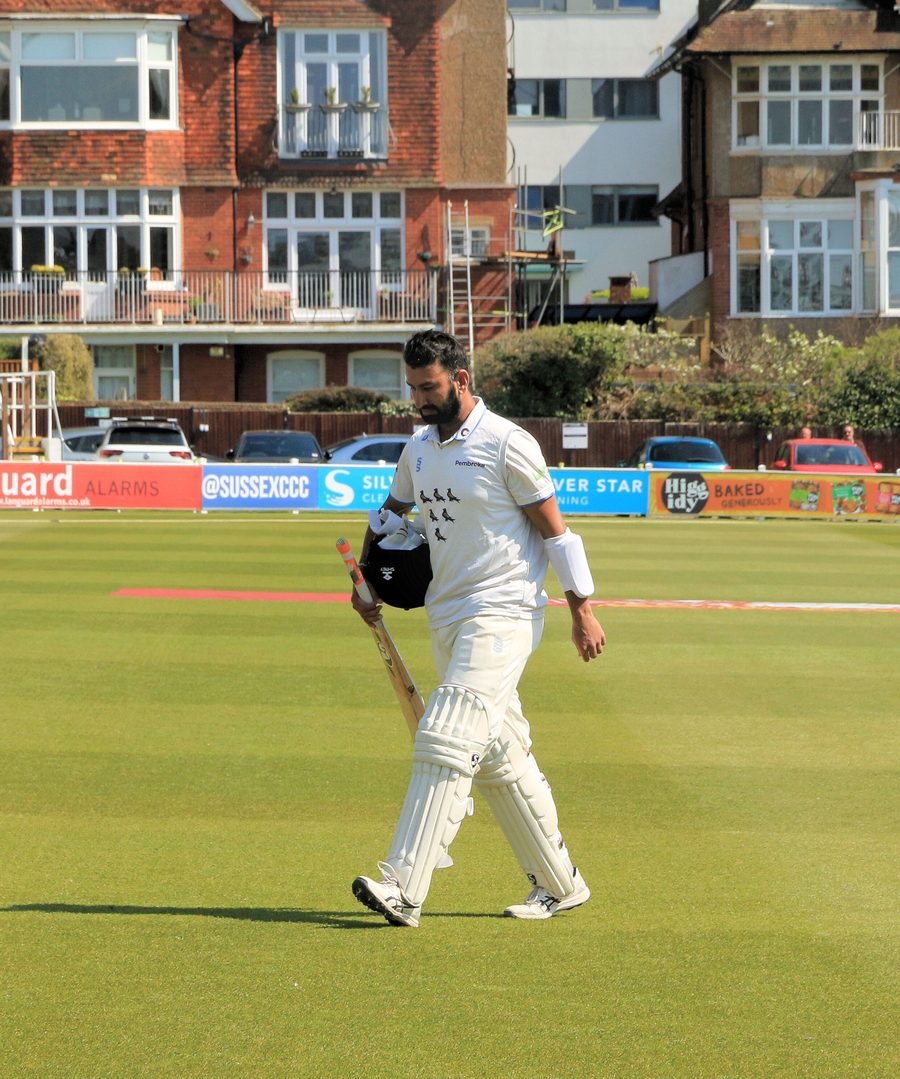
India arrived in Adelaide in December 2018 having never won a Test series in Australia. Eleven previous tours across seventy-one years had produced three drawn rubbers and eight defeats, and the two most common explanations were the bounce and the new ball. The bowling attack India brought that summer was the best they had ever taken there. The batting was the part nobody trusted, and it turned out that the batting was the part that decided it.
A place in doubt before the tour
Six months earlier, Pujara had been dropped. India left him out of the opening Test of the 2018 England tour at Edgbaston, preferring an extra batting all-rounder, and lost narrowly. He returned for the remainder of the series and closed it with an unbeaten 132 at Southampton, compiled largely in the company of the tail on a wearing surface, yet the questions did not go away. He had no white-ball role, no Indian Premier League contract since 2014, and a school of thought within Indian cricket held that his scoring rate cost the side more than his wicket protected it.
His earlier record in Australia fed the doubt. The 2014-15 tour had brought him little, and in the two years that followed he lost his place more than once, each recall framed as provisional. By December 2018 he was thirty, secure on the team sheet but not in the argument surrounding it. The tour settled that argument for the next four years.
The first innings at Adelaide
India were 41 for 4 on the opening morning of the series. Cheteshwar Pujara had come in at 15 for 1 and was still there at lunch, at tea, and when the last wicket fell. He finished on 123 from 246 balls out of a total of 250. The next-highest score was 25. The innings ended off the final ball of the day, Pat Cummins throwing down the stumps direct from mid-on with Pujara short of his ground — a run-out, which is to say that in six hours no Australian bowler had found a way past him.
Australia replied with 235, India made 307 in the second innings, and Australia were bowled out for 291 chasing 323. The margin was 31 runs. Pujara's second-innings 71, slower again and compiled against a Nathan Lyon spell of relentless accuracy from around the wicket, was the innings that stretched the target beyond Australia's reach. Take fifty runs off Pujara's first-innings score and India lose the Test and, on the evidence of what followed, the series. It is rare that a single innings in the opening match of a four-Test tour can be isolated so cleanly as the difference, and this one can.
Melbourne, Sydney and the long middle
Australia levelled at Perth, on a fast, freshly laid drop-in surface at the new stadium where nobody on either side managed to bat long. It was the one pitch of the four on which occupation was close to impossible, and the result followed from that.
Melbourne restored the pattern. The Boxing Day Test was played on a slow, dry drop-in pitch that offered the bowlers almost nothing, which meant the match would go to whichever side had the patience to bat properly once and the discipline not to chase the game. India gave a debut to Mayank Agarwal, who made 76, and Pujara then batted through the heart of the innings for 106 from 319 balls, adding a long stand with Virat Kohli that decided the match's shape before Australia had bowled a third of their overs. India declared on 443 for 7, won by 137 runs, and went to Sydney 2-1 up with one to play.
There Pujara produced the largest innings of his tour: 193 from 373 deliveries, his highest Test score against Australia, spread across the best part of two days. He shared a long fifth-wicket partnership with Rishabh Pant, whose unbeaten 159 was the flourish to Pujara's foundation, and India declared on 622 for 7. Rain took most of the last two days and the match was drawn, which suited India perfectly well. Series won, 2-1 — the first by any Asian side in Australia.
The 1,258 deliveries
Pujara's aggregate for the series was 521 runs, and he was named player of the series. The number that better describes what he did is the balls faced: 1,258 across seven innings, more than any visiting batter had faced in a Test series in Australia. His three hundreds alone consumed 938 deliveries — 246 at Adelaide, 319 at Melbourne, 373 at Sydney — which is more than most specialist batters on either side faced across the whole tour.
That figure is the whole argument. A Test attack of Pat Cummins, Mitchell Starc, Josh Hazlewood and Nathan Lyon is at its most dangerous in the first fifteen overs of a spell, and its capacity to sustain that danger depends on how much bowling it has already done. Pujara made them bowl. Every session he survived cost them overs they could not get back, and the batters who followed him — Virat Kohli, Ajinkya Rahane, Rishabh Pant — met an attack in its third or fourth spell rather than its first.
He scored at roughly 41 runs per hundred balls across the tour. In a modern Test that reads as obstruction. In the context of the series it was the mechanism: India's bowlers took twenty Australian wickets three times in four Tests, and they were able to do so partly because they were fresh and partly because Pujara had given them a scoreboard to bowl at.
What the method actually was
The technique was not pretty and it was not meant to be. Pujara stood deep in his crease, played almost everything under his eyes, and left in enormous quantities. Against the short ball he ducked rather than pulled. Against Lyon he used the crease, coming forward or going right back with very little in between, and refused to sweep in situations where most batters would have.
The leaving deserves its own sentence, because on those pitches it was the most productive shot he played. Kookaburra-ball cricket in Australia rewards bowlers who can hold a fourth-stump line for hours, and punishes batters who feel obliged to answer it. Pujara simply declined the conversation. Ball after ball passed through to Tim Paine untouched, and each one shifted the burden of invention back onto the bowler. Eventually the bowler, needing something to happen, strayed straighter or fuller, and those were the deliveries Pujara scored from.
The distinctive part was the mental arrangement rather than the physical one. Pujara batted in units of time rather than runs. He was visibly untroubled by long scoreless periods — he faced more than fifty consecutive dot balls on several occasions in that series — and by the fact that the crowd, the opposition and often his own dressing room were becoming impatient. Australia tried to provoke him verbally and got nothing back. Tim Paine's on-field commentary at Melbourne, aimed at unsettling him, became a running joke largely because it did not work.
The cost of the method is real and should be stated. A batter scoring at forty runs per hundred balls cannot chase, and Pujara's record in fourth innings where a target had to be hunted is thin. He was a first-innings batter and a match-saving batter, not a match-winning one in the way the term is usually meant. In Australia, where the first innings decides most Tests, that was exactly the right specialisation.
Australia missing two batters
There is a qualification that gets raised whenever the 2018-19 result is discussed, and it is a legitimate one. Australia were without Steve Smith and David Warner, both serving bans, and their batting was correspondingly weak: no Australian passed 100 in the series, and their highest total in eight innings was 326.
The fair response is twofold. First, India's bowlers would have had to work considerably harder with Smith in the order, and the margins at Adelaide were narrow enough that a single Smith hundred flips it. Second, the Australian bowling attack was at full strength and was the best in the world, which is the half of the equation Pujara was dealing with. He is not responsible for who Australia picked.
The stronger evidence arrived two years later.
The 2020-21 return, and the body blows
On the 2020-21 tour, with Smith back and India missing most of their first-choice side after the first Test, Pujara made 271 runs at a strike rate of around 30. On paper that is a poor series. In practice it was the second half of the same job, and that tour is a story in its own right.
At Sydney he made 50 and 77, the latter across the best part of a session and a half on the final day, in a match India were asked to bat out to save. At Brisbane, chasing 328 on the fifth day with a scratch bowling attack and no obvious reason to believe, he made 56 from 211 balls and was struck on the body eleven times. The strike rate was the point: the fewer risks Pujara took, the more overs Rishabh Pant had available at the other end to win it. India got there with three overs left.
That series is the better proof of concept, because Australia were at full strength, India were not, and the batting still functioned. The rivalry between the two sides had for decades been decided by whether India's top order could survive the first hour in Australian conditions. For two consecutive tours it did, and the same man was responsible both times.
Why the role went out of fashion
Within three years of the Gabba, Pujara was out of the India side. The reasons given were his scoring rate and his conversion, and both had some truth in them. Between 2019 and 2023 his hundreds became rare while the deliveries faced stayed high, which is the worst combination for a batter of this type: all of the cost and less of the benefit.
The wider reason is that Test cricket changed underneath him. The rise of aggressive Test batting, and of teams willing to lose in four days to win in three, made a specialist occupier look like a luxury — a shift examined more fully in the piece on his method and the number three role. India moved towards a top order that scored quickly enough to give its bowlers time by a different route. Shubman Gill and others were asked to do at 60 runs per hundred balls what Pujara had done at 40.
Whether that was an improvement is arguable. What is not arguable is that it required a different kind of bowling attack to work — one led by Jasprit Bumrah and Mohammed Shami taking wickets in clusters rather than grinding a side out. India had that attack, so the trade was affordable.
The parts of the record that get lost
Pujara finished with more than 7,000 Test runs at an average in the low forties, nineteen hundreds among them, across more than a hundred matches. That is a very good record and not a spectacular one, and the aggregate misrepresents the shape of his usefulness in exactly the way strike rate misrepresents his innings.
A better measure is that India won a Test series in Australia in 2018-19 and again in 2020-21, having never done it in the previous seventy years, and that he made a hundred in the first of them and absorbed the fast bowling in the second. Very few players get to be the specific reason a national side crosses a barrier of that age. He got to be it twice, in two different ways, with the second version producing almost no runs anyone would call attractive.
The two tours between them account for fewer than eight hundred of his Test runs. They are, comfortably, the most valuable eight hundred any India batter has scored abroad.