

David Warner's Test Record: 8,786 Runs as an Opener
David WarnerAustralia
By CricketTaken EditorialPublished Player analysis6 min read
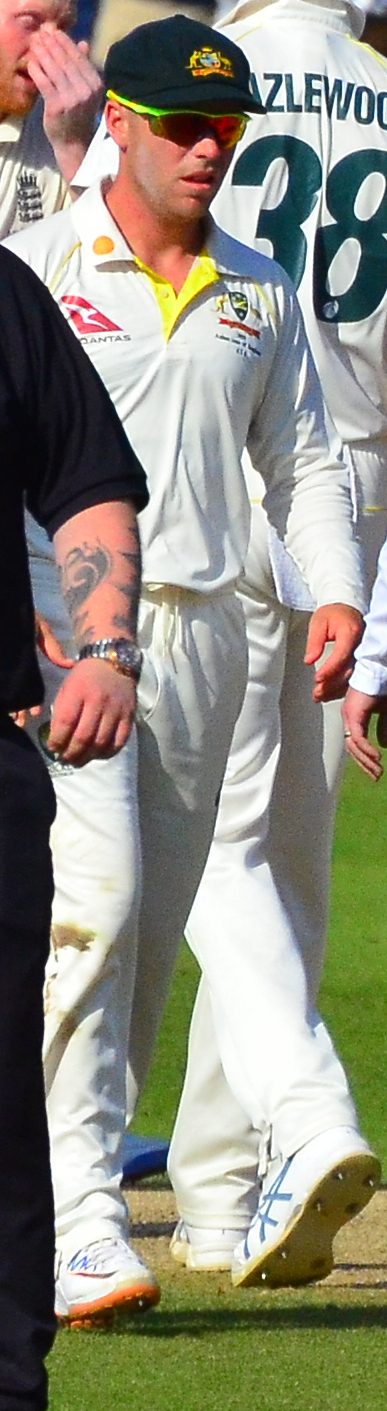
David Warner finished his Test career with 112 matches, 8,786 runs at 44.59 and 26 hundreds. Those are the figures of a very good opening batter and not, on their face, an unusual one. What makes the record worth examining is how it was assembled: at a tempo nobody had previously sustained in the position over that many matches, in a pattern of enormous home scores and thin away ones, and with a two-year hole in the middle of it.
Selected for Australia before he had a first-class match
Warner played a Twenty20 international against South Africa at the Melbourne Cricket Ground in January 2009, made 89 from 43 balls, and had not at that point played a single first-class game. It was the first time in over a century that Australia had picked a player for a senior international without any experience of the longer game. The selection was widely treated as a novelty, and for two years it looked like one, because he was a limited-overs specialist with a technique nobody expected to hold up over five days.
The Test debut came at Brisbane in December 2011 against New Zealand, three years after the international career had begun. Within a year he had two Test hundreds and a place nobody was arguing about. The route into the side is not incidental. It shaped how his batting was judged for the next decade: every failure was read as evidence that the technique had never been built for the format, and every large score as an exception.
Perth 2012, and the argument about tempo
The innings that settled the question came at the WACA in January 2012, against India. Warner made 123 from 69 balls in a Test match, one of the fastest hundreds in the format's history, in a game Australia won inside four days. It was not a slog in a dead position. Australia were building a first-innings lead, the pitch was quick, and the fastest scoring available was through the off side against a tiring attack.
That innings established the trade-off that ran through the whole career. An opener scoring at close to a run a ball changes the arithmetic of a Test: it gives the captain a session in hand and the bowlers more overs. It also produces innings that end at 20 in conditions where a slower player would have made 45. Australia decided the exchange was worth making, and stuck with it for twelve years.
The method itself was narrow and very well drilled. Warner scored square of the wicket on both sides, cut and pulled hard, and got off strike relentlessly. Against full, straight bowling on a good length outside off stump he was as vulnerable as anyone, which is why his record in England reads the way it does.
Three scores past 200
| Score | Opposition | Venue | Season |
|---|---|---|---|
| 253 | New Zealand | Perth | 2015-16 |
| 335* | Pakistan | Adelaide | 2019-20 |
| 200 | South Africa | Melbourne | 2022-23 |
The Adelaide innings is the one that will outlast the others. Warner batted for most of two days under lights against Pakistan in a day-night Test, reached 335 not out, and was denied a shot at the record because Tim Paine declared. Only Matthew Hayden, with 380 against Zimbabwe in 2003, has made a larger score for Australia. The pink ball is supposed to make batting harder in the evening session; Warner scored through two of them without giving a chance.
The Melbourne 200 is unusual for a different reason. It came in his hundredth Test, on Boxing Day, after a long period in which he had not made a hundred at all and was being publicly discussed as a selection problem. He finished the innings cramping badly and left the field. Very few players have made a double hundred in a hundredth Test; almost none have done it while their place was under that much scrutiny.
The home record and the away record
The split is the central fact of the batting career and there is no way around it. In Australia, on hard, true pitches with even bounce, Warner averaged well over 50 and made the large majority of his hundreds. In England, across three tours, his average sat in the twenties. In India it was worse. In South Africa and New Zealand it was somewhere in between.
The explanation is mechanical rather than temperamental. Warner played with a fairly closed stance and a strong bottom hand, and hit hardest square of the wicket, which requires bounce and pace to come on to the bat. Take those away and his scoring options narrow to the straight drive and the flick off the hip, neither of which was his strength. The wider the ball swung and the lower it stayed, the smaller the area he could score in and the longer the periods in which he had to defend.
Australia carried it because the home half of the ledger was so productive. Over the twelve years he opened, Australia's first-innings scores in home Tests were routinely built on a start of 60 or 70 inside fifteen overs, and the bowling attack of Pat Cummins, Mitchell Starc, Josh Hazlewood and Nathan Lyon rarely needed more than that.
Ten innings, ninety-five runs
The 2019 Ashes is the low point of any Australian opener's record in the modern era. Warner made 95 runs in ten innings at an average of 9.50, and Stuart Broad dismissed him seven times. Broad came around the wicket, angled the ball across him from a wide of the crease position, and got the seam to hold its line just enough. There was no answer found during the series and, as it turned out, none found afterwards either.
Australia retained the urn on that tour despite it, which is the only reason the failure did not end the partnership. Warner kept his place because Australia won 2-2 in England for the first time since 2001, and because Steve Smith made 774 runs in four Tests. A batter who fails that comprehensively in a drawn series is usually dropped. He was not, and the selectors were later vindicated by four more years of home runs.
The series is also a fair illustration of how narrow the margins are in the Ashes. Warner's ten dismissals cost Australia perhaps 300 runs across the series. They still did not lose it.
The last two years, and the Sydney exit
From the start of 2020 the hundreds became rare. Warner passed fifty regularly enough to keep the average from collapsing and converted almost none of them, and the discussion around his place became a fixture of every Australian summer. He was part of the side that won the 2021-2023 World Test Championship, beating India at The Oval, and part of the side that lost the 2023-2025 final at Lord's after he had gone.
He announced in advance that he would retire after the Sydney Test of January 2024, which invited an obvious failure and very nearly produced one. He made 34 in the first innings. In the second, chasing 130 against Pakistan, he made 57 and finished the match. Announcing a retirement date before a Test is a risk few players take, and it worked out about as well as it could have.
What the record is worth
Judged as a whole, Warner sits in the group of Australian openers below Matthew Hayden and above most of the rest. The volume is there, the hundreds are there, and the tempo genuinely changed how Australia set up Test matches at home. The gap in the away record is real, and it is the reason he is discussed as a very good player rather than a great one.
There is one further complication, which is the twelve-month suspension that took out the whole of 2018 and the leadership ban that followed it. Warner returned at 32 and made more than 3,000 further Test runs, which is not the usual arc for a batter of that age coming back from a year away from the game.
The complete career figures across formats are on the David Warner profile. For where this record sits among his countrymen, the history of Australian cricket provides the longer view, and Usman Khawaja, his last regular opening partner, is a useful contrast in method.