

Dwayne Smith and the Career the T20 Leagues Gave Back
Dwayne SmithWest Indies
By CricketTaken EditorialPublished Player analysis7 min read
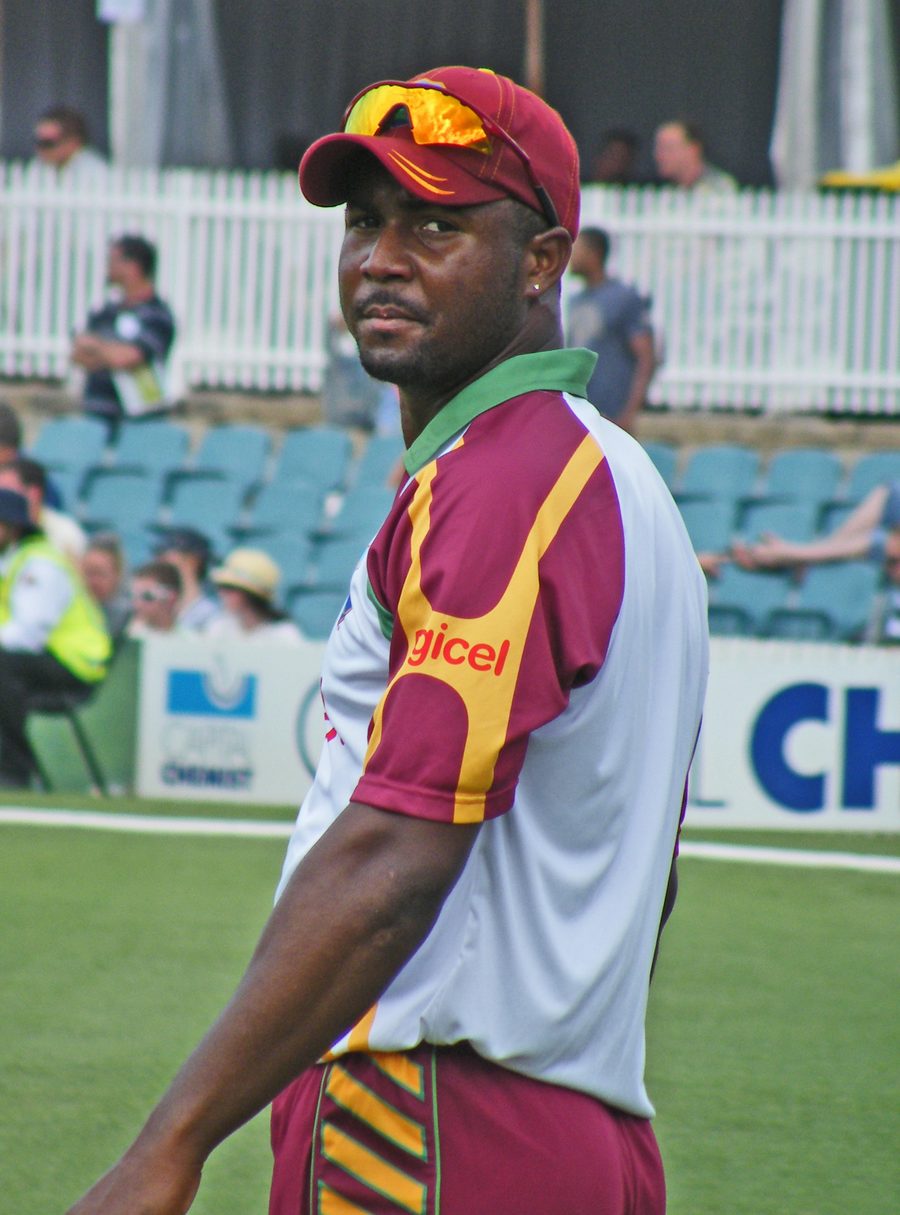
Dwayne Smith played 105 one-day internationals for West Indies and averaged 18.57. In ten Tests he averaged 24.61. Across thirty-three T20 internationals he made 582 runs at 18.18. Those are the numbers of a man selectors kept picking out of hope, and by any conventional reading they describe a career that did not work.
He also scored 2,385 runs in the IPL at a strike rate of 135, opened the batting for a Chennai side that reached a final, top-scored in a Caribbean Premier League final, and was for a stretch of about four years one of the most feared new-ball batters in franchise cricket anywhere. The gap between those two records is not a curiosity. It is a fairly precise account of what T20 leagues did to careers that international cricket had already filed away.
The debut that set the wrong expectation
Dwayne Smith announced himself in the most misleading way available. On Test debut against South Africa in January 2004, aged twenty, he made 105 not out in the second innings — the eleventh West Indian to score a hundred in his first Test. He bowled right-arm fast-medium at a decent clip. He fielded like a man who had never considered the possibility of the ball beating him. The obvious conclusion, in a West Indies side badly short of both batting and seam, was that a genuine Test allrounder had arrived.
He played nine more Tests. The hundred remained his only one, and the batting average settled at 24.61 with seven wickets to go beside it. The one-day career ran far longer and told a similar story more slowly: 105 matches spread across a decade, 1,560 runs at 18.57, and 61 wickets at a cost that made him a useful fifth bowler rather than a fourth. There is a five-wicket haul in there, 5 for 45, which is more than most part-timers manage. There is no innings anyone remembers.
The reason is worth naming because it is the hinge of the whole career. Smith was used, almost throughout his international life, as a lower-middle-order allrounder — a number six or seven who bowled a few overs. That job requires either patience with the tail or the ability to accelerate from a standing start against an old ball and a set field. Smith had neither. What he had was an exceptional eye, immense bat speed through the line, and a game built for the first fifteen deliveries of an innings when the field is up and the ball comes on. West Indies spent a decade asking him to do the opposite of the thing he was good at.
The franchise circuit works it out
Franchise cricket found the answer, and it found it more or less by accident, because franchise cricket runs enough matches and enough auctions that most players eventually get tried in most positions.
Smith's IPL career began at Mumbai Indians in 2008 with three innings and 45 runs, and continued in the sort of disjointed fashion typical of an overseas squad player: eight innings for Deccan Chargers in 2009, three in 2010, then nothing at all in 2011. The 2009 season is the first hint of what was coming — 215 runs from eight innings at a strike rate of 162.9, with fifteen sixes, which is a lot of sixes for a man who did not reach fifty once.
Back at Mumbai in 2012 he made 157 runs from six innings, including an 87 that remained his highest score in the tournament. In 2013 he played a full season for the first time: thirteen innings, 418 runs, four fifties. He was twenty-nine, nine years into his international career, and had just had the best T20 season of his life.
Chennai, 2014, and the job he should have had all along
Chennai Super Kings bought him for 2014 and did the thing nobody had done: they opened with him, alongside Brendon McCullum. It worked immediately and it worked for two years.
Smith scored 566 runs in sixteen innings in 2014 at a strike rate of 136, with five half-centuries and thirty-four sixes — Chennai's leading run-scorer in a season that ended in the qualifiers, and the most productive campaign of his career in any competition. The partnership with McCullum was the point of it. Two batters who both attacked the new ball, neither of whom had any interest in playing themselves in, produced a powerplay that started matches at a run rate most sides were still trying to reach by the tenth over. He followed it with 399 runs in 2015, a season in which Chennai reached the final.
The 2016 and 2017 seasons came at Gujarat Lions, and they contain the most extreme version of the method: 324 runs at a strike rate of 146.6 in the first, and 239 at 153.2 in the second. He was thirty-four in that last season and striking at a rate he had never approached in his twenties.
The complete IPL record is 2,385 runs from 88 innings at 28.39, strike rate 135.2, with seventeen fifties and 117 sixes. There is no century in it, and the average is not high. What the numbers describe is a batter who did one job, at high volume, at a tempo that made the job worth doing — and it is worth noting how much better that average is than either his ODI or T20I figure while the scoring rate is roughly forty runs per hundred balls faster. The difference between average and strike rate is usually a trade-off. In Smith's case, moving him up the order improved both at once, because the position finally matched the technique.
Barbados, and the trophy that came with it
The other half of the second career was in the Caribbean, where the CPL gave him a home side to open for. Smith played for Barbados Tridents from the competition's early years and was central to the 2014 title, top-scoring with 57 from 51 balls in a rain-affected final that Barbados won by eight runs at Warner Park. He returned to the franchise later in the decade, and filled the gaps in the calendar with spells at Sussex, in the Big Bash, and at Islamabad United in the Pakistan Super League.
He also holds a footnote that suits him better than most of his statistics: for years he had the highest career strike rate in T20 internationals on record, at 414.28, a number produced by facing a tiny number of deliveries and hitting almost all of them. It stood until Harry Brook passed it in 2023. It is a joke of a record, and it is also, in miniature, an exact description of what he did with a bat.
He was part of the West Indies squad that won the 2012 T20 World Cup, the first global trophy of the Caribbean's franchise-era revival, and he announced his retirement from international cricket in March 2017.
What the record actually shows
There is a standard way of telling this story that makes it a tale of wasted talent — the debut hundred, the decade of underachievement, the belated flowering. It is not quite right, because it assumes there was a single correct version of Dwayne Smith that West Indies failed to find and Chennai did.
The more accurate reading is that he was a specialist in a role that did not exist for most of his career. An opener whose entire value is the first six overs, who averages in the high twenties and strikes at 135, is a coherent and useful cricketer in Twenty20 and close to useless in a fifty-over middle order. Before about 2013 there was nowhere for that player to make a living except in the margins of a national side that kept trying to convert him into something else. The growth of the franchise leagues did not make him better. It created a job description that matched what he already was, and then paid him for it for five years.
Plenty of West Indian cricketers of his generation made the same journey more spectacularly. Chris Gayle, Dwayne Bravo and Kieron Pollard all built franchise careers that dwarfed their international returns, and all three did so as established stars. Smith is the more instructive case precisely because he was not one. He was an ordinary international cricketer with one unusual skill, and a system arrived that valued that skill highly enough to fund a decade of work. There are not many careers where you can point to the exact moment the sport changed shape around a player. Move Dwayne Smith to the top of the order and everything about him makes sense.