

Harbhajan Singh: The Series That Ended an Australian Era
Harbhajan SinghIndia
By CricketTaken EditorialPublished Player analysis7 min read
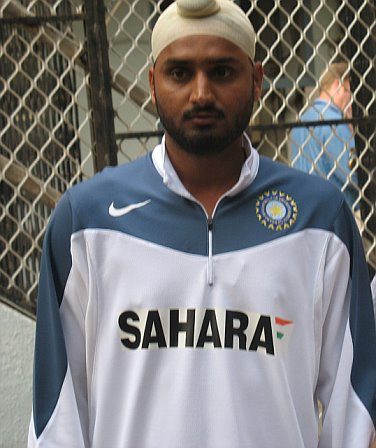
In February 2001 Australia arrived in India having won sixteen consecutive Test matches, a record that still stands, and with a settled view of themselves as unbeatable anywhere. They won the first Test in Mumbai inside three days to make it seventeen. Then a 20-year-old off-spinner from Jalandhar, playing because Anil Kumble was injured, took 32 wickets in the three matches at an average of 17.03, and Australia lost the series 2-1.
Harbhajan Singh played for another fourteen years and finished with 417 Test wickets, the third-most by an Indian. Almost none of the rest of it matters as much as those three weeks, and the reason is not sentiment. That series changed what India believed was available to them at home, and it did so through one specific technical fact.
What actually happened, Test by Test
The scale of it is easy to underplay because the numbers look implausible.
| Test | Venue | Figures |
|---|---|---|
| First | Mumbai | 4/121 |
| Second | Kolkata | 13/196 (7/123 and 6/73) |
| Third | Chennai | 15/217 (7/133 and 8/84) |
Thirteen wickets in one Test and fifteen in the next, against a batting order containing Steve Waugh, Ricky Ponting, Adam Gilchrist, Justin Langer and Matthew Hayden. The 8 for 84 at Chennai remains his best Test return. Two five-wicket hauls in each of the last two matches, delivered on the fourth and fifth days when a side already ahead in the series should have been closing it out.
In the Kolkata Test he also took India's first Test hat-trick, removing Ponting, Gilchrist and Shane Warne in successive deliveries. That match is remembered mostly for VVS Laxman and Rahul Dravid batting through an entire day, and rightly — the 281 and the 180 turned an innings deficit into a target. But India still had to bowl Australia out twice on a pitch that had already produced 445 in one innings, and Harbhajan took thirteen of the twenty available wickets to do it.
The technical reason it worked
Off-spin against a good side has one structural weakness: everything turns the same way, so a right-handed batter who plays with the spin and uses his pads can wait. The great off-spinners of the previous era answered that with drift, bounce and relentless accuracy. Harbhajan answered it with a delivery that turned the other way.
The doosra — an off-spinner's ball spun out of the back of the hand to leave the right-hander — was not his invention; Saqlain Mushtaq had established it in the 1990s. What Harbhajan did was bring it into a Test attack against the best batting side in the world at a point when almost nobody had faced it in a five-day match. The effect on a batter's forward defensive is straightforward and severe: if you cannot be certain which way the ball will go, you cannot commit your front pad, and if you cannot commit your front pad to an off-spinner on a turning pitch, you are batting on a considerably worse surface than the one you are actually standing on.
That is the mechanism behind 32 wickets at 17. It was not a mystery ball taking wickets on its own — plenty of his dismissals in that series were conventional off-breaks. The doosra made the conventional off-break dangerous by removing the batter's certainty about it, which is how variation works generally and how it worked in this case at an unusually high price to the opposition.
The delivery also drew him into the long argument about bowling actions that consumed off-spin for a decade, since the doosra is difficult to bowl inside the permitted degree of elbow extension. He was reported and cleared, and continued to bowl it, though he used it less as his career progressed and umpiring scrutiny tightened. The broader outcome of that argument — a formalised fifteen-degree tolerance applied across all bowlers — reshaped how spin bowling was policed for a generation.
What the rest of the career added
Harbhajan finished with 103 Tests, 417 wickets at 32.46, twenty-five five-wicket hauls and five ten-wicket matches. In one-day cricket he took 269 wickets at 33.35, and he took 25 in T20 internationals. He was in the side that won the 2011 World Cup and part of the 2007 T20 World Cup win before it.
The Test average of 32.46 is the number that provokes the most disagreement about him, and it should be looked at squarely. It is a good figure rather than a great one. Compared with the very best spinners of the same period it is a run or two adrift, and the reason is visible in the home-and-away split: his record in Australia, England and South Africa was substantially worse than his record in Asia, which is true of most finger spinners and truer of him than of some.
The partnership with Kumble is the fairer frame. For most of the 2000s India played two front-line spinners at home and the arrangement worked because they were different bowlers: Kumble fast, straight and relentless, Harbhajan slower, with more genuine turn and the ball that went the other way. Between them they made an Indian home Test a very specific and very unpleasant proposition, and the run of home series results in that period is the joint product. It is not a coincidence that his heaviest hauls came in the years when the other end was occupied by somebody a batter also could not score off.
The franchise career, which was longer than most remember
He played thirteen IPL seasons and took 150 wickets in 163 matches at 26.87, at an economy rate of 7.08 — computed from the ball-by-ball archive of every IPL match played through the 2026 season. That economy rate is the figure worth pausing on. Very few bowlers with more than 3,000 deliveries in the competition have conceded fewer than seven and a bit an over.
| Franchise | Wkts | Econ | Avg |
|---|---|---|---|
| Mumbai Indians | 127 | 6.96 | 26.65 |
| Chennai Super Kings | 23 | 7.67 | 25.30 |
Eleven seasons at Mumbai Indians produced 127 of those wickets, and his role there was almost entirely the middle overs: 2,370 of his 3,416 career deliveries came between the seventh and fifteenth overs, at an economy rate of 6.93. He was the containing bowler in a side that generally had somebody else to take wickets, and he did that job for over a decade in a competition that spent the whole period getting harder for spinners.
His best figures came at the Wankhede on 22 April 2011 — 5 for 18 against Chennai — and his best season was 2013, 24 wickets at an economy rate of 6.51, in the year Mumbai won their first title. He captained the side for a period, played on until 2021, and finished with 833 runs at a strike rate of 139.07, which is a better lower-order batting return than the 833 suggests.
The other thing he was known for
An account of Harbhajan that omits the temperament would be dishonest, because the temperament was part of the bowler. He was combative to the point of self-harm at times, and the most consequential incident of his career was the 2008 dispute with Andrew Symonds in Sydney, which produced a hearing, a suspension reduced on appeal, and a diplomatic row that came close to ending a tour.
The aggression was not decoration. Off-spin bowled defensively is easy to play, and Harbhajan bowled it as an attacking option almost regardless of the state of the match — appealing hard, standing his ground, changing his pace and angle rather than settling for a maiden. The same instinct that made him a difficult opponent made him a bowler who took thirteen wickets in a Test India was supposed to lose.
What the 2001 series is actually worth
The measure of it is what followed rather than what happened. Australia's sixteen-match run ended in Kolkata, and the notion that they could not be beaten went with it — inside eighteen months they had lost a series in India and been made to fight in England. India, meanwhile, established something they had not previously had: a settled expectation of winning at home against anybody, built on two spinners and a batting order that had just proved it could bat for two days when required.
Harbhajan was 20 and had played eight Tests before that series. He was picked as cover for an injured man and produced the best three-match return by an Indian bowler against Australia. Everything else in his career — the 417 wickets, the world titles, the thirteen IPL seasons — is a substantial career built on top of a fortnight in which he changed a much larger thing than his own prospects.
For the full career figures across all formats and franchise seasons, see the Harbhajan Singh profile. His Test, ODI and T20I figures here are published career totals; the IPL phase and franchise splits were computed from the ball-by-ball archive through the 2026 season, taking overs seven to fifteen as the middle phase.