

David Warner and Newlands 2018: The Ball-Tampering Ban
David WarnerAustralia
By CricketTaken EditorialPublished Player analysis8 min read
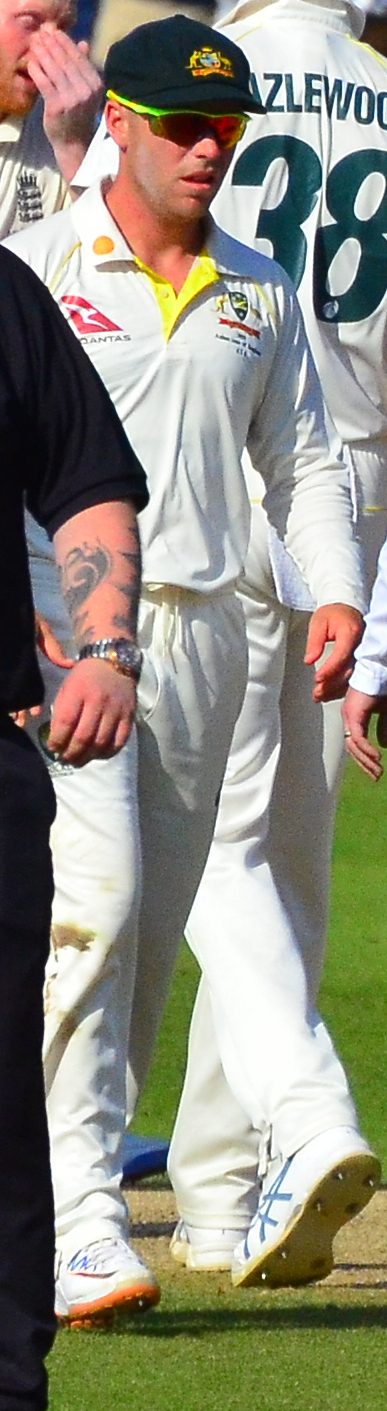
On the third day of the third Test between South Africa and Australia at Newlands in March 2018, television cameras followed Cameron Bancroft as he took an object from his pocket and worked it against the ball. Within two hours the match had become a governance story, and within a week three Australian cricketers had been suspended by their own board. David Warner received the heaviest sanction of the three. What follows sets out what was established, what was imposed, and what he did with the six years of playing career that remained.
A series already running hot
Newlands did not happen out of a clear sky. The four-Test series had been ill-tempered from its first week, and Warner had been at the centre of much of it. During the opening Test at Durban, stump microphones and CCTV captured a confrontation between Warner and Quinton de Kock in a stadium stairwell, after which Warner was fined and both boards issued statements. The provocation, by most accounts, involved remarks about Warner's wife, and sections of South African crowds spent the rest of the tour amplifying the theme, some arriving in masks intended to continue the taunt.
The second Test at Port Elizabeth brought a dispute of a different kind: Kagiso Rabada was banned for making shoulder contact with Steve Smith, then cleared on appeal and restored for Newlands, a reversal Australia's camp publicly resented. By the time the teams reached Cape Town, the series was level at 1-1, both dressing rooms considered themselves the aggrieved party, and the officiating, the crowds and the players had been in open friction for a fortnight. None of that excuses what followed — Cricket Australia's own findings did not treat it as mitigation — but it is the atmosphere in which a group of players persuaded themselves that sandpaper was a reasonable idea.
The passage of play
Australia were in the field on 24 March. The ball was 43 overs old and reverse swing was the obvious objective on a dry Cape Town surface. Broadcast footage showed Cameron Bancroft, the junior member of the side, applying a piece of sandpaper to one side of the ball and then, when the umpires approached, removing a cloth from his trouser pocket and offering it for inspection.
At the close of play Bancroft and the captain, Steve Smith, gave a press conference. Smith said a plan had been discussed by a group of senior players during the lunch interval and that he had known about it. Bancroft's initial account described the object as tape with granules attached; he corrected this later to sandpaper. Neither said at that stage who had originated the plan.
Cricket Australia sent its head of integrity to South Africa the following day. The ICC's own sanction, imposed under its code, was comparatively light: Smith was banned for one Test and Bancroft fined. The Australian board's response was on a different scale.
The charges and the sanctions
Cricket Australia's investigation concluded within four days. Warner was charged with developing the plan to alter the condition of the ball, instructing a junior player to carry it out, and failing to report it voluntarily. He was suspended from international and Australian domestic cricket for twelve months. He was also declared permanently ineligible to hold a leadership position in an Australian team, which was the part with no fixed end date.
Smith received a twelve-month suspension and a two-year ban from leadership. Bancroft received nine months. The head coach, Darren Lehmann, was not charged, and resigned during the final Test of the series. All three players accepted their sanctions rather than contesting them at a hearing, and all three gave separate press conferences in Australia in the days that followed.
The distinction the board drew between the three cases mattered a good deal afterwards. Smith's leadership ban expired and he later captained Australia again. Warner's did not expire, and the difference in the two outcomes became a recurring subject in Australian cricket for the next five years.
What the sanction cost beyond the matches
The playing ban was the visible penalty; the financial and professional one was considerably wider. Warner lost the captaincy of Sunrisers Hyderabad, and the Indian board then barred both him and Smith from the 2018 IPL entirely, which removed the most lucrative contract either held. Personal sponsors ended their arrangements within days, and one of Cricket Australia's own major sponsors withdrew from the governing body itself — a reminder that the commercial damage ran in every direction at once.
The press conferences in Australia were their own chapter. Smith broke down in front of the cameras with his father beside him. Warner's, in Sydney on 31 March, was more controlled and more guarded: he apologised, accepted responsibility for his part, declined to answer questions about who else knew what, and said he had to accept that he might never play for his country again. The refusal to elaborate was widely criticised at the time. It also never changed — in the years afterwards, as team-mates and officials produced memoirs and interviews, Warner remained the member of the three who said least about the mechanics of what happened in that dressing room, and the fullest account of Newlands has still never come from the man given the heaviest sanction for it.
The year out
Warner spent the suspension playing grade cricket in Sydney and a season of club cricket in Canada and the Caribbean, none of it under Cricket Australia's jurisdiction. He was 31 when the ban began and 32 when it ended, an age at which most batters are managing a decline rather than restarting. He also lost the 2018 IPL season, a Test summer at home and a full year of one-day cricket.
Cricket Australia commissioned an independent review of its own culture, which reported in late 2018 and was critical of the environment the board had built around the men's team. That review did not alter any of the sanctions. Its practical effect was to shift part of the public discussion from the three players to the organisation, which is a shift that took most of a year to happen.
Coming back through Hyderabad
The suspension ended in late March 2019, and Warner's first competitive cricket was for Sunrisers Hyderabad. He made 692 runs in twelve innings in the 2019 season at an average of 69.2, with a hundred and eight fifties, and took the Orange Cap. It is the highest average of his franchise career and it came in his first month back.
He then went to the 2019 World Cup and made 647 runs, finishing one behind Rohit Sharma's 648 as the tournament's leading scorer. English crowds booed him at every ground. The batting was noticeably slower than his usual one-day method, particularly early in the tournament, and he was criticised for it at the time; Australia reached the semi-final and lost to England at Edgbaston.
Six months later came the 335 not out at Adelaide. Within a year of returning he had made more runs than in any equivalent period before the ban.
Dubai, 2021
The 2021 T20 World Cup is the strangest entry in the record. Warner arrived in the United Arab Emirates having been removed as Hyderabad's captain mid-season and then left out of the side altogether. He was, on any reading of his recent scores, out of form.
He made 49 in the semi-final against Pakistan and 53 in the final against New Zealand, and was named Player of the Tournament. Australia chased 173 in Dubai with seven balls to spare, Mitchell Marsh making 77 not out and taking the match award. It was Australia's first men's title in the format, and the side that won it had been widely written off before it started.
The leadership ban, and the review that stalled
The permanent ban on holding a leadership role outlasted the playing suspension by years, and the process for revisiting it became a dispute in its own right. Cricket Australia amended its code of conduct in late 2022 to allow sanctions of that kind to be reviewed. Warner applied, and then withdrew the application in December 2022, objecting to the format of the hearing and to the prospect of the case being re-argued publicly.
The episode is a reasonable illustration of how the original decision had been constructed. A sanction with no expiry requires a mechanism to lift it, and the mechanism that existed put the player back in front of a public process four years after he had accepted the finding without contest. Whatever view one takes of the original penalty, the design of the exit from it was not straightforward.
Two endings, and a third
Warner retired from one-day internationals at the end of the 2023 World Cup, which Australia won in Ahmedabad. He had made hundreds against Pakistan and the Netherlands in the group stage, both at a tempo closer to his pre-2019 batting than anything he had produced in England four years earlier.
The Test career ended at Sydney in January 2024 with a fourth-innings 57. The Twenty20 international career ended after the 2024 T20 World Cup, where Australia went out in the Super Eight stage and Warner played the last of his matches in St Lucia. Three formats, three separate exits, all inside eight months.
The Thunder years, and the state of the record
Since then he has played franchise cricket, including a return to Sydney Thunder in the Big Bash League. In the 2025-26 season he made 130 not out and 110 not out in separate matches, at 39, in a competition where a hundred is a rare event at any age.
The career divides cleanly at March 2018, and both halves are substantial. Before the ban: a Test opener with more than 6,000 runs, a limited-overs record among the best in the world, and a leadership role at both club and country. After it: three more years as Australia's first-choice Test opener, a 335, a World Cup, a T20 World Cup player-of-the-tournament award, and a permanent bar from captaining anything.
Newlands is the fact most people reach for first, and it is a real part of the record rather than a footnote to it. It is also, on the arithmetic of runs scored and matches won, not the largest part. Both of those statements can be made without either one cancelling the other. The full career figures are on the David Warner profile.