

Michael Clarke and the 2015 World Cup: A Title, Then Goodbye
Michael ClarkeAustralia
By CricketTaken EditorialPublished Player analysis8 min read
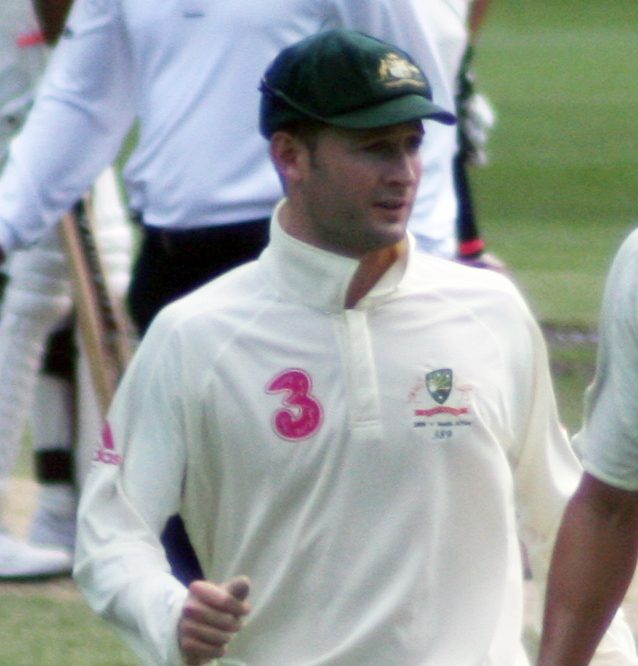
The last one-day international Michael Clarke played was a World Cup final at the Melbourne Cricket Ground, in front of more than 93,000 people, and Australia won it. He had announced the retirement the day before the game, which meant the whole country watched his final innings knowing it was his final innings. Very few careers are allowed to end like that, and for most of the preceding four months this one had looked like ending on a physiotherapist's table instead.
A hamstring, a surgeon and a deadline
Clarke's body had been an ongoing negotiation for years. A degenerative back condition had needed managing since his teens, and the hamstrings attached to it kept tearing. In December 2014, batting through obvious pain in Adelaide against India, he made 128 and then broke down completely while fielding, the hamstring going so badly that surgery was the only option. The operation came with a recovery window that ended, at best, somewhere in the middle of the 2015 World Cup.
Cricket Australia named him in the squad anyway, on the condition that he prove his fitness by a fixed date. It was an unusual arrangement for a captain, publicly negotiated, and it put a running clock on his rehabilitation. George Bailey led the side in the opening win over England at the MCG while Clarke watched. The second group match, against Bangladesh in Brisbane, was washed out without a ball bowled. Clarke returned for the third, against New Zealand at Eden Park, and satisfied the deadline with room to spare.
The Eden Park scare
That return match in Auckland was the tournament's best game and Australia lost it. Bowled out for 151 on a small ground, they reduced New Zealand to 146 for 9 through an extraordinary burst from Mitchell Starc, who took 6 for 28, before Kane Williamson ended it with a six. One-wicket defeats tend to be remembered by the losing side, and this one gave the campaign its useful bruise. Australia did not lose again.
The rest of the group stage was heavy scoring against Afghanistan, Sri Lanka and Scotland, and the quarter-final in Adelaide brought Pakistan and one of the great losing spells, Wahab Riaz's short-ball examination of Shane Watson. Australia wobbled and got through by six wickets. The semi-final at Sydney was more straightforward: Steve Smith made 105 against India, Australia posted 328 for 7, and the defending champions were beaten by 95 runs.
The final against New Zealand
The final on 29 March 2015 paired the two co-hosts, and it turned inside its first over when Starc bowled Brendon McCullum for a duck. New Zealand had played the tournament at full aggression and never recovered from losing its symbol so early. Grant Elliott's 83 held the innings together, but the last seven wickets fell for 33 and the total was 183. James Faulkner took 3 for 36 and was named man of the match; Mitchell Johnson took three as well.
Clarke walked in at 2 for 63 and played the kind of innings the situation asked for rather than the kind that decorates highlight reels: 74 from 72 balls, busy between the wickets, severe on anything short. He was bowled by Matt Henry with the scores nearly level, raised his bat to the ground on the way off, and watched Smith pull the winning boundary moments later. Australia had won a fifth men's 50-over World Cup, and their fourth in five tournaments going back to 1999. Starc's 22 wickets earned him player of the tournament.
The one-day player he had been
The final was the 245th ODI of a career that had started twelve years earlier, and the shape of that career explains why the ending felt earned rather than sentimental. Clarke came into the one-day side in 2003 as a scampering middle-order player with fast hands and faster feet, part of the generation being groomed to follow the champions of the early 2000s. He was in the squad that went through the 2007 World Cup unbeaten in the Caribbean, batting in a middle order so strong that his job was mostly to keep the scoreboard moving between other people's hundreds.
By the time the captaincy arrived in 2011 he had reshaped himself into the side's stabiliser, the No.4 who measured a chase and finished it. He was never the most explosive one-day batsman Australia had, and in the early Twenty20 years that counted against him; he gave up the shortest format entirely in 2011, reasoning that others did it better. What he offered instead was judgement. His ODI average sat in the mid-40s for most of his captaincy, built on placement, running and an unusual coldness about risk. His left-arm spin was a genuine fifth-bowler option for stretches, too, good enough to have once run through India on a turning Mumbai pitch in a Test match, and used more often than his modest figures suggest.
The other thing worth recording is how much one-day captaincy he did in hard times. He took the job weeks after the 2011 quarter-final exit, led through the rebuilding years when Australia briefly looked ordinary in the format, and carried the side back to No.1 in the rankings before the home tournament. The 2015 squad was not an accident of talent. Its batting order, its bowling depth and its habit of chasing hard had been assembled deliberately over four years.
A heavy summer behind the trophy
The context of that Australian summer should not be airbrushed out of the story. The World Cup began less than three months after Phillip Hughes, Clarke's close friend and former teammate, died after being struck while batting in a Sheffield Shield match. Clarke had been the public face of the game's grief, and the Test series against India that followed had been rearranged and played under a weight nobody involved pretended was normal. By February, cricket in Australia needed the tournament to feel like a celebration again, and slowly it did.
For Clarke personally, the sequence was brutal even before the emotion is counted: a eulogy in Macksville in early December, a hundred and a career-threatening injury in Adelaide the following week, surgery, and then a public fitness deadline to make a home World Cup. That he arrived at the final match-hardened and in form was a genuine feat of rehabilitation, and people inside the squad said later that the sight of the captain grinding through it set the tone for a group that had every excuse to drift. None of this needs embellishing. It is simply the backdrop against which the yellow confetti at the MCG has to be understood.
Why he stopped playing one-day cricket
The retirement announcement on the eve of the final surprised people mostly in its timing, not its substance. Clarke was 33, his ODI place had been questioned during the long injury absences, and the format's next World Cup was four years away. He said plainly that the team needed to rebuild its one-day side around younger players and that hanging on would get in the way. His one-day career closed at 245 matches and 7,981 runs, with the 2011 tournament quarter-final exit and this title as the two poles of his World Cup captaincy experience.
There was also the unspoken arithmetic of his body. Two formats were no longer sustainable, and Test cricket was the one he ranked higher. An Ashes tour began in England within months, and he wanted whatever the hamstring had left to be spent there.
The 2015 Ashes and the second goodbye
It did not go the way he intended. Australia arrived in England as favourites and lost the Ashes 3-2, the series effectively ending on the first morning at Trent Bridge when they were bowled out for 60 inside a session, Stuart Broad taking 8 for 15. Clarke's own form had been thinning for two years, the back and hamstring issues visibly shortening his footwork against the moving ball, and he averaged under 20 for the series. He announced his retirement from Test cricket immediately after Trent Bridge, before the dead rubber.
The farewell Test at The Oval was won by an innings, which mattered to him and to a dressing room that had lost three Tests in six weeks. He finished with 115 Tests, 8,643 runs at a fraction over 49, and 28 hundreds. Between the March final in Melbourne and the August handshake at The Oval, one of the defining Australian careers of its era had been switched off in two stages, five months apart.
Where the 2015 side came from
The team Clarke handed to Smith was in large part a team he and the selectors had assembled through difficult years. The pace attack of Starc, Johnson and Josh Hazlewood had been developed and protected through injuries. David Warner, promoted and persisted with despite early turbulence, was now the most destructive opener in the world game. Smith had been converted from a leg-spinning curiosity into the best batsman in it. The story of how Clarke inherited and rebuilt that side after Ricky Ponting's era is a separate one, told in the piece on his captaincy years, but the 2015 trophy was its dividend.
It is worth noting how short the gap was between triumph and transition. Within a year of the MCG final, none of Clarke, Johnson, Haddin, Watson or Rogers was still playing international cricket. World Cup wins often mark the end of a cycle rather than the middle of one, and this was a textbook case, something the longer sweep of Australian cricket history shows happening after 2007 as well.
The afterlife of a modern captain
Clarke's life after playing followed the modern pattern: commentary boxes, business interests, occasional headlines. What has aged well is the cricket itself. The 2015 campaign is now studied as a model of tournament management, a side that peaked in its last three games rather than its first three, with a captain who missed the start, absorbed a defeat in the middle, and was gone within days of the end.
His batting legacy rests more on the Test format, and above all on the extraordinary 2012 that included the unbeaten 329 at Sydney. But the image most Australians hold of him is from the MCG that March night, in canary yellow, out for 74 in a game that was already won. For a player whose career contained more friction with the public than most, it was an unusually clean ending, and he knew it at the time. He said afterwards that he had dreamed of finishing at the MCG in a World Cup final and had never believed it would actually happen. For once, the script held. Anyone tracing the modern shape of cricket in Australia starts more or less at that boundary rope.