

Yuvraj Singh's 2011 World Cup and the Comeback From Cancer
Yuvraj SinghIndia
By CricketTaken EditorialPublished Player analysis7 min read
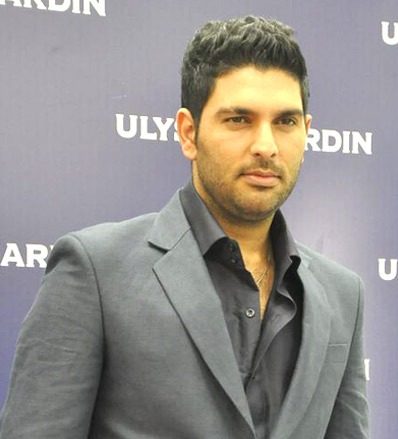
The most complete individual campaign in World Cup history was played by a man whose body was failing him, though neither he nor anyone watching knew how badly. Across the 2011 World Cup, Yuvraj Singh scored 362 runs, took 15 wickets with his left-arm spin, won four man-of-the-match awards and was named player of the tournament as India won the trophy at home. Through the back half of it he was coughing at night, vomiting between innings and sleeping badly, symptoms put down at the time to stress and the Indian summer. Within a year he was in a hospital in Indianapolis receiving chemotherapy for a tumour lodged between his lungs. Within eighteen months he was playing for India again. The two stories cannot be told separately, because the second is what retrospectively revealed the scale of the first.
The all-rounder India did not know it had
Yuvraj went into the 2011 tournament as a batter under scrutiny. His one-day place, secure for most of a decade, had wobbled through 2010 amid poor form and public questions about his fitness, and the selectors' faith in him for a home World Cup was not universally shared. What changed the shape of his tournament, and arguably the tournament itself, was the ball rather than the bat. India's four-bowler structure needed a genuine fifth option, and captain MS Dhoni used Yuvraj's slow left-arm not as a stopgap but as a full shift, ten overs most matches, through the middle of the innings.
The returns were absurd for a part-timer. Fifteen wickets made him India's second-highest wicket-taker for the tournament, behind only Zaheer Khan, whose 21 shared the tournament lead. Left-hand batters found his angle awkward; right-handers found nothing to hit. And because his overs came cheap, India's frontline attack could be held back for the phases that decided matches. The batting alone would have made his tournament. The bowling is what made it historic.
Five matches that built the reputation
The campaign's spine can be given match by match. Against Ireland in Bengaluru he took five wickets and then made an unbeaten fifty in the chase, becoming the first player in World Cup history to do both in the same match. Against the Netherlands he added another unhurried fifty in a low chase. Against the West Indies in Chennai, on a used pitch with the innings collapsing around him, he made 113, his only hundred of the event and the innings he later called the hardest of the five.
Then came the quarter-final in Ahmedabad against Australia, three-time defending champions. Chasing 261, India were 187 for 5 when the last recognised pair came together. Yuvraj finished 57 not out, having also taken two wickets, and his roar on hitting the winning boundary became one of the tournament's lasting images. In the semi-final against Pakistan at Mohali, his home ground, he was out first ball; he bowled ten tidy overs instead. The final at the Wankhede belonged to others, Gautam Gambhir's 97 and Dhoni's unbeaten 91 carrying the chase of 275, and Yuvraj was at the non-striker's end when the six that ended it disappeared over long-on. He fell to his knees in tears before the ball had landed. People assumed the emotion was about the trophy. It was, partly.
The diagnosis
The symptoms did not go away with the celebrations. Through the England tour that followed and into the winter, the coughing worsened, and scans eventually found a tumour in the mediastinum, the space between the lungs. The diagnosis, confirmed in early 2012, was a seminoma, a germ-cell cancer, malignant but among the more treatable forms of the disease. In February 2012 he began chemotherapy at a cancer institute in Indianapolis under Dr Lawrence Einhorn, the oncologist best known for treating the cyclist Lance Armstrong.
Yuvraj later wrote about the period with unusual candour: the hair loss, the vomiting, the flat terror of the first cycle, the appetite that disappeared and the weight that went with it. He also wrote about the 2011 tournament through its new lens. He had played the knockout stages of a World Cup, he now understood, with a growing tumour pressing on his chest, and the breathlessness he had blamed on nerves had been something else entirely. Doctors were careful to say the cancer had not been diagnosable from the outside during the tournament. That has never made the fact of it less extraordinary.
Ten months from chemotherapy to an India shirt
The comeback was fast enough to alarm some of the people managing it. The third and final cycle of chemotherapy ended in March 2012; by the summer he was training again; and in September 2012, ten months after his last international, he walked out at Chennai in a Twenty20 international against New Zealand to the loudest reception of his career. He hit a six that night. The selectors then took him to the 2012 T20 World Cup in Sri Lanka, where he played every match of India's campaign, batting in the middle order and bowling his full quota more often than not.
Sentiment played no part in the selection, whatever was said at the time. India's team management had watched him in the nets and concluded the skills were intact, and the tournament bore them out: useful runs, tidy overs, and fielding that showed no sign of the previous winter. What had changed was harder to measure. Team-mates from that squad describe a player who had stopped treating cricket as a source of anxiety, which for Yuvraj, whose relationship with his own talent had always been fraught, was a genuine alteration.
The long second act
The years after the comeback were a slow diminuendo rather than a restoration. He remained in and around the Twenty20 side through the 2014 T20 World Cup in Bangladesh, where his 11 from 21 balls in a losing final against Sri Lanka drew a level of public abuse, including stones thrown at his family home, that said more about the country's relationship with its cricketers than about him. He answered it the only way available. Recalled to the one-day side in January 2017, he made 150 against England at Cuttack, the highest score of his ODI career, at 35, sharing a stand of 256 with Dhoni that briefly made the clock seem negotiable.
It was a coda rather than a new chapter. The 2017 Champions Trophy was his last international tournament, and he retired from international cricket in June 2019, at a press conference in Mumbai in which he called cricket both the great love of his life and, in the 2014 aftermath, its cruellest teacher. His franchise career, which ran in parallel through record-breaking auctions and six clubs, is a separate story told in the account of his IPL years.
YouWeCan, and the work after the work
The most durable product of the illness is not a comeback statistic. In 2012 Yuvraj founded YouWeCan, a foundation focused on cancer awareness, early screening and treatment support for patients who cannot afford it, and he has run it with the persistence he once reserved for point-fielding. Its screening camps, concentrated in smaller Indian cities where late diagnosis is the norm, have reached hundreds of thousands of people. He has spoken plainly about why: his own cancer was caught late because a professional athlete with world-class medical access ignored symptoms for months, and the lesson generalises.
That work reframes how the 2011 story should be told. The standard version treats the tournament as the triumph and the illness as the obstacle overcome. Yuvraj's own version, repeated in interviews for over a decade, runs closer to the reverse: the cancer taught him what the cricket was for.
Where the campaign stands
Judged purely as cricket, the 2011 tournament remains the benchmark for all-round performance at a World Cup: no other player has combined 300 runs and 15 wickets in a single edition, and none has won four match awards in one campaign en route to a title. Judged as a chapter in Indian cricket's longer history, it completed the arc that began with his teenage announcement at the 2000 ICC Knockout and ran through the 2007 Twenty20 title, where his six sixes at Durban, covered in the story of that fortnight, had made him the face of the format's arrival.
Between those two world titles, Sachin Tendulkar finally got his World Cup, Dhoni got his defining six, and Gambhir got his 97. Yuvraj got the player-of-the-tournament award and, within a year, a diagnosis that turned the whole campaign into something no scorecard captures: the best month of cricket of his life, played by a body that was quietly betraying him, followed by the harder, slower, less televised innings of getting well. Indian cricket has produced more prolific players. It has not produced a stranger or more complete act of will. His full record sits on the Yuvraj Singh profile.