

Yuvraj Singh's Six Sixes and the 2007 T20 World Cup
Yuvraj SinghIndia
By CricketTaken EditorialPublished Player analysis7 min read
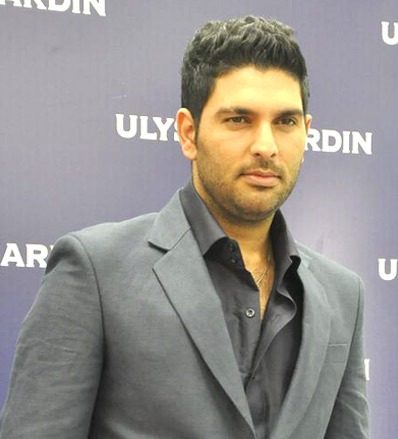
On 19 September 2007, in the eighteenth over of a group match at Kingsmead in Durban, Yuvraj Singh hit every ball of a Stuart Broad over for six. Thirty-six runs from six legal deliveries, a fifty reached in twelve balls, and a piece of cricket that has been replayed more often than most entire tournaments. It happened at the first T20 World Cup, an event India's board had resisted for years and entered almost reluctantly. Within a fortnight India were world champions in a format they had barely played, and within seven months the country had a franchise league built on the appetite that September created.
A tournament nobody in India rated
The context matters, because the over did not arrive in a match anyone expected to remember. Twenty20 had been invented in England in 2003 to fill county grounds on weekday evenings, and India's administrators wanted nothing to do with it. When the ICC scheduled the inaugural World Twenty20 for South Africa, the selectors sent a squad without Sachin Tendulkar, Rahul Dravid or Sourav Ganguly, and handed the captaincy to a twenty-six-year-old MS Dhoni who had never led India at a global event.
Yuvraj was twenty-five and, by then, an established one-day cricketer of seven years' standing. He had announced himself as a teenager with 84 against Australia at the ICC Knockout in Nairobi in 2000, and had played the innings of the 2002 NatWest final at Lord's, where he and Mohammad Kaif hauled India to 326. What he had never quite been was the main event. In September 2007 that changed in the space of about four minutes.
A strange, short group stage
India's route to Durban had already produced one of the odder results in the sport's history. The group meeting with Pakistan finished as a tie, and under the tournament's playing conditions the deadlock was resolved by a bowl-out: five players from each side bowling at an unguarded set of stumps. Three Indians hit, three Pakistanis missed, and the method was quietly retired from world tournaments soon afterwards. Elsewhere Zimbabwe beat Australia in the second match of the competition, Sri Lanka posted 260 against Kenya, and Brett Lee took the format's first international hat-trick. Twelve teams played the whole event in thirteen days across three grounds, a schedule so compressed that form barely had time to exist.
That compression suited India. A young side with no reputation in the format could not be worn down over weeks, and Dhoni's captaincy, improvised and unusually calm, kept a group of players loose in a way Indian teams of that era rarely were. Robin Uthappa, Rohit Sharma and the seamers RP Singh and Sreesanth all had moments that would have defined a lesser fortnight. The England match arrived with India needing a win to stay alive in the Super Eight stage, which is the detail the highlight reels never mention: the six sixes were struck under genuine elimination pressure, not in a dead rubber.
Flintoff first, then Broad
The over had a preamble. In the seventeenth over of India's innings Andrew Flintoff and Yuvraj exchanged words, the sort of routine needle that usually evaporates by the next delivery. It did not evaporate. Yuvraj said later that the exchange left him furious, and the England captain's decision to give the next over to Broad, then a twenty-one-year-old in his first year of international cricket, put a young bowler in front of a senior batter who had just been provoked.
The six blows went to six different parts of Durban. The first was swung hard over cow corner, the second flicked off the pads and deposited behind square leg, the third lofted inside-out over the covers. The fourth, a full toss, was steered up and over backward point, a stroke almost nobody in 2007 played deliberately. The fifth was the biggest of the lot, launched over midwicket, and by the sixth ball everyone in the ground knew what was coming, including Broad, which made no difference. Six sixes in an over had been done in first-class cricket by Garry Sobers and Ravi Shastri. Nobody had done it in an international.
Twelve balls to fifty
The over tends to obscure the innings around it. Yuvraj reached his half-century from twelve deliveries, which remains the fastest fifty in Twenty20 internationals nearly two decades later. He finished with 58 from 16 balls, India closed on 218 for 4, and England fell 18 runs short despite a genuine chase. The margin is worth dwelling on: had England won, the over would be a footnote in a defeat, the way most individual pyrotechnics in group matches are. Instead it became the tournament's signature.
It also rearranged the popular understanding of what the format allowed. Fifty-over cricket had taught a generation that 36 runs was a reasonable return for five overs. Yuvraj had taken them from one, off an international attack, in a match that mattered. Every argument about Twenty20 being a lottery or a slog suddenly had to account for the fact that the man who had just dismantled England was one of the cleanest strikers of a cricket ball alive, doing something that plainly involved skill.
Seventy off thirty against Australia
Three days after Durban, India met Australia in the semi-final at the same ground, and Yuvraj played what he always maintained was the better innings. Australia in 2007 were the best limited-overs side in the world, holders of three consecutive fifty-over World Cups. Yuvraj took 70 from 30 balls off an attack containing Brett Lee, Mitchell Johnson and Stuart Clark, driving India to 188 for 5. Australia kept coming and finished 15 runs short.
The semi-final innings had none of the novelty of the six sixes and nearly all of the substance. It came against better bowling, in a knockout, with a final at stake. Between the two performances Yuvraj had scored 128 runs from 46 balls across the business end of a world tournament, and India had beaten England and Australia in the space of four days.
The final, and five runs at the Wanderers
The final on 24 September paired India with Pakistan, who they had already met once in the group stage in a tie settled by a bowl-out. Gautam Gambhir made 75 from 54 balls in a total of 157 for 5 that looked light. Irfan Pathan took three wickets in the middle of the chase and was named man of the match, but Misbah-ul-Haq dragged Pakistan to within a stroke of the title before scooping Joginder Sharma to short fine leg. India won by five runs, and a squad picked almost casually had delivered the country's first world title since 1983.
Yuvraj's own final was quiet, 14 from 19 balls, which is a useful reminder of how tournament reputations actually work. His two eruptions had carried India through the group and the semi-final; others finished the job. The rivalry with Pakistan gave the occasion a weight no other pairing could have provided, and the trophy did the rest.
What the over did to the sport
The Board of Control for Cricket in India had voted against Twenty20 for four years. Six months after Johannesburg it launched the Indian Premier League, and the economics of cricket reorganised themselves around the short format almost immediately. Yuvraj was made one of the marquee names of the inaugural 2008 season, leading Punjab to the knockouts and striking at 162 across the campaign. The full arc of his franchise career, including the record auction prices that followed, is traced in his IPL story.
Broad's side of the story deserves its own paragraph. He was twenty-one, and an evening like that has ended careers. Instead he became one of England's great fast bowlers, took more than 600 Test wickets, and was part of the England team that won this same tournament in 2010. He spoke about the over often and without self-pity, which is roughly the only dignified way to carry it. The bowler at the wrong end of cricket's most famous over retired with a career that dwarfed most of the batters who never suffered one.
Where the fortnight sits in Yuvraj's career
The 2007 tournament made Yuvraj a Twenty20 icon, but it was in some ways a preview rather than a peak. Four years later he produced the most complete all-round campaign a World Cup has seen, taking the player-of-the-tournament award as India won the 2011 fifty-over World Cup at home, an achievement covered in the story of his 2011 and what followed. He was also there in 2012, back in India's T20 side for the World Cup in Sri Lanka within months of finishing chemotherapy.
The six sixes remain what strangers ask him about, and he has generally been gracious about that, while gently insisting that the Australia semi-final and the 2011 tournament were better cricket. Both things are true. The over was not the best thing Yuvraj Singh ever did, but it is the moment his sport changed shape, and he is the only player in men's international cricket who can say the format's arrival in India is dated, precisely, to six swings of his bat. His full record across formats is on the Yuvraj Singh profile.