

Michael Clarke's 329 Not Out and the Golden Year of 2012
Michael ClarkeAustralia
By CricketTaken EditorialPublished Player analysis8 min read
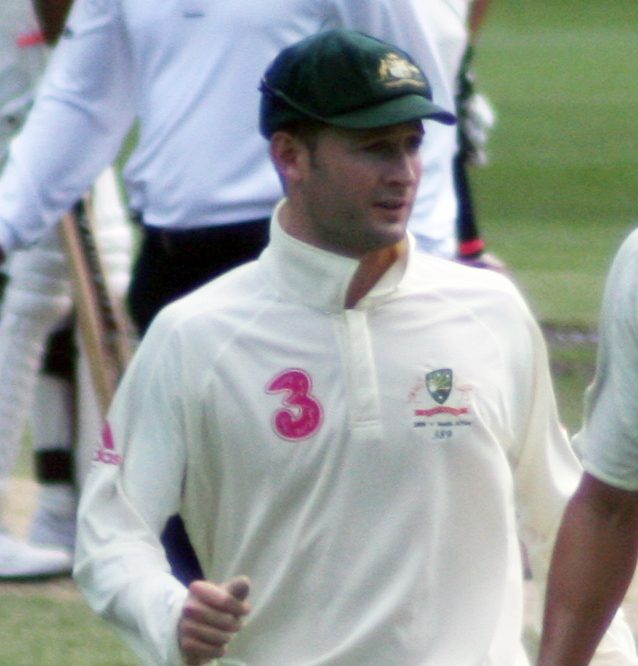
On the second evening of the Sydney Test of January 2012, Michael Clarke was 251 not out against India and nobody in the ground wanted to go home. By tea on day three he had 329, Australia had 659 for 4, and he declared, on himself, with Brian Lara's world record 71 runs away and two full days left in the match. The declaration told you as much about the batsman as the innings did. The innings, though, was the start of something without precedent: a calendar year in which one man passed 200 four times in Test cricket.
Sydney, January 2012: the 329 not out
The context makes the score stranger. Clarke came to the crease at 3 for 37 on the first afternoon, against an Indian attack fresh from bowling Australia out cheaply in patches during the Melbourne Test. He was also a captain under scrutiny, eight months into the job, leading a side that had been humiliated 3-1 at home by England the previous summer. What followed was three sessions of repair and then four sessions of accumulation so untroubled that the bowlers visibly stopped believing a wicket was coming.
He added 288 with Ricky Ponting, who made 134 in his first hundred for almost two years, and then an unbroken 334 with Michael Hussey, who finished 150 not out. The 329 came from 468 balls with 39 fours and a single six, and it was, at the time, the highest Test score ever made at the Sydney Cricket Ground. Only Matthew Hayden's 380, Mark Taylor's 334 not out and Don Bradman's 334 stand above it on Australia's all-time list, and Taylor's is the comparison Clarke invited: a captain declaring on himself with a landmark in reach, putting the match ahead of the number. Australia won by an innings and 68 runs and took the series 4-0.
Asked about stopping short of Lara's 400, Clarke's answer was that the win mattered more and the weather might not hold. It became one of the era's small ethical set pieces, praised and picked over in equal measure. What is rarely disputed is that the innings changed how he was seen. Before Sydney he was a very good batsman with a complicated public image. After it he was the best batsman in the country, and the argument was over.
Adelaide, and a first pair of doubles
Three weeks later, in the fourth Test of the same series at Adelaide, he made 210. It is the forgotten double of the four because the series was already decided, but it lifted his series aggregate against India to 626 runs and confirmed that Sydney had not been a freak of a flat pitch. Ponting made 221 in the same innings; the two of them put on 386 for the fourth wicket. Australia's 4-0 result closed the home summer with the captain averaging 125 for the series.
The technical signature of that summer is worth recording, because it is what made the year possible. Clarke had always been a beautiful player of spin, quick-footed and light-handed. What changed under his captaincy was the discipline outside off stump: fewer flirts at wide balls early, a tighter base against pace, and a willingness to score square of the wicket off the back foot rather than force drives. He batted at No.5, which meant he did his best work with the ball forty overs old, and in 2012 he simply refused to give a start away.
Brisbane and Adelaide again: South Africa, November 2012
The real test of the golden year came in November, when the world's No.1 side arrived with Dale Steyn, Morne Morkel and Vernon Philander. At the Gabba, Clarke made 259 not out, sharing a huge stand with Ed Cowan, whose 136 was his maiden Test hundred. At Adelaide two weeks later he made 230, this time dominating a 272-run partnership with David Warner, who made 119 at better than a run a ball. Two double centuries in consecutive Tests against the best attack in the world, both made at better than a healthy tempo, both setting up declarations.
No other player has scored four Test double hundreds in a calendar year. Bradman never did it; nobody managed it in the decade of flat pitches that followed either. Clarke's 2012 closed with 1,595 Test runs at an average a little above 106, and he was named as the leading cricketer in the world by the sport's oldest almanack the following spring. The series against South Africa was nevertheless drawn and then lost in Perth, a reminder that one batsman, even at this pitch of form, does not decide everything, and that the side around him was mid-rebuild, a story covered properly in the piece on his captaincy after Ponting.
What made 2012 possible
Three things converged. The first was health: for one blessed stretch, the degenerative back that shaped his career behaved, and the hamstrings held. Clarke's movement in 2012, particularly his skip down the pitch to spin and his back-foot punch, was that of a player briefly free of his own body.
The second was the captaincy itself. Some players shrink under it. Clarke, whose form had dipped badly in 2010 and early 2011 while his private life fed the tabloids, seemed to be simplified by responsibility. Batting became the one uncomplicated part of his day. Teammates from that period describe a batsman who trained less than he once had and concentrated better.
The third was role clarity. With Ponting and Hussey still in the side, Clarke at five could counter-attack rather than survive. Both retired within a year, Ponting after that South Africa series and Hussey after the home summer, and Clarke was never again as protected. His average as the side's senior batsman from 2013 onwards fell back into the 40s, decent and no longer supernatural.
The four doubles side by side
| Match | Venue | Month | Score | Result |
|---|---|---|---|---|
| 2nd Test v India | Sydney | January 2012 | 329* | Won by an innings |
| 4th Test v India | Adelaide | January 2012 | 210 | Won by 298 runs |
| 1st Test v South Africa | Brisbane | November 2012 | 259* | Drawn |
| 2nd Test v South Africa | Adelaide | November 2012 | 230 | Drawn |
Laid out like that, two patterns emerge. The first is that Clarke was not converting flat-pitch marathons into padding: every one of the four was the innings around which the match was built, and two of them were unbeaten because he was declaring, not because partners ran out. The second is the tempo. None of the four crawled. The 230 at Adelaide came at close to four an over during its middle stretch, because Warner's assault at the other end had knocked the South African plans sideways and Clarke saw no reason to let them reset. He was, by the measures kept at the time, among the faster-scoring No.5s in the world that year without offering a chance until deep into each innings.
The one blemish the year allowed was Perth, the decider against South Africa, where he made 34 and 44 and Australia were beaten by 309 runs as the tourists kept their No.1 ranking. It stung, and Clarke said so, because the batting of that November deserved a series win and the attack, missing its spearheads through injury at the wrong moment, could not close either Test out from ahead. Anyone weighing the golden year has to include that asterisk: a mountain of runs, one drawn series, one won against opponents in transition.
How the year compares beyond Australia
Calendar-year run records tend to belong to openers and No.3s who bat more often, which is what makes Clarke's 2012 unusual. His 1,595 runs came from only 18 innings, and the average of just over 106 is among the highest ever recorded by anyone scoring 1,500 in a year. Others have made more total runs in a calendar year, Mohammad Yousuf's 2006 aggregate chief among them, and Ricky Ponting twice passed 1,500 himself. Nobody else has stacked four scores of 200-plus into twelve months, and only a handful of players have ever managed three.
The innings also rewrote his relationship with Indian bowling in particular. Clarke finished his career with a fine record against India at home and a poor one in India, a split he shared with most of his generation. The 2011-12 series, in which he made 626 runs across the four Tests, was among the heaviest home scoring against India by any Australian since Bradman, and it set up the brief period in which Australia, England and South Africa traded the No.1 Test ranking among themselves while India rebuilt.
Where the innings sit in Australian batting history
Australia's triple centuries form a short and jealously guarded list, from Bradman's two 300s in the 1930s through Bob Simpson, Bob Cowper, Taylor and Hayden. Clarke's is the only one made by a serving captain against India, and the only one followed in the same year by three more scores of 200. Students of the history of Australian cricket tend to rank the 329 not out behind only Bradman's Headingley 334 among home triples, partly for the quality of the innings and partly for what it announced: the post-golden-generation team had found its batting anchor.
There is also a case that the Gabba 259 not out was the better innings. Zimbabwe-era flat tracks played no part; Steyn was at his peak; the match situation on the first day had been genuinely dangerous. Clarke himself reportedly leaned that way. Spectacle votes for Sydney, difficulty votes for Brisbane, and the year means never having to choose.
The decline that followed, and why the year still stands
By late 2013 the back had returned as a daily opponent, and by the 2013-14 Ashes whitewash Clarke was a fine player managing himself between spasms rather than a great one in flow. He still produced significant innings, notably a fighting hundred at Cape Town in 2014 against the short ball and the 128 in Adelaide in December 2014 that preceded his hamstring surgery and the World Cup comeback. But he never again made a Test double century after 2012, which gives the year its strange shape: four in twelve months, none in the rest of a 115-Test career.
That concentration is the point. Most batting peaks are spread across three or four years and smoothed into an average. Clarke's was compressed into one season of near-perfect health and form, witnessed end to end by home crowds, and bookended by ordinary numbers. It makes 2012 less a phase of his career than a separate, self-contained achievement, the way a single record album can sit apart from a musician's catalogue. For a generation of Australians who watched that summer, the sight of Clarke skipping out to the spinners at the SCG remains the standard against which stylish batting in Australian conditions gets measured.