

MS Dhoni's Captaincy Record Across All Three Formats
MS DhoniIndia
By CricketTaken EditorialPublished Player analysis9 min read
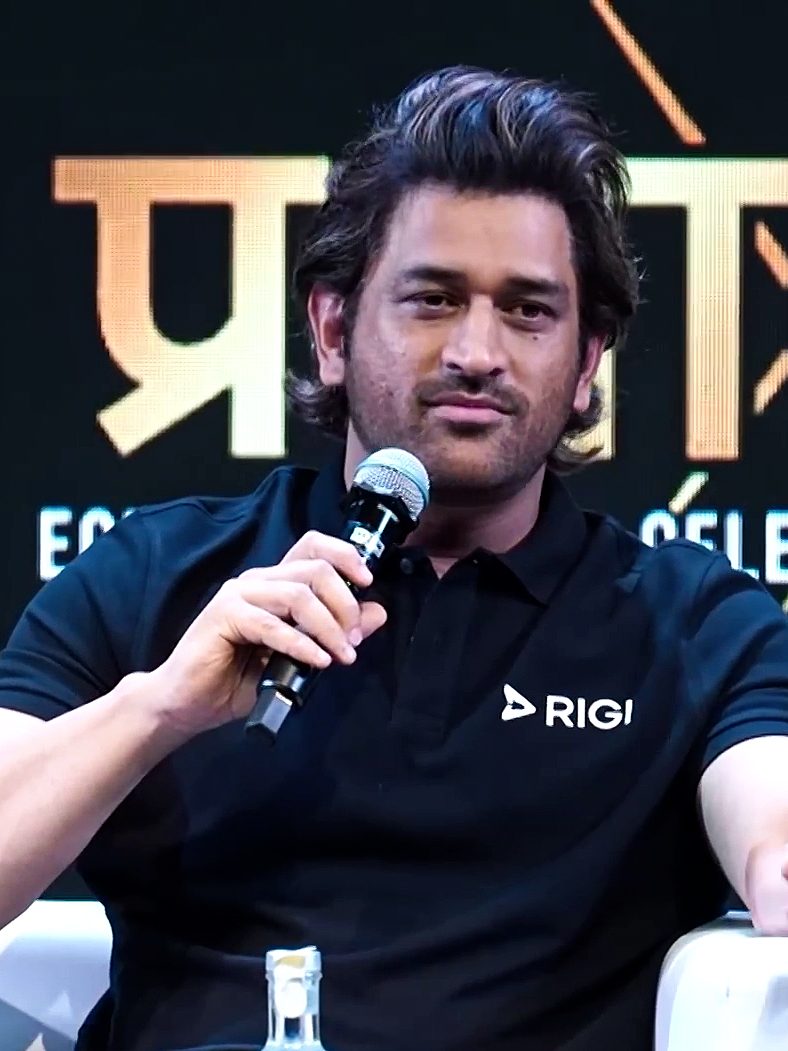
The job arrived by elimination. When the Board picked a squad for the first World Twenty20 in September 2007, the senior batters made themselves unavailable for a competition nobody took seriously, and the captaincy went to a 26-year-old wicketkeeper with three years of international cricket behind him. India won it. Within a year he was leading the side in all three formats, and he held at least one of those jobs for the next nine years.
The trophy record, and why it is unrepeatable
Three global men's titles, one in each format, remains a set no other captain has assembled. The 2007 World Twenty20 came first, with a squad whose average age was low enough that most of them had never played a Twenty20 international. The 2011 World Cup followed at home. The 2013 Champions Trophy completed it, in England, with a side that won all five of its matches and beat the hosts in a final reduced by rain to twenty overs a side.
| Final | Opponent | Venue | Result |
|---|---|---|---|
| 2007 World Twenty20 | Pakistan | Wanderers, Johannesburg | Won by 5 runs |
| 2011 World Cup | Sri Lanka | Wankhede Stadium, Mumbai | Won by 6 wickets |
| 2013 Champions Trophy | England | Edgbaston, Birmingham | Won by 5 runs |
Three points are worth making about that list. The first is that the margins were tiny: five runs at the Wanderers, five runs at Edgbaston, and a chase at the Wankhede that had been three down inside seven overs. The second is that they were won by three noticeably different teams, separated by six years, with only a handful of players common to the first and the last. The third is that in two of the three, Ravindra Jadeja or a comparable all-round option gave him a fifth bowler without costing a batter, which is the resource most limited-overs captains never have.
How he actually captained
The style was distinctive enough to describe. Dhoni set fields for the batter's likely error rather than for the bowler's plan, which sometimes meant a leg-side sweeper in the sixth over of a Test day and a fielder at short third for a batter who had shown no inclination to cut. He rotated bowlers in short bursts, often removing a bowler who looked to be settling. He almost never spoke to a bowler at length in the middle; the conversations were three or four words, and then he walked back.
He also trusted inexperienced bowlers with the decisive overs. Joginder Sharma bowling the last over of the 2007 final with Misbah-ul-Haq set is the example everyone reaches for, and the choice was defensible only on the reasoning Dhoni gave afterwards, which was that Harbhajan had bowled out and the alternative was a bowler the batter had been hitting. The habit persisted: young quicks bowling the nineteenth over in a semi-final, part-timers given a spell against a rebuilding partnership.
The corresponding weakness was a defensiveness that grew as the sides got weaker. From about 2012 he would set a ring field and defend singles for long periods in the middle overs of an ODI, on the theory that pressure produces wickets. Against good batting line-ups on flat pitches it produced accumulation instead. He was also slow to use the review system aggressively in its early years and unusually good at it later, having worked out faster than most captains that the technology rewarded conviction over consensus.
How the Test job arrived
The Test captaincy came to him the same way the Twenty20 job had: through an absence. Anil Kumble, who had taken over after the fractious 2007-08 tour of Australia, announced his retirement during the Delhi Test of the 2008 home series against Australia, with the series still alive. Dhoni, who had already stood in earlier in that series when Kumble was injured, led the side in the decider at Nagpur. India won it, took the series, and the arrangement was never revisited.
It is worth noticing how little resistance there was. Dhoni was a wicketkeeper from a state with no Test tradition, leading a dressing room that contained Tendulkar, Dravid, Laxman and Ganguly — four players with over a decade of seniority on him, one of whom played his farewell Test in that very series. The transition produced none of the friction that Indian captaincy changes had reliably generated for thirty years, partly because the seniors backed him and partly because he made no attempt to remake the side in a hurry. He inherited a great batting order in its final years and used it, which sounds obvious and is precisely what several of his predecessors' rivals had failed to do.
The 2008 tri-series, and a generational argument won early
Before any of the Test success came a decision that shaped the one-day side for five years. On the 2007-08 tour of Australia, Dhoni's white-ball squads began to shed senior players, and he was open about the reasoning: one-day cricket was increasingly decided by fielding and running, and he wanted a side that saved runs in the ring. The commodore-class outfielders went; the young legs came in.
The argument was settled by results. India won the CB Series finals against Australia in early 2008, beating the hosts in consecutive matches in Sydney and Brisbane with a young squad, Tendulkar making a hundred in the first final. A captain six months into the job had reshaped the one-day XI against considerable public sentiment and been proved right inside a season. Much of the freedom he enjoyed for the next eight years was purchased with that series.
The Test record: 60 matches, 27 wins, and the number one ranking
Dhoni captained India in 60 Tests and won 27 of them, which was a record for an India captain until Virat Kohli passed it. The peak was late 2009, when India reached the top of the Test rankings for the first time, having beaten Sri Lanka at home and drawn in South Africa. He led the side to home series wins against Australia, England, New Zealand and West Indies, and to an away win in New Zealand in 2009 that was India's first series victory there in four decades.
The home record was built on spin and on batting first. He had Harbhajan Singh and then Ravichandran Ashwin and Jadeja, a top order containing Tendulkar, Sehwag, Dravid and Laxman for the first half of his tenure, and pitches that took turn from day two. India won eight consecutive home Tests between 2012 and 2013 without ever needing a fast bowler to take more than two wickets in an innings.
The overseas collapse of 2011 and 2012
Then the away record, which is the reason the Test captaincy is argued about. India lost 4-0 in England in the summer of 2011, months after winning the World Cup, and 4-0 in Australia the following winter. Eight consecutive defeats abroad, against two sides who were themselves in transition, with an ageing batting order and a seam attack that could not keep a lid on the game for long enough.
Some of it was not Dhoni's fault. Zaheer Khan broke down in the first Test at Lord's and the attack never recovered its shape. Sehwag and Tendulkar were both past their best, Dravid alone made runs in England, and the schedule had brought a squad straight from a World Cup and an IPL season into a five-Test series in seaming conditions.
Some of it was. India persisted with a four-man attack that could not take twenty wickets, batted first when the conditions said otherwise, and set fields that conceded singles to keep the scoring rate down in matches where the scoring rate was not the problem. Dhoni's own answer, offered repeatedly, was that the bowling resources did not exist to do anything else. It was a reasonable defence and it did not entirely hold, because his successors took twenty wickets abroad with bowlers who had been available to him.
He retired from Test cricket abruptly in December 2014, in the middle of a series in Australia, announcing it after the drawn Melbourne Test and handing the job to Kohli for Sydney. The stated reason was the strain of the format; the timing suggested a man who had decided some months earlier.
The white-ball years after 2013
The one-day captaincy ran on for three more years and produced the strongest sustained results of his tenure without a trophy at the end. India reached the semi-finals of the 2015 World Cup, winning seven matches in a row before losing to Australia at Sydney, having gone into the tournament off a wretched summer in Australia. They reached the semi-final of the 2016 World Twenty20 at home, losing to West Indies at the Wankhede.
The Bangladesh group match of that tournament produced the piece of wicketkeeping most often replayed: with one run needed off the last ball, Dhoni took a glove off as he moved, gathered wide of the stumps and beat Mustafizur Rahman to the crease by a stride. It is a good illustration of a habit that ran through his captaincy. He had worked out where the run would come from before the ball was bowled and had already decided what he would do about it.
He stepped down from the limited-overs captaincy in January 2017 and continued as a player under Kohli for another two and a half years, keeping wicket, positioning the field from behind the stumps and offering advice that the television microphones picked up more often than the new captain probably wanted.
What the record adds up to
The volume deserves a line of its own before any verdict does. Dhoni led India in close to two hundred one-day internationals and more than seventy Twenty20 internationals on top of the sixty Tests, a workload no Indian captain before him had carried across three formats simultaneously, and he did it while keeping wicket in every match and batting in the hardest positions in the order. The physical arithmetic of that — squatting for fifty overs, then marshalling a chase — is the part of the captaincy that never appears in the win-loss columns.
The fairest summary is that Dhoni was an outstanding limited-overs captain and a good home Test captain who never solved the away problem. The three trophies are real and the eight defeats are real, and the attempt to make one of those facts cancel the other has occupied Indian cricket for fifteen years without much progress.
Two things about the tenure look better with distance. The first is the promotion of young players into pressure roles, which produced a generation who had already bowled a nineteenth over in a knockout match by the time they were established. The second is that he never publicly blamed a bowler, a selector or a schedule, and the dressing room he handed on was notably free of the factionalism that had marked the India sides of the previous decade. Anybody following the history of Indian cricket through its captains will find that unusual.
His franchise leadership at Chennai ran alongside all of it and lasted longer than the international job, ending with a fifth title in the 2023 season at the age of 41. Between them, the two records make him the most consistently successful captain the Indian game has produced, in a career that began because a group of senior players decided a Twenty20 tournament was not worth their time.