

MS Dhoni's CSK Record and the Wicketkeeping Behind It
MS DhoniIndia
By CricketTaken EditorialPublished Player analysis9 min read
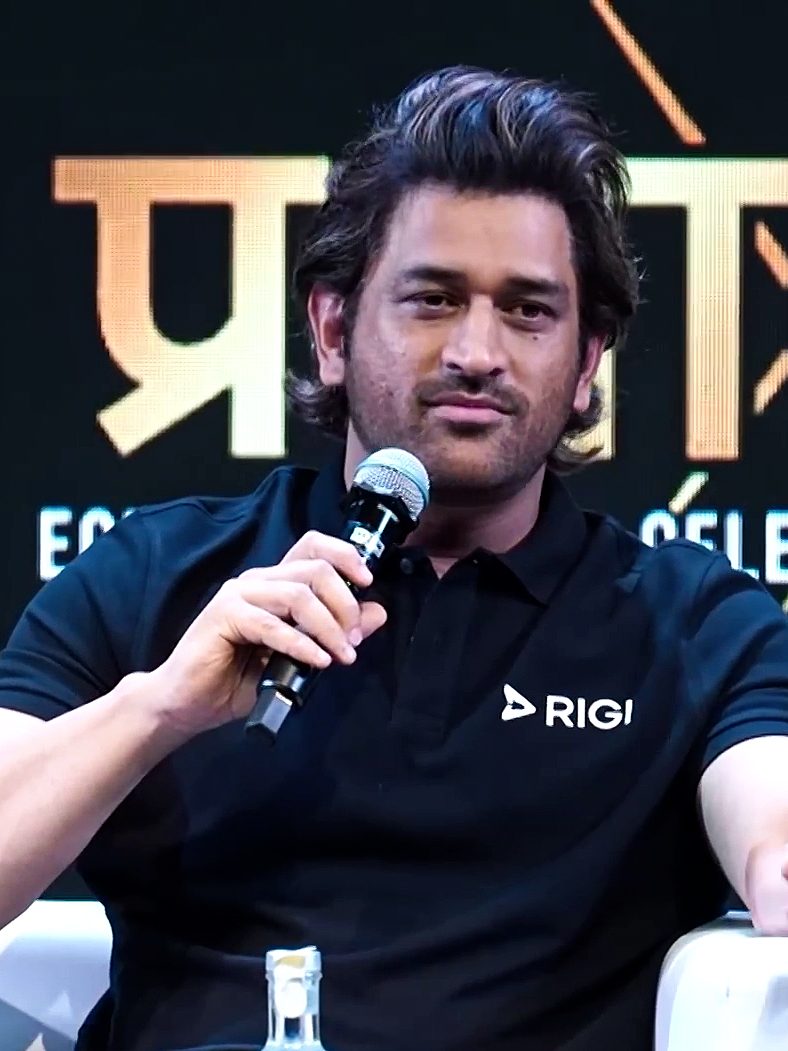
There is a version of the Chennai Super Kings story in which the franchise built itself around a player. The reverse is closer to the truth. Chennai bought MS Dhoni at the first auction in February 2008 for a sum that made him the most expensive player in the room, installed him as captain immediately, and then spent eighteen years constructing a squad policy around what he was good at: retaining players past the age at which other clubs discarded them, valuing bowlers who could hold a length at the death, and refusing to rebuild in a hurry.
The full IPL record, season by season
The batting figures, computed from ball-by-ball data. Rising Pune Supergiants were the temporary franchise Dhoni joined during the two seasons Chennai were suspended.
| Season | Team | Inns | NO | Runs | Avg | SR | HS | 50s |
|---|---|---|---|---|---|---|---|---|
| 2008 | CSK | 14 | 4 | 414 | 41.4 | 133.5 | 65 | 2 |
| 2009 | CSK | 13 | 5 | 332 | 41.5 | 127.2 | 58 | 2 |
| 2010 | CSK | 11 | 2 | 287 | 31.9 | 136.7 | 66 | 2 |
| 2011 | CSK | 13 | 4 | 392 | 43.6 | 158.7 | 70 | 2 |
| 2012 | CSK | 17 | 5 | 358 | 29.8 | 128.8 | 51 | 1 |
| 2013 | CSK | 16 | 5 | 461 | 41.9 | 162.9 | 67 | 4 |
| 2014 | CSK | 15 | 10 | 371 | 74.2 | 148.4 | 57 | 1 |
| 2015 | CSK | 17 | 5 | 372 | 31.0 | 122.0 | 53 | 1 |
| 2016 | Pune | 12 | 5 | 284 | 40.6 | 135.2 | 64 | 1 |
| 2017 | Pune | 15 | 4 | 290 | 26.4 | 116.0 | 61 | 1 |
| 2018 | CSK | 15 | 9 | 455 | 75.8 | 150.7 | 79 | 3 |
| 2019 | CSK | 12 | 7 | 416 | 83.2 | 134.6 | 84 | 3 |
| 2020 | CSK | 12 | 4 | 200 | 25.0 | 116.3 | 47 | 0 |
| 2021 | CSK | 11 | 4 | 114 | 16.3 | 106.5 | 18 | 0 |
| 2022 | CSK | 12 | 5 | 232 | 33.1 | 123.4 | 50 | 1 |
| 2023 | CSK | 12 | 8 | 104 | 26.0 | 182.5 | 32 | 0 |
| 2024 | CSK | 11 | 8 | 161 | 53.7 | 220.5 | 37 | 0 |
| 2025 | CSK | 13 | 5 | 196 | 24.5 | 135.2 | 30 | 0 |
| Total | 241 | 99 | 5439 | 38.30 | 137.45 | 84 | 24 |
Two numbers in that table are worth pausing on. He was not out 99 times in 241 innings, which is the highest proportion of any batter with a comparable aggregate in the competition, and a direct product of batting at five or six with instructions to be there at the end. And he never scored a hundred. Twenty-four fifties and a highest score of 84 across eighteen seasons is the record of a man who was almost never given twenty overs to bat.
Five titles, five defeats in finals
Chennai won the 2010 final against Mumbai Indians by 22 runs and the 2011 final against Royal Challengers by 58, the first back-to-back titles the competition produced. After the two-year suspension they returned in 2018 with the oldest squad in the league — a fact mocked for six weeks and then not mentioned again — and beat Sunrisers Hyderabad by eight wickets with nine balls to spare. The 2021 season brought a fourth, against Kolkata Knight Riders in Dubai. The 2023 final, pushed to a reserve day by rain and finished at 1.35 in the morning, drew them level with Mumbai Indians on five.
The defeats are less discussed and more instructive. Chennai lost the first final in 2008 to Rajasthan Royals, lost to Kolkata in 2012 having posted 190, lost to Mumbai in 2013 and again in 2015, and lost the one-run final of 2019 when Ravindra Jadeja and Dhoni had taken the chase to the last over. Ten finals in eighteen seasons is the underlying achievement; the five-five split is roughly what a coin would produce.
There is also the season in yellow that was not: 2017, when Dhoni played for Rising Pune Supergiant under Steve Smith's captaincy and lost a final by one run at the same ground where Chennai had won two. It is the only IPL final he appeared in without leading the side.
The consistency underneath the titles
Finals are a coin toss; qualification is a habit, and it is the habit that separates Chennai from every other franchise of the period. From 2008 until the 2020 season — the first they missed — Chennai reached the playoff stage of every Indian Premier League campaign they contested. No other side managed anything close to that run, and it survived rule changes, auction resets, the loss of half a squad to the 2016-17 suspension and the steady ageing of its core.
The knockout record extended beyond the IPL itself. Chennai won the Champions League Twenty20, the now-defunct competition between the domestic champions of the major boards, in both 2010 and 2014, which means the franchise held a continental title in two separate cycles of its squad. Those tournaments have slipped out of the game's memory since the competition was wound up, but at the time they were the only available measure of franchises across leagues, and Chennai topped it twice.
The mechanism was the squad policy described above, plus a scheduling insight Dhoni articulated more than once: a fourteen-match league season is long enough to recover from any start, so the object of April is not to win matches but to learn which eleven should be playing in May. Chennai's slow starts were not carelessness. They were the cost of auditioning, and the audition meant the side that reached the playoffs was almost always the strongest one available rather than the one picked in March.
What the wicketkeeping was actually built on
The glovework is easier to praise than to describe, which is why it usually gets summarised as "quick hands" and left there. The mechanism is more specific.
Most keepers take the ball and then move the hands towards the stumps. Dhoni took the ball with the gloves already travelling, so that the collection and the removal of the bails were a single movement rather than two. The gather was often untidy by textbook standards — the hands would end up outside the line, the body would not be square — and it did not matter, because the bails were off. He also stood closer to the stumps than most keepers of his era to spin, which shortened the distance the hands had to cover and raised the risk of a deflection past him. He accepted the trade because the stumping was worth more than the bye.
He finished with more stumpings than any wicketkeeper in the history of international cricket, in every format combined, and a share of them were of batters who had not obviously left the crease. The relevant number is not the total but the fraction of dismissals that were stumpings rather than catches, which is far above the norm and reflects a keeper who was hunting for a specific dismissal rather than waiting for one.
The other component was the run-out. Dhoni broke the stumps underarm from a crouch, often without straightening, and his direct hits from behind the wicket were frequent enough that batters visibly hesitated over the second run. Against spin, with a keeper up, a batter who cannot back away from the crease and cannot turn for two is being squeezed at both ends.
The captaincy, and the two seasons he did not lead
The Chennai captaincy ran from 2008 to 2015 and again from 2018 to 2023, with the Pune interruption in between. He handed it to Ruturaj Gaikwad before the 2024 season, played that year purely as a batter, and resumed the job during 2025 when Gaikwad was injured.
The method transferred from the international side almost unchanged. Chennai's bowling plans were built around a settled death pair and a spinner who could bowl in the powerplay, and the fields were set for the shot the batter had just missed rather than the shot he had just played. Chennai also built an unusual amount of their identity on continuity: the same core of players re-signed year after year, an academy pipeline in Tamil Nadu, and a crowd at Chepauk that treated squad members as long-term residents rather than seasonal hires. Suresh Raina, Dwayne Bravo and Jadeja between them covered fifteen seasons of that core.
The batting role in the last five years
The interesting part of the record is the end of it. From 2020 the aggregates fall away — 200, 114, 232, 104, 161, 196 — and the strike rates go in the opposite direction. In 2023 he faced 57 balls all season and struck at 182.5. In 2024 he faced 73 and struck at 220.5, with 13 sixes from those 73 deliveries.
That is not a decline curve; it is a job change. Dhoni was batting at seven or eight by then, arriving with three or four overs left, with knees that had been operated on and a brief that consisted of hitting the ball over the boundary and nothing else. Judged as a middle-order batter those seasons look poor. Judged as what they were — a specialist finisher used for twenty deliveries a week — the strike rates are among the highest in the competition.
The 2025 figures, 196 runs at 135.2 from 13 innings, show a small return to a fuller role, which is what happens when a captain has to bat where the situation needs him rather than where his knees prefer. Chennai's data ends there. Eighteen seasons, 5,439 runs, and the longest single-club leadership tenure in the league's history.
The relationship with the crowd
One last thing that does not appear in any table. Chepauk adopted Dhoni in a way that no other Indian franchise crowd has adopted an outsider, and it survived two years of suspension, the Pune interlude and a decade of him batting less and less. The 2023 final in Ahmedabad, nominally a neutral venue holding over a hundred thousand people, was played in front of a wall of yellow, and the pattern repeated at every away ground in his final seasons: a stadium that had paid to watch its own team spend the evening roaring for the visiting wicketkeeper. Ticket sales for Chennai's away fixtures became a measurable phenomenon in their own right, and franchises scheduled their marketing around his visits. Visiting sides came to expect a home crowd in the second innings regardless of the venue; at neutral grounds during the 2020 and 2021 seasons the broadcast noise was Chennai's.
That relationship is the closest analogue in the Indian Premier League to what Virat Kohli has at Bengaluru, and it was built on a different foundation: not a batter scoring runs for a city, but a captain from Jharkhand who kept winning for one. For the complete career figures, see the MS Dhoni profile.