

Rishabh Pant's Comeback and the Headingley Twin Centuries
Rishabh PantIndia
By CricketTaken EditorialPublished Player analysis7 min read
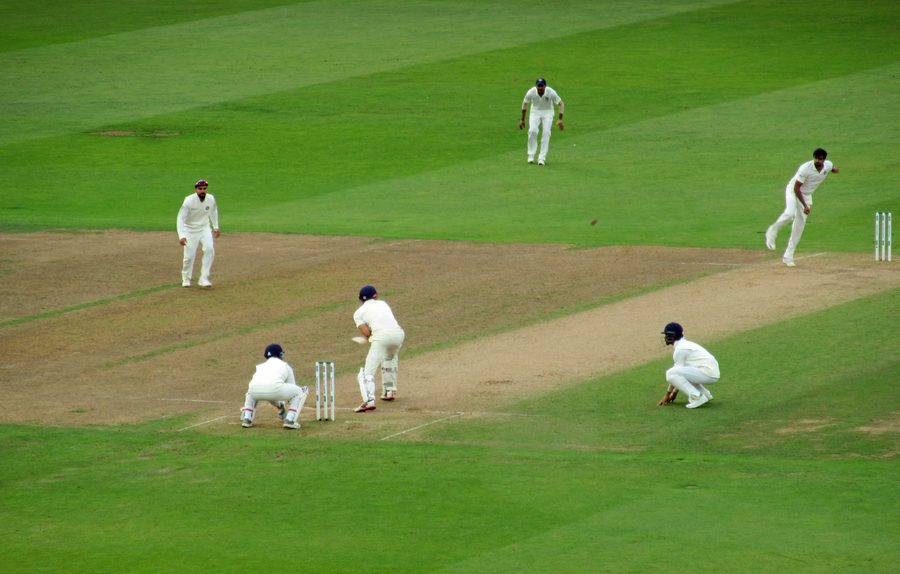
On 30 December 2022, Rishabh Pant fell asleep at the wheel on the Delhi–Dehradun expressway, hit a divider, and got out of a burning car with a torn knee ligament, damage to his wrist and ankle, and cuts to his forehead. He was twenty-five, India's first-choice Test wicketkeeper, and the previous eighteen months had contained two of the most consequential innings any Indian batter had played abroad. The medical question in the weeks that followed was not when he would return to cricket. It was whether the knee would let him squat behind the stumps again at all.
In June 2025 he walked out at Headingley and made 134 and 118 in the same Test match — the first Indian batter to score hundreds in both innings of a Test in England, and only the second wicketkeeper in the game's history to do it anywhere, after Andy Flower. That sequence, from a burning car to a record standing since England and India first played each other in 1932, is the argument of Pant's career. Everything else about him — the shot selection, the noise behind the stumps, the record auction fee — is context for it.
Before the crash: the two innings that made him non-negotiable
Pant arrived in Test cricket in 2018 and immediately did something Indian wicketkeepers historically had not, which was score hundreds overseas. His maiden Test century came at The Oval in September 2018, in his third match. Later that year in Australia he took eleven catches in a single Test, then the most by any keeper in a Test.
The two innings that fixed his place came in January 2021. At the Sydney Cricket Ground he made 97 in a series-saving draw, and then at the Gabba, with India's first-choice attack injured and the ground unbeaten for Australia in thirty-two years, he came in with the match in the balance and finished 89 not out to win it. India took the series 2-1. It is arguably the most valuable innings by an Indian wicketkeeper in Test history, and it was played by a twenty-three-year-old whose selection had been argued about for two years.
He was in the ICC Test Team of the Year for 2021 and had become the fastest Indian keeper to a thousand Test runs. By the end of 2022 he was captaining India in T20 internationals. Then the car.
Seventeen months, and the part of the recovery nobody watches
The public version of a comeback is the innings. The actual work was a knee ligament reconstruction, months on crutches, then a long rehabilitation at the National Cricket Academy in Bengaluru with the added problem specific to his trade: a wicketkeeper does not merely run, he loads the same knee into a deep squat several hundred times a day and then stands up sharply out of it.
He returned in the 2024 season of the Indian Premier League, keeping wicket and captaining Delhi Capitals, roughly sixteen months after the accident. He made 446 runs, was picked for the T20 World Cup that summer, and kept wicket through India's title-winning campaign in the Caribbean and the United States — a tournament he had no reasonable business being at.
The Test return followed. He was back in the side for the 2024-25 home season and toured Australia again. The record through that stretch was decent rather than transformative, and the honest reading at the time was that India had recovered a good player rather than the one who had won at the Gabba.
Headingley, June 2025
The 2025 tour of England was India's first Test series after the retirements of Virat Kohli and Rohit Sharma from the format, with Shubman Gill in his first series as captain. Pant, at twenty-seven, was suddenly the most experienced batter in the side.
In the first Test at Headingley he made 134 in the first innings and 118 from 140 balls in the second, a match aggregate of 252. No Indian had made two hundreds in a Test in England before, and only Andy Flower, for Zimbabwe against South Africa at Harare in 2001, had done it as a wicketkeeper. India lost the match, which is part of why the achievement is sometimes undersold, and the series ended level at 2-2 after a summer in which Pant also batted with a fractured foot at Manchester before the injury ended his tour.
The Headingley innings mattered technically as much as symbolically. Pant's method has always involved risk — the reverse sweep against pace, the slog sweep off a good length, the charge at a seamer — and the standing criticism has been that it produces spectacular failures alongside the hundreds. What he produced at Leeds was the same method applied for long enough, twice, to take a bowling attack apart on a surface that was doing something. It answered the specific charge against him, which was never about ability but about repetition.
The wicketkeeping, which the debate keeps skipping
Pant is a substantially better wicketkeeper than the discussion of him usually allows, and the reason for the discrepancy is that he made his mistakes visibly and in England, where they were replayed for a fortnight. The record: the fastest keeper to fifty Test dismissals, eleven catches in a Test against Australia in 2018, and comfortably more than 150 dismissals across his Test career.
Keeping to India's spinners on turning home surfaces is one of the two hardest keeping jobs in world cricket, and he has done it, standing up, to Ravichandran Ashwin and Ravindra Jadeja across dozens of matches. Doing it on a reconstructed knee is a fact worth stating flatly rather than dressing up.
The auction that priced the comeback
At the auction ahead of the 2025 season, Lucknow Super Giants paid 27 crore for Pant — the highest fee in IPL auction history at the time. The number was widely read as a franchise overpaying for a name, and by the strict logic of runs per rupee it probably was. But it is also the clearest available measure of what the cricket market thought of him two years after the crash: not a rehabilitation project, but the most valuable single asset in an auction containing every leading Indian white-ball batter.
The Lucknow spell was not a success. He was appointed captain and the seasons that followed did not go well, and he resigned the job after a poor campaign. That is a real part of the record and it sits awkwardly beside the Headingley Test — a reminder that Pant's captaincy record, at Delhi and at Lucknow, has been considerably less impressive than his batting.
What kind of batter he actually is
Strip out the biography and the Test record is unusual for a wicketkeeper: an average in the low forties across nearly fifty Tests with eight hundreds, achieved with a scoring rate faster than almost any specialist batter in the side. That combination — genuine top-order quality delivered at a tempo that changes the state of a match — is the Gilchrist template, and Pant is one of the few keepers since who has run it in Test cricket rather than only in white-ball formats.
The one-day and T20 records are thinner and it is worth conceding that. His ODI average sits in the low thirties across a small number of matches, and his T20I average in the low twenties across seventy-odd games — figures that do not match the reputation, and a large part of why he spent years being compared unfavourably with keepers who had smaller Test records. In the longest format, and specifically away from home, he has been something close to irreplaceable. In the shortest he has been useful and inconsistent.
The measure of the career
Pant has a T20 World Cup winner's medal from 2024, a Champions Trophy from 2025, a Test hundred at The Oval, an 89 not out that won at the Gabba, and two hundreds in a Test at Headingley. He also has a knee that required rebuilding and a captaincy record that has not worked out.
The reason the comeback is the right frame for him, rather than a sentimental one, is that it changes how the numbers should be read. A player who has recorded his best Test performance thirty months after being told he might not keep wicket again is not best described by a career average. He is best described by what he has proved possible — that a wicketkeeper-batter can be the most attacking player in a Test side and its most reliable one abroad, and that the profession's most physically punishing role can be resumed after an injury that would have ended most careers.
Within Indian cricket, Pant now occupies the position MS Dhoni held in the shorter formats and never quite claimed in Tests: the keeper the side is built around because of his batting. He is twenty-eight. Career figures are on the Rishabh Pant profile.
Sources and method
Match scores, dates and career aggregates are taken from published scorecards and official BCCI, ICC and IPL records, cross-checked against contemporary match reports of the Tests and tournaments described. Details of the December 2022 accident and the subsequent rehabilitation are as publicly reported at the time. Assessments of his keeping and of the captaincy record are the author's reading of the published record.