

Yuzvendra Chahal's IPL Record: 205 Wickets and a Purple Cap
Yuzvendra ChahalIndia
By CricketTaken EditorialPublished Player analysis7 min read
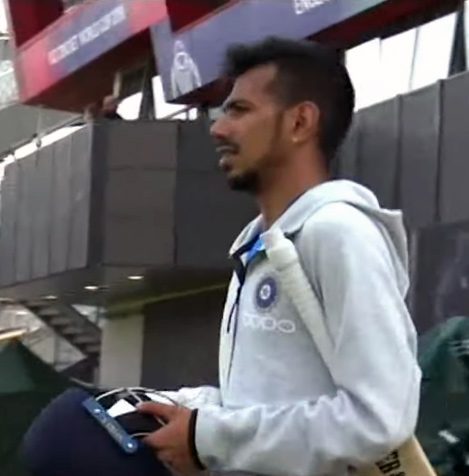
Two hundred and five wickets in 158 matches is the second-largest haul in the history of the Indian Premier League, and the largest by any bowler India has produced. The figure is unusual for a second reason. Chahal has taken those wickets at an average of 22.28, which is better than anyone else who has passed 180 in the competition, and he has done it while conceding 7.84 an over. Those two numbers pull in opposite directions and both of them are the point of him.
A spinner nobody was picking
Chahal was born in Jind, in Haryana, on 23 July 1990, and he came to franchise cricket sideways. He was on the books at Mumbai Indians in the early years of the tournament and played almost nothing. A right-arm leg-break bowler who was neither tall nor quick nor a batter was, in that period, a luxury item. Sides carried one spinner and wanted him to bowl four overs for twenty-eight runs, and a wrist spinner offered no guarantee of either half of that.
The Mumbai spell is worth recording because of how little it predicted. Nothing about a bowler who cannot get into a squad suggests he will finish above Jasprit Bumrah, Dwayne Bravo and Piyush Chawla on a wicket list. He left with a career that had not started.
Eight seasons at Bengaluru, on the wrong ground for it
Royal Challengers signed him in 2014, and from the 2016 season onwards he was a first-choice bowler in every match he was fit for. He stayed until 2021. Eight years at one club is a long apprenticeship in a competition where spinners are traded like currency.
The context that gets left out is the venue. The Chinnaswamy is among the smallest grounds the tournament uses, at altitude, with a short square boundary and a crowd that expects sixes. A leg-spinner asked to bowl the middle overs there is being asked to do the hardest version of the job. Virat Kohli, who captained him for most of that period, used him as an attacking option rather than a containing one, which was the only sensible reading of the situation: on that field an economical over is largely luck, and a wicket is not.
Bengaluru in those years were a side built on batting. AB de Villiers and Kohli scored enough to win most matches and the bowling lost a good number of them. Chahal's role in that arrangement was to take wickets in the eighth to fifteenth overs and accept that some evenings would go badly in public. He was the leading wicket-taker at the club by a distance when he left it, in a period during which they won nothing.
2022, Rajasthan, and the Purple Cap
He moved to Rajasthan Royals for 2022 and had the best season of his career immediately. Twenty-seven wickets took the Purple Cap, and Rajasthan reached the final.
That season is remembered mostly for a batter. Jos Buttler made 863 runs with three hundreds and was Player of the Tournament, becoming only the second man after Kohli to score three centuries in a single edition. What the Buttler story obscures is how the Royals actually won matches. They built totals around one player and then defended them with two spinners in the middle, and Chahal was the one bowling in the phase where those defences either held or collapsed.
It ended at the Narendra Modi Stadium, where Gujarat Titans beat Rajasthan in the final in front of 101,566 spectators. Gujarat had been assembled that winter and won the tournament at the first attempt. The same season, Mumbai lost their first eight matches and finished bottom, which is a reasonable summary of how quickly the IPL rearranges itself.
The Brabourne, 18 April
The single match that carries the season came against Kolkata Knight Riders at the Brabourne Stadium on 18 April. Buttler made 103. Rajasthan won by seven runs, which is a margin that suggests something went wrong with the defence of the total, and it did: Kolkata were in a position to win it late.
Chahal finished with 5 for 40, including a hat-trick, in the over that decided the match. Hat-tricks in the competition are not rare enough to be remarkable on their own. This one was taken with the game effectively lost, off a bowler who had already been hit for a good deal, in the last quarter of an innings where a leg-spinner is usually the fifth option rather than the first. Rajasthan gave him the ball because there was no version of the over that worked defensively.
That is the clearest single illustration of the method. A bowler who is willing to concede forty in four overs will occasionally concede forty and take five.
Where 205 wickets sits
The all-time list, computed from ball-by-ball data across the competition's history:
| Bowler | Wkts | Mat | Econ | Avg |
|---|---|---|---|---|
| Sunil Narine | 209 | 200 | 6.80 | 25.26 |
| Yuzvendra Chahal | 205 | 158 | 7.84 | 22.28 |
| Jasprit Bumrah | 190 | 158 | 7.32 | 23.54 |
| Piyush Chawla | 186 | 184 | 7.92 | 26.44 |
| Dwayne Bravo | 183 | 158 | 8.38 | 23.83 |
| Rashid Khan | 179 | 153 | 7.28 | 24.02 |
| Ravindra Jadeja | 164 | 213 | 7.71 | 30.59 |
| Ravichandran Ashwin | 142 | 161 | 7.06 | 29.01 |
Read the first two rows together and the shape of the argument appears. Sunil Narine leads on aggregate, from forty-two more matches, at an economy rate more than a run cheaper. Chahal is second on fewer games and takes his wickets three runs cheaper apiece. Rashid Khan sits between them on both counts and is the bowler most often described as the best spinner the tournament has had.
The column that settles least is the economy rate. Narine and Ravichandran Ashwin bowl a different job: they are asked for the powerplay and for control, and their averages reflect the fact that containment and wicket-taking are not the same skill. Chahal's 22.28 is the lowest average on the list, and the gap to Ravindra Jadeja at 30.59 is larger than the gap between most Test batters and most Test tailenders.
Punjab, and the price of a specialist
Rajasthan kept him for three seasons, through 2024, and then he moved to Punjab Kings. Franchise moves at that stage of a career usually mean one of two things: a squad rebuilding around a proven wicket-taker, or a bowler whose price has outrun his role. In this case the market clearly still believed in the first reading, because a leg-spinner with this record does not reach an auction quietly.
What the moves reveal is a structural point about the competition. Chahal has been a first-choice bowler at three clubs and has won nothing with any of them. Bengaluru's titles arrived after he had gone. Rajasthan lost the one final he played in. The individual record and the team record have run on separate tracks for twelve years, which is common enough among bowlers and rarely gets said about them.
The batting, in one paragraph
Sixteen innings, thirty-seven runs, highest score eight. He has never hit a four or a six in the IPL. In a tournament where a number nine who can clear the ring is worth an over of somebody's time, Chahal has been picked in every one of those 158 matches purely as a bowler, and has been worth it. That is a harder selection case to make than it sounds, and it is one reason the early Mumbai years went the way they did.
What the record actually shows
Three numbers describe the career better than any list of spells. He has bowled 3,497 balls, conceded 4,568 runs and taken 205 wickets. That works out at a wicket roughly every seventeen deliveries, which is a rate closer to a fast bowler's than a spinner's, paid for with an economy rate that would get most spinners dropped.
The trade is deliberate and it has held across four franchises, three captains and more than a decade of the tournament changing its scoring rates underneath him. When the IPL's average total was in the 160s the approach looked expensive. When it moved past 180 it started to look like the only sane way to bowl. Nothing in his method changed in between.
The reasonable objection is that a bowler who goes at nearly eight an over has cost his side matches, and he has. There are evenings in the record where four overs went for fifty and no wicket followed. The counter-argument is arithmetic: over 158 matches, a bowler taking wickets at 22 in the middle overs prevents more runs than he concedes, because the wickets fall in the phase that determines whether the last five overs are worth twelve an over or eighteen. That case is easier to make now than it was in 2016.
For the full career figures across formats, see the Yuzvendra Chahal profile.