

Irani Cup History: Ranji Champions v Rest of India
By CricketTaken EditorialPublished Cricket in India11 min read
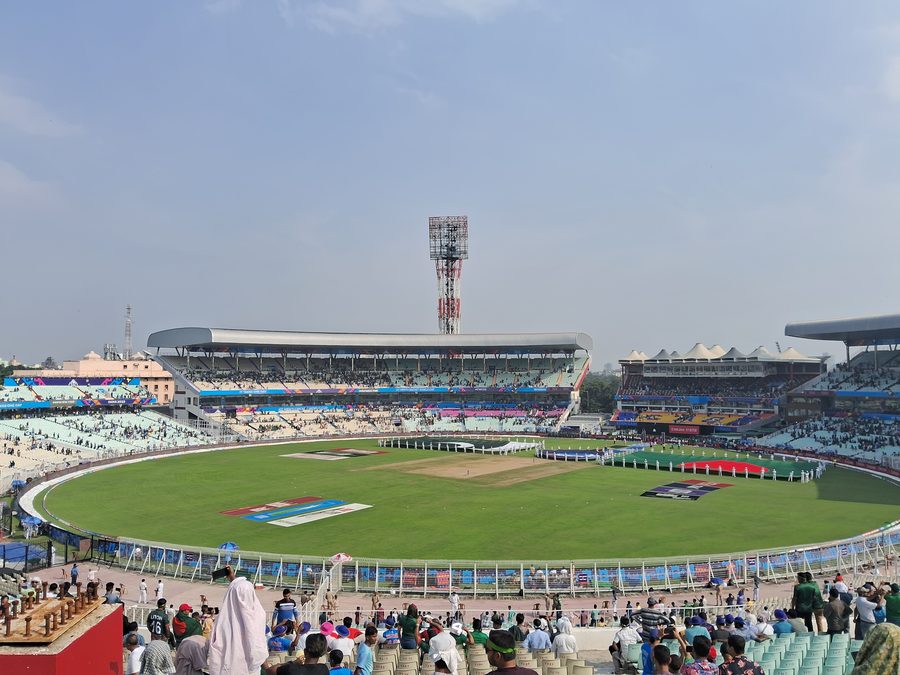
Indian domestic cricket runs on tournaments — long leagues, group stages, knockout brackets — with one conspicuous exception. The Irani Cup is a single first-class match, played once a season, between the reigning Ranji Trophy champions and a Rest of India XI assembled by the national selectors from everybody else. There is no group to top, no semi-final to survive, no second chance. One fixture, five days, and a question asked as plainly as cricket can ask it: is the best state side in the country actually better than the best of the rest?
The answer, across more than six decades, has usually been no — and that answer is the point. The Irani Cup exists to remind Indian cricket that no single state, however strong its system, contains the depth of the whole country, and to give the selectors one concentrated look at the players contesting the fringes of the Test team. It is among the smallest events on the domestic calendar and one of the most closely read.
A silver jubilee fixture that outlived its occasion
The match was instituted in 1959-60 to mark the completion of twenty-five seasons of the Ranji Trophy, which had begun in 1934-35 as the first national championship of the newly organised Indian game. A commemorative fixture needed a commemorative name, and the board chose Z. R. Irani, a Parsi businessman who had served the Board of Control for Cricket in India from its earliest years, most visibly as its long-standing treasurer. The naming placed him in a particular tradition: Indian domestic trophies honour administrators and pre-independence batting royalty — Ranjitsinhji, his nephew Duleepsinhji, Vijay Hazare — and Irani is the administrator among them, a reminder that somebody had to keep the books while the princes made the runs.
What began as a one-off anniversary celebration proved too useful to retire. From the mid-1960s the fixture settled into the calendar as an annual event, and it has been played in almost every season since, surviving format experiments, calendar reshuffles and the arrival of limited-overs cricket entirely unchanged in its essentials. Very little in Indian cricket has stayed the same shape since 1959; the Irani Cup has.
The durability is worth pausing on, because the fixture has none of the machinery that normally keeps a competition alive. It generates one match of gate revenue. It has no franchise owners, no promotion or relegation stakes, no television bidding war. It persists because the two institutions it serves — the champion state association and the national selection panel — both get something from it that nothing else on the calendar provides. That story of how a board of federated state associations comes to run such a fixture at all is told in the guide to the BCCI's structure.
How the match works
The format is the simplest in Indian cricket, and a short table exhausts it.
| Element | Shape |
|---|---|
| Teams | The reigning Ranji Trophy champions against a Rest of India XI picked by the national selectors |
| Format | A single first-class match, played over five days in the modern era |
| Result rule | Outright win if the match finishes; otherwise the trophy goes to the side leading on first innings |
| Venue | A single ground, sometimes in the champion state, often a neutral centre chosen by the board |
The first-innings rule is the detail that shapes everything. Because one match cannot be replayed, a draw needs a tiebreaker, and Indian first-class cricket has always used the first-innings lead — the same device the Ranji Trophy applies in its drawn group games. The consequence is that the Irani Cup is frequently decided by the third day even when it runs to the fifth: once one side has secured the lead, the remainder becomes an extended net with a trophy already allocated. Players treat those closing days seriously anyway, for reasons the selection section below makes obvious, but the competitive spine of the match is the first innings on each side, and captains plan for it — batting deep rather than declaring adventurously, grinding past the opponent's total rather than chasing quick runs.
Picking the Rest of India
The champions select themselves; the Rest of India XI is where the fixture gets interesting. The national selectors compose it, and the composition is read every year as a statement of intent, because a Rest of India cap is understood — by players, by the press, by the state associations — as a marker of standing in the national queue.
The panel's habits are consistent enough to describe. The XI is usually built around Test-squad fringe players: batters who have toured without playing, bowlers rotated out of the eleven, a wicketkeeper competing for the second slot. Around that core the selectors add the domestic season's loudest performers — the run-scorers and wicket-takers whose numbers demand a look on a better stage than their state sides can provide. Established internationals appear when the calendar frees them, and their availability swings the match: a Rest of India side with two or three current Test players is close to a full-strength national XI, while the champions can call on only what one state system produces.
Captaincy of the Rest side carries its own signal. The selectors tend to hand it to a player they regard as leadership material, and careers have been nudged by the choice in both directions. For the player picked, the fixture is a chance to be seen organising a side of near-equals; for those left out, the published team sheet is the clearest available reading of where they stand.
Why the Rest usually wins
The historical record is lopsided: Rest of India has won the trophy far more often than the champion states, and the imbalance is structural rather than accidental. A Ranji title is won by a system — a strong association, a settled coaching staff, a batting order that has played together for years. But a system draws from one state's population, while the Rest of India XI draws from every other state at once. Eleven players picked from the whole country will, on average, simply be better than eleven picked from one corner of it, however well organised that corner is.
That arithmetic is the fixture's quiet lesson, and it is the same lesson that produced the Duleep Trophy two seasons later: state cricket alone cannot stage contests at the intensity Test cricket demands, so Indian cricket manufactures stronger opposition by combining catchments. The Irani Cup does it once a season in a single match; the Duleep Trophy does it as a tournament. A champion side that beats the Rest of India has genuinely done something — it has beaten a selection of the entire country's talent — which is precisely why the rare champion victories are remembered and the routine Rest victories are not.
For the champions, the fixture is therefore played against the odds and against a subtext. Losing narrowly to the Rest costs nothing; being dismantled suggests the Ranji title was won against weak opposition, and a champion side's reputation can be audited in five days. The best champion teams have treated the match as the real final of their season — the examination that certifies the title — and that attitude is the closest thing the fixture has to tribal feeling.
The audition before the cap
The Irani Cup's deepest function is selection, and its timing historically served that function perfectly. For most of its life the match opened the domestic season, played in September or October before the year's first Test series, which made it the last first-class evidence available when the opening Test squad was picked. A hundred against a Rest of India attack, or five wickets against a batting order full of internationals, arrived on the selectors' desks at exactly the moment squads were being written.
The most famous illustration is the most famous player. In 1989, a sixteen-year-old Sachin Tendulkar made an unbeaten hundred for Rest of India against Delhi in the Irani Cup, weeks before he was named in the Test squad to tour Pakistan. He had already announced himself with a hundred on first-class debut, but the Irani Cup innings was the performance against national-standard opposition that settled the argument about whether a schoolboy could be picked for Test cricket. The pattern he set has repeated for decades in quieter forms: the fixture sits at the head of a selection chain that runs through the Duleep Trophy and the India A programme, and a player who performs across that chain in a single autumn can travel from domestic name to Test cap inside a season. Now that Test places are contested across the two-year cycles of the World Test Championship, with squads named series by series, a well-timed Irani Cup score matters as much as it ever did.
The match also audits in the other direction. Because the bowling on both sides is close to international standard, a domestic giant whose runs have come against modest state attacks can be exposed in an afternoon, and selectors weigh an Irani Cup failure more heavily than a Ranji one. The fixture's small sample cuts both ways — one innings is thin evidence — but it is evidence gathered under the right conditions, which the bulk of domestic cricket cannot claim.
A fixture that drifts around the calendar
The traditional slot — curtain-raiser to the season — has not always held. The modern Indian calendar, arranged around the international programme and the window reserved for the Indian Premier League, has pushed the Irani Cup to different positions in different years: sometimes the season's opening act, sometimes a mid-season interlude between Ranji phases, occasionally squeezed out of a season altogether when the schedule could not accommodate it. The champions being honoured are in some editions the winners of the season just finished, in others the winners of the season before that, depending on where the match lands.
The drift matters more than it looks. A season-opening Irani Cup examines players fresh, with selection for the winter's Tests genuinely open; a mid-season edition catches internationals unavailable and fringe players already sorted into the year's hierarchy. Administrators have periodically debated the fixture's ideal home, and the honest answer is that no slot is perfect in a calendar as congested as India's — the guide to the Vijay Hazare Trophy describes how even full tournaments are compressed into blocks to fit. That a single five-day match still commands its own space at all is a measure of the board's attachment to it.
Mumbai and the famous editions
No account of the fixture escapes Mumbai, the most successful side in Ranji Trophy history and therefore the most frequent champion representative in the Irani Cup. Mumbai's appearances give the match most of its folklore: their great sides of the mid-century treated beating the Rest as the natural completion of a title, and their long barren stretches in the fixture were read, fairly or not, as the index of the city's cricketing decline.
The 2024-25 edition showed the old machinery still working. Mumbai, champions again after their forty-second Ranji title, beat Rest of India on first innings at Lucknow to take the trophy for the first time in over a quarter of a century — and the match doubled, as the fixture always has, as a selection document. Sarfaraz Khan, then on the fringe of the Test side, made an enormous double hundred, and the teenaged Musheer Khan added a big hundred of his own, the sort of innings that moves a young player from state prospect to national conversation in a single scorecard. One match, two careers repriced: the Irani Cup in miniature.
Across the decades the fixture's memorable editions follow that template — they are remembered less for the trophy than for who announced themselves in them. The match's honours board is really a register of well-timed innings, which is exactly what a selection fixture's history should look like.
The idea elsewhere, and why it survived in India
The concept is not Indian in origin. English cricket staged a Champion County against Rest of England match for decades either side of the First World War, a season-closing exhibition at the Oval that served the same certifying purpose, and it withered once the fixture list grew too crowded to sustain it. Australia has periodically staged one-off matches between its Sheffield Shield winners and composite XIs without ever making the habit permanent. India took a fixture format that other countries let lapse and gave it a job — selection — substantial enough to justify its keep.
The survival says something about how the Indian system, described from its beginnings in the origins of cricket in India, differs from the countries it borrowed from. England's counties and Australia's states are few enough that their first-class cricket is already concentrated; a champions-versus-rest match adds little that the championship itself does not show. India's federation of dozens of associations, spread across a vast and uneven talent map, needs manufactured concentration — fixtures that gather the best players in one place so they can be measured against each other. The Irani Cup is the cheapest such instrument the board owns: one match, eleven players a side, and a season's selection debate given its sharpest available evidence.
Following the Irani Cup
The match is streamed on the board's digital platforms with full scorecards published live, and because it is a single fixture at a single ground, it is one of the easiest events in the domestic season to actually attend — five days of near-Test-standard cricket, usually for minimal admission. The team sheets reward attention as much as the play: the composition of the Rest of India XI, and who captains it, is the selection story of the week regardless of the result.
For the wider context, the cricket in India hub gathers this site's Indian coverage, the history of India cricket traces the national story the fixture feeds into, and career records for the players named here are in the player index.
Sources and method
This guide rests on the public record of the Irani Cup since its institution in 1959-60: the board's announcements of fixtures, venues and squads, and the widely published scorecards of individual editions. The fixture's founding occasion, its naming after Z. R. Irani, the first-innings tiebreak and the historical dominance of Rest of India are matters of settled record. Where individual performances are described — Tendulkar's 1989 hundred, Mumbai's 2024-25 win and the innings within it — they are drawn from the extensive public reporting of those matches. Aggregate figures such as exact title counts are characterised rather than enumerated, because sources divide eras differently; nothing here depends on statistics computed for this article.