

Bhuvneshwar Kumar's India Career: Injuries and Comebacks
Bhuvneshwar KumarIndia
By CricketTaken EditorialPublished Player analysis6 min read
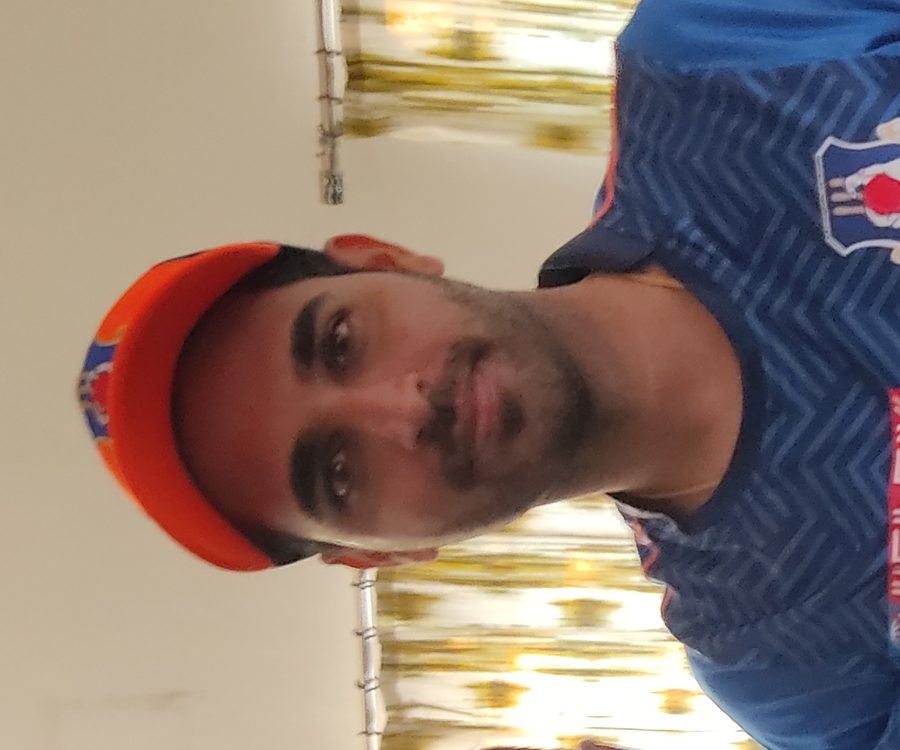
There is a version of Bhuvneshwar Kumar's international career that exists only on paper, the one where his back, hamstrings and groin cooperated. In that version he plays sixty Tests instead of twenty-one, leads India's attack in two fifty-over World Cups, and retires as the country's most capped seam bowler. The career he actually had was repeatedly cut, restarted and rerouted by injury, and yet still ran across eleven years, three formats and some of the most important matches India played in the period. Judging it fairly means holding both versions in view.
The winter everything started: Pakistan, December 2012
Bhuvneshwar's entry was unusually sudden. Picked for the home limited-overs series against Pakistan at the end of 2012 on the strength of years of domestic swing bowling for Uttar Pradesh, he struck in his opening spell in both his first T20 international and his first one-day international, removing Mohammad Hafeez in each. Within weeks the selectors moved him up a format, and in February 2013 he made his Test debut against Australia in Chennai, in the series India won 4-0.
The timing mattered. Zaheer Khan's body was failing, Praveen Kumar had drifted out of favour, and India needed a new-ball bowler who could exploit the SG ball at home and the Dukes abroad. For the next two years Bhuvneshwar was the answer, and the high point came quickly: the 2013 Champions Trophy in England, where he opened the bowling throughout India's unbeaten run to the title, sharing the new ball in the rain-shortened final against England that India won by five runs.
2014: the series that made his reputation
The five-Test tour of England in 2014 remains the best sustained cricket of his life. He took 19 wickets in the series, including six in the first innings of India's win at Lord's on a pitch whose greenness England had misjudged, and added three half-centuries from the lower order. For a stretch of that summer he was, by common consent, the best swing bowler on either side, out-bowling England's own practitioners in their conditions.
It did not translate into a long Test run. India lost the series 3-1 as the batting failed, and by the time of the next major away cycle the selectors had begun to prioritise outright pace. Bhuvneshwar's Test appearances thereafter came in clusters, chosen for conditions: a famous spell of movement in Johannesburg in 2018 on one of the most treacherous pitches of the decade, home Tests when the ball was new, tours of England when the forecast suited him. He finished with 21 Tests, a total that undersells him and also accurately reflects the competition. When Jasprit Bumrah, Mohammed Shami and Ishant Sharma were fit, someone had to miss out, and it was usually the man who bowled 130 kph.
The white-ball prime, 2016 to 2019
In limited-overs cricket there was no such squeeze. From 2016 to 2019 Bhuvneshwar and Bumrah formed India's first-choice new-ball and death-overs pairing in both white-ball formats, a partnership of opposites: one bowling swing at conventional pace, the other bowling everything at unconventional angles. India reached the semi-finals of the 2016 T20 World Cup at home, won the 2016 Asia Cup in Bangladesh, and reached the final of the 2017 Champions Trophy, where Pakistan's 338 buried the tournament's best bowling attack along with everyone else.
Within this period sit his best individual white-ball performances: ODI five-wicket hauls against Sri Lanka, match-winning death overs in bilateral series across South Africa and New Zealand, and an economy rate that stayed defensible while T20 scoring climbed. He was also, quietly, one of the more reliable lower-order batters in the one-day side, a legacy of the Test-match technique described in the study of his swing craft.
The body starts collecting its debts
The first serious interruptions arrived in 2018. A back injury ruled him out of Tests he would otherwise have played; hamstring trouble followed during the 2019 World Cup in England, where he broke down mid-match against Pakistan, recovered, and returned later in the tournament as India reached the semi-final. Then came the most consequential setback: a sports hernia, diagnosed in 2019 and eventually operated on, which combined with the pandemic to keep him out of almost all cricket for the better part of a year, including the entire 2020 IPL season.
Each comeback was genuine and each was shorter than the last. He returned in 2021 with his run-up remodelled and his pace briefly up, was rotated through home white-ball series, and re-established himself in the T20 side ahead of the 2021 T20 World Cup in the UAE and the 2022 edition in Australia. In the 2022 tournament he opened the bowling in the semi-final against England in Adelaide, the ten-wicket defeat that ended an era of Indian T20 selection. Like most of that XI, he never played a T20 international again.
What injury actually took, and what it did not
It is tempting to file Bhuvneshwar under unfulfilled promise, and wrong. The injuries cost him volume, particularly in Tests, and they cost him the 2023 home World Cup cycle, by which time younger seamers had overtaken him. What they never took was the skill itself. There was no post-surgery version of Bhuvneshwar who could not swing the ball; every return, including the last ones, featured the same late shape and the same control. His problem was availability, not decline, until deep into his thirties.
The proof is in the franchise record. While his international career wound down, he remained among the most effective powerplay bowlers in the Indian Premier League, and his late move to Royal Challengers Bengaluru brought back-to-back titles in 2025 and 2026, a chapter covered fully in the piece on his franchise career. Bowlers whose skills have eroded do not survive mega auctions at 35. Bowlers whose bodies merely need managing sometimes do.
The counterfactual Test career
The 21-Test total will always invite the question of what a fully fit Bhuvneshwar might have done in whites. The evidence from his actual Tests is suggestive: he took his wickets at a strong average in wins abroad, contributed genuine runs at No. 8, and his six-for at Lord's stands with the best individual performances by an Indian seamer in England. In the same 2014-2021 window, India's selectors moved decisively towards a pace-first attack that won series in Australia and competed everywhere, a transformation recorded in the history of Indian cricket. It is entirely possible that even a fit Bhuvneshwar would have remained the fourth seamer in that hierarchy, picked for Leeds and left out for Perth.
What the counterfactual misses is how much of his value was concentrated in white-ball cricket anyway. Across the 2013-2022 span he was a fixture in India's limited-overs planning in a way only Bumrah matched among seamers, and his tournament record, a Champions Trophy winner's medal, an Asia Cup title, two further finals and three semi-finals, is deeper than that of many contemporaries with twice his Test caps.
An exit without an announcement
Bhuvneshwar's India career ended the way most white-ball careers do now, not with a farewell match but with a gradual absence from squads. After the 2022 T20 World Cup the selectors rebuilt around new names, and he moved into the elder-statesman phase of franchise cricket without fuss, which was in character. He had never campaigned for himself in public, never litigated selection through the press, and his last years were spent doing the two things he had always done: bowling the first over, and bowling the ball that leaves the right-hander late.
His standing in India's seam-bowling line is secure and specific. Between the end of Zaheer Khan and the peak of Bumrah, through a period when Indian cricket was learning to win with pace, the most skilful new-ball overs the country produced belonged to a bowler who barely touched 130. The injuries decided how much of that skill the record books captured. They had no say in the skill itself.