

Bhuvneshwar Kumar at Sunrisers: Purple Caps and the IPL Years
Bhuvneshwar KumarIndia
By CricketTaken EditorialPublished Player analysis6 min read
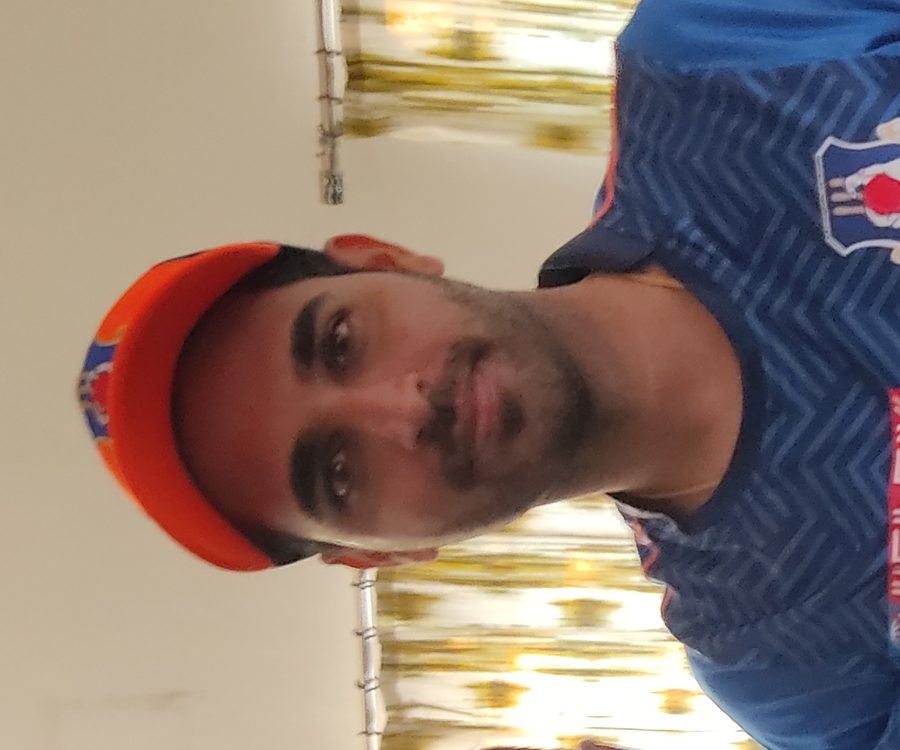
Few bowlers have been as closely identified with one franchise as Bhuvneshwar Kumar was with Sunrisers Hyderabad. He joined them in 2014, stayed eleven seasons, led their attack through a title, two Purple Caps and a decade of playoff campaigns, and left only when the 2025 auction cycle broke the squad up. Then, in a coda nobody had scripted, he crossed to Royal Challengers Bengaluru and promptly collected the two championship medals that Hyderabad had never quite added to their 2016 triumph.
His franchise story is really three stories: an apprenticeship at a doomed team, a long prime in orange, and a late harvest in red and gold.
Pune Warriors, 2011 to 2013: the apprenticeship
Bhuvneshwar entered the Indian Premier League with Pune Warriors India, the expansion side that lasted three seasons and finished near the bottom in all of them. For a young swing bowler it was an unpromising billet, a team short of match-winners and shorter of confidence, but it bought him something valuable: overs. He bowled the new ball regularly from 2012, learned what happened to a 125 kph bowler when the lacquer wore off, and arrived at the 2013 season as an India international, having made his ODI and Test debuts that winter.
When the Warriors folded after 2013, Sunrisers Hyderabad picked him up. It turned out to be one of the better pieces of business in the league's history.
Becoming the spearhead in Hyderabad
Sunrisers in the mid-2010s built their identity around defending totals, and that identity needed a bowler who could deliver four cheap, threatening overs split between the powerplay and the death. Bhuvneshwar became that bowler. From 2014 onwards he opened the bowling in essentially every match he played for the franchise, and his duels with opposing openers became one of the tournament's reliable set-pieces.
The 2016 season was the summit. Sunrisers won their first title, beating Royal Challengers Bangalore by eight runs in a final at the Chinnaswamy in which they defended 208, and Bhuvneshwar finished as the league's leading wicket-taker with 23. The Purple Cap mattered less than how the wickets were distributed: top-order strikes with the new ball, then closing overs delivered under maximum pressure while David Warner's side protected totals. In a final remembered for Ben Cutting's late hitting, it was the bowling unit, marshalled by Bhuvneshwar and Mustafizur Rahman, that actually held a full-strength Bangalore batting order featuring Virat Kohli at the peak of his 973-run season to 200.
He retained the Purple Cap in 2017 with 26 wickets, the first bowler to win it in consecutive seasons. Those two years were the height of his knuckle-ball period, examined more closely in the piece on his swing craft, and they coincided with Sunrisers' most consistent era: playoffs every year, an attack that conceded less than anyone, and a settled new-ball plan that opponents knew about and still could not counter.
The 2018 final and the long middle years
Sunrisers reached the final again in 2018, the season Kane Williamson captained in Warner's absence, and lost it to Chennai Super Kings, who chased 178 with more than an over to spare. For Bhuvneshwar the years that followed were harder. Injuries, detailed in the account of his fitness battles, cost him most of the 2020 season and interrupted several others, and the franchise around him began to churn. Warner left acrimoniously, coaches rotated, and by the early 2020s Sunrisers were rebuilding around a new generation.
Through the churn he remained the constant. He passed a decade of service in 2023, became the franchise's senior professional, and adapted his bowling as the league's batting sped up: fewer attempted yorkers, more hard-length variation, the knuckle ball held back rather than advertised. In 2024, under Pat Cummins, Sunrisers reinvented themselves as the most aggressive batting side the tournament had seen and reached the final, where Kolkata Knight Riders bowled them out for 113 and chased the target inside eleven overs. It was Bhuvneshwar's fourth IPL final and his third defeat in one.
The move to Bengaluru, and two titles in two years
The 2025 mega auction ended the association. Royal Challengers Bengaluru, assembling the deepest bowling group they had ever owned, signed Bhuvneshwar as their senior Indian seamer, and the fit was immediate. Bengaluru won the 2025 title, defending 190 against Punjab Kings in the final, and then retained it in 2026, beating Gujarat Titans with two overs to spare. A bowler who had spent eleven years watching one trophy recede collected two in his mid-thirties, in a side where his job had narrowed to exactly the overs he was best at.
There was a neat symmetry in it. Bhuvneshwar had been on the losing side against RCB's batting in the 2016 final; a decade later he was part of the bowling unit that finally made the franchise serial winners. Careers in franchise cricket rarely arrange themselves this tidily.
The record in numbers
Bhuvneshwar's batting figures for his IPL career, computed from ball-by-ball data, are those of a genuine lower-order man: 354 runs from 75 innings with 37 not-outs, a highest score of 27. The bat was never the point, although his Test batting suggested more ability than the numbers show; in T20 cricket he was simply never asked.
The bowling shape of his career by season and team:
| Seasons | Team | Role |
|---|---|---|
| 2011-2013 | Pune Warriors | New-ball apprentice at an expansion side |
| 2014-2015 | Sunrisers Hyderabad | Establishing himself as first-choice opener of the bowling |
| 2016-2017 | Sunrisers Hyderabad | Back-to-back Purple Caps, 23 and 26 wickets; 2016 champions |
| 2018-2024 | Sunrisers Hyderabad | Senior spearhead through two further finals |
| 2025-2026 | Royal Challengers Bengaluru | Powerplay specialist in consecutive title-winning squads |
The two Purple Caps remain the core of the record. Winning the award once at his pace was notable; winning it twice, in seasons when Sunrisers' home pitches in Hyderabad offered him little conventional swing after the sixth over, was a statement about skill under constraint.
Why he suited Twenty20 better than the sceptics expected
When Bhuvneshwar emerged, the conventional view held that swing bowlers were a liability in T20: the format's field restrictions punish a full length, and swing disappears with the shine. His career is the counter-argument. The new ball still swings for two or three overs, and in a 20-over innings those overs are a far larger share of the whole than in a one-day match. A bowler who can take a top-order wicket in the first over changes the arithmetic of the entire chase.
His death bowling extended the case. Because his threat never depended on pace, the older, softer ball took nothing away from him, and his slower-ball repertoire made him harder to line up in the closing overs than bowlers 15 kph quicker. Franchises noticed. For most of a decade he was the first Indian seamer picked in Sunrisers' side and among the first retained, through every auction reset, at a franchise not sentimental about ageing players.
Standing among the league's bowlers
Where does he rank? The Purple Cap pairing puts him in select company; only a handful of bowlers have led the league's wicket charts more than once, and Harshal Patel and Dwayne Bravo are the names usually cited alongside him in death-overs discussions. Pure wicket-takers like Yuzvendra Chahal and Lasith Malinga finished with bigger career hauls. But no seamer of his era matched Bhuvneshwar's combination of longevity, economy and new-ball threat across three franchises, and none did it while giving India a parallel decade of international service.
The 2016 champion side has scattered, and Sunrisers have been rebuilt twice since. What survives from that era, in the tournament's collective memory, is a left-field image: a slight, undemonstrative man from Meerut standing at the top of his short run with two slips waiting, about to make the best openers in the world play at a ball they would rather have left. For eleven Hyderabad summers, that image was the start of the innings.