

How Chris Gayle Invented the Freelance Cricketer
Chris GayleWest Indies
By CricketTaken EditorialPublished Player analysis8 min read
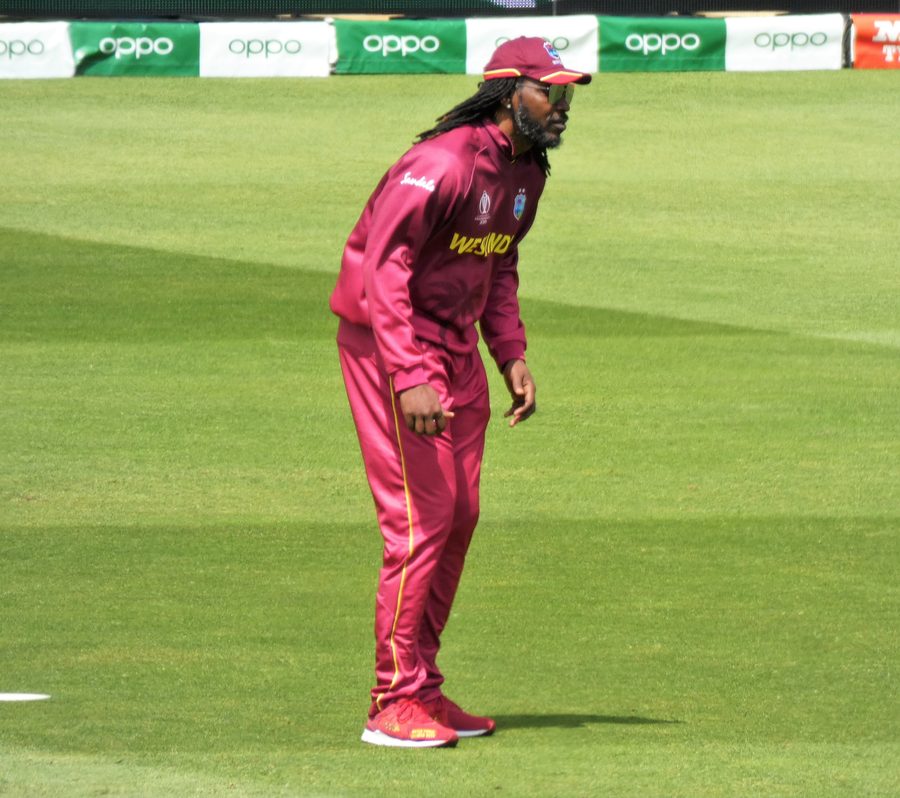
Cricket had employed mercenaries before Chris Gayle. Players had taken county contracts, gone to World Series Cricket, done a winter in South Africa. What nobody had done was build an entire second career, longer and more lucrative than the international one, out of playing for teams in six countries while being on poor terms with his own board. Gayle did that between roughly 2011 and 2021, and in the process he demonstrated a possibility that has since reorganised the labour market of the sport. He was not just the best T20 batter of the first franchise decade. He was the proof of concept.
Start with the Test record, because it complicates everything
The convenient version of Gayle is a slogger who could not be bothered with the long game. The record says otherwise, emphatically. Chris Gayle scored two Test triple centuries: 317 against South Africa at St John's in 2005 and 333 against Sri Lanka at Galle in 2010. Four men in the history of Test cricket have two — Bradman, Lara, Sehwag and Gayle.
He is also the only batter ever to hit the first ball of a Test match for six, off the Bangladesh debutant Sohag Gazi at Mirpur in 2012. That detail is usually told as a joke. It is better understood as a statement of method: Gayle's entire approach to opening was that the first ball of an innings, in any format, is simply a ball, and the field is at its most restricted at exactly the moment convention says to be careful.
His Test career yielded more than 7,000 runs at an average around 42 with fifteen centuries, from a top-order position, for a side that spent most of that period losing. He also captained the West Indies in Tests. None of that fits the caricature, and none of it gets mentioned much, which tells you something about how the second half of his career overwrote the first.
The dispute that made a freelancer
The break came in 2011. After the West Indies went out of the World Cup at the quarter-final stage, the coach Ottis Gibson criticised his senior batters publicly. Gayle was left out of the one-day squad to face Pakistan that April, along with Ramnaresh Sarwan and Shivnarine Chanderpaul. Gayle, who had not been contacted about his fitness or the omission, signed for Royal Challengers as a mid-season replacement and then gave a radio interview in which he attacked the board and the coach.
The board asked him to retract. He refused. What followed was fourteen months out of the West Indies side — not a suspension exactly, but the practical equivalent, resolved only in 2012 when he expressed regret for remarks that had been taken as bringing the board into disrepute. Michael Holding and Tony Cozier, among others, wrote in his defence at the time.
That gap is the pivot of his career, and its consequences were not the ones the board intended. Gayle spent the exile playing T20 cricket wherever it was played, discovered that he could earn more and be treated better doing it, and never again structured his life around the West Indies calendar. The dispute did not end his international career — he played on for years, including the 2015 World Cup and beyond — but it permanently changed the priority order.
The 175, and why it is still the ceiling
The single innings that defines the franchise era arrived on 23 April 2013 at the Chinnaswamy. Gayle, opening for Royal Challengers against Pune Warriors, made 175 not out from 66 balls with seventeen sixes and thirteen fours. He reached his hundred in thirty balls. Bangalore made 263 for 5, then the highest total in IPL history, and won by 130 runs, then the largest margin.
More than a decade on, all of those remain the highest marks in the competition: the individual score, the sixes in an innings, the fastest hundred. That is genuinely unusual. Batting records in T20 are supposed to fall as the format's scoring rates rise, and the tournament's team totals have climbed considerably since 2013. Gayle's individual mark has not been approached.
It also captures what made him different from a hitter. Seventeen sixes in an innings requires a batter who is not selecting between balls — who has decided in advance that everything in a defined area is going over the rope, and who is strong enough through the arms and shoulders to make that decision safe. Bowlers had no plan for it because there had never been a batter to plan for.
The volume, which is the real record
The individual innings gets the attention; the aggregate is the more remarkable statistic. Gayle passed 14,000 runs in T20 cricket, well clear of anyone else at the time. He was the first player to hit a thousand sixes in the format, and by a distance — Kieron Pollard, the next man on the list, was some three hundred behind despite a comparable number of innings.
He has 22 centuries in T20 cricket. For most of the format's history, no other player had more than seven. That gap is the single most extreme individual dominance of a discipline in modern cricket, and it is worth pausing on, because centuries in a twenty-over game require both the strike rate and the survival: a batter who slogs does not reach three figures, and a batter who accumulates does not have time. Gayle did both by removing the middle phase from his innings entirely.
In IPL terms alone he made 4,965 runs across thirteen seasons for Kolkata Knight Riders, Royal Challengers and Punjab Kings, with six centuries — a total for the competition that no other overseas player of his era matched.
The international white-ball career, which was also enormous
Between the exile and the franchises it is easy to lose the ODI record. Gayle made more than 10,000 one-day international runs, and at the 2015 World Cup he scored 215 against Zimbabwe at Canberra — the first double century in World Cup history, made in partnership with Marlon Samuels in a stand of 372 that was then the highest for any wicket in the tournament's history.
He was also, for years, the leading six-hitter in T20 internationals and made two T20 international centuries, including 117 against England at the 2016 World T20 in Mumbai in a chase West Indies won with an over to spare. The West Indies won that tournament, their second T20 title, with a side largely composed of players who had spent the previous five years in the same argument with the same board that Gayle had started.
The model he proved, and who followed it
The reason Gayle matters structurally, not just statistically, is that until him the calculation for a cricketer from a smaller board was straightforward: international cricket was where the money and the status lived, so you accepted the terms you were offered. Gayle demonstrated that for a specific type of player — a T20 opener with a global reputation — the calculation had inverted.
Everything downstream of that follows: the T20 leagues around the world that now fill the calendar, the West Indies players who repeatedly chose franchise contracts over tours, the specialist overseas signings whose international careers are incidental to their income. Andre Russell, Nicholas Pooran and Sunil Narine all built careers on the template. The same logic now shapes selection in West Indies cricket as a whole, which is a substantial part of why that side's Test record collapsed in the same decade its T20 record was the best in the world.
Whether that is a good thing for cricket is a genuine argument and it does not resolve neatly. What is not arguable is the sequence: Gayle went first, and the market followed.
The complications
An honest page has to say that Gayle's public career included a 2016 television interview in Australia widely condemned as harassment of a reporter, for which he was fined by his Big Bash club, and a defamation case against an Australian publisher which he won on appeal in 2019 over separate allegations he denied. These were substantial parts of how he was discussed at the time and pretending otherwise would be a strange omission.
There is a cricketing complication as well. Gayle's last international appearances came around 2019, and there was no formal retirement, no farewell Test, no final one-day series — the same slow fade that ended his relationship with the board a decade earlier. For a player with two Test triple hundreds and a World Cup double century, the absence of any ceremonial ending is a strange final entry in the ledger, and it is entirely consistent with everything that preceded it.
What the record supports
Gayle's own summary of himself was always the entertainer, the man who brought a party to the cricket. The record supports something less comfortable and more interesting. He was a top-order batter good enough to score triple centuries in Test cricket who concluded, correctly and about five years before anybody else did, that the game's value had moved and that he did not need permission to follow it.
That conclusion cost him a great deal of goodwill in the Caribbean and a portion of his international career, and it made him, by a wide margin, the most influential batter of the franchise era. The 175 is the innings people remember. The fourteen months in 2011 and 2012 are what actually changed the sport.
Sources and method
Test and one-day records, T20 aggregates and match details are taken from published scorecards and official tournament records. T20 career aggregates across all competitions are published totals and move as players remain active. The account of the 2011 board dispute follows contemporary reporting and the public statements of the parties; the wider claim about his influence on the franchise labour market is argument rather than measurement.