

Jasprit Bumrah's Action and Yorker: How the Method Works
Jasprit BumrahIndia
By CricketTaken EditorialPublished Player analysis6 min read
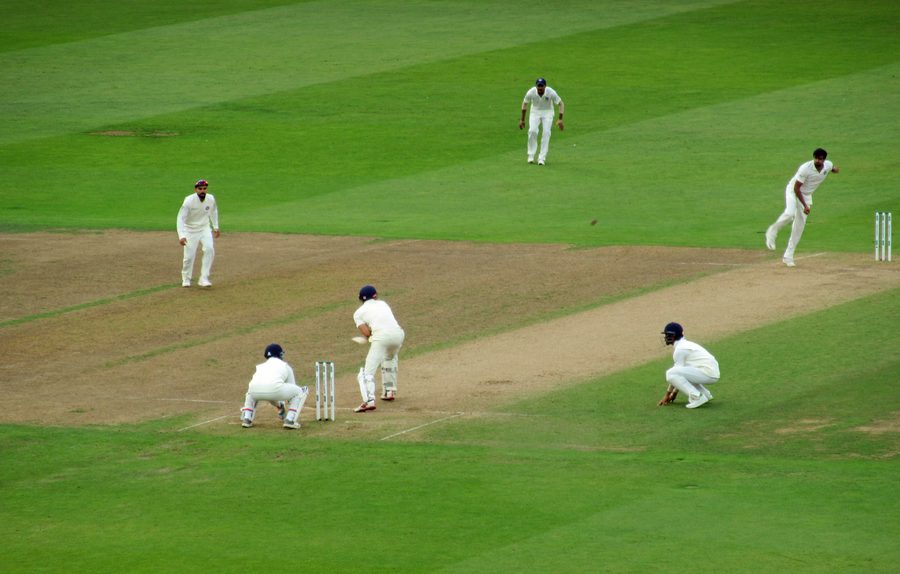
Coaches spend their lives ironing out actions like Jasprit Bumrah's. The run-up is barely a jog, the arms pump like a sprinter's warm-up drill, the load-up happens impossibly late, and the elbow hyperextends in a way that looks briefly alarming in slow motion. Every orthodoxy of fast-bowling instruction says none of it should work. It has instead produced the most complete fast bowler of his generation, and the most reliable yorker the game has seen since the man who taught him its finer points.
The interesting question is not whether the action is strange. It is why the strangeness is precisely what makes him effective.
A tennis ball, a wall, and no coaching
The origin story is domestic in the most literal sense. Bumrah grew up in Ahmedabad, raised by his mother, a schoolteacher, after his father died when he was five. The famous detail — confirmed by him often enough to be reliable — is that he practised in the afternoons by bowling a tennis ball at the base of the wall while his mother slept, because hitting the skirting made the least noise. A boy optimising for quiet taught himself to hit the junction of floor and wall over and over, which is, in essence, a yorker drill. Nobody designed it. It was an accident of flat acoustics.
He came through Gujarat's age-group system with the action unchanged, because by the time serious coaches saw him he was already too effective to risk dismantling. John Wright, then coaching the Mumbai Indians, spotted him in a domestic Twenty20 match and signed him at nineteen. He made his IPL debut in 2013 and dismissed Virat Kohli in his first match — a piece of foreshadowing the league has enjoyed ever since.
What the action actually does
Break the action into components and each one steals something from the batter.
The run-up is around fifteen paces and generates little momentum, which means almost all of his pace comes from an explosive final stride, a braced front leg, and one of the fastest arms in cricket. Because the approach telegraphs nothing — no rhythm building, no gather the batter can time — the batter's usual subconscious cues are missing. Facing him, professionals say, feels like being bowled at from a standing start, with the ball simply materialising at ninety miles an hour.
The release compounds it. Bumrah's arm comes over with a hyperextended elbow and an unusually long reach towards the batter, so the ball leaves his hand appreciably closer to the target than it does from a conventional action. A delivery released two feet later arrives measurably sooner in reaction-time terms; combined with the absent rhythm cues, the batter is operating on less information and less time than against any comparable bowler. His stock ball also angles in from a wide-ish position and then holds its line or seams away, which is why right-handers play down the wrong line against him so often, and why so many of his Test wickets are bowled or leg-before.
None of this would survive if he sprayed it. The third component, the one that gets least attention, is that his repeat accuracy is elite — the strange arms and legs finish in an exceptionally stable release position, ball after ball, which is the part biomechanists find genuinely unusual. Odd actions are common. Odd actions that repeat under fatigue are almost unknown.
The yorker, and the Malinga apprenticeship
The yorker is the shop window. At Mumbai Indians he spent his early seasons alongside Lasith Malinga, the greatest death bowler of the previous era, and has always credited those conversations — about fields, about sequencing, about when a yorker is a wicket ball and when it is merely a dot — as his real education. The tennis-ball drill had given him the skill; Malinga gave him the theory of when to use it.
What separates Bumrah's yorker from everyone else's is not accuracy alone but disguise. The ball comes out of the same action, same wrist, same trajectory as his length ball until very late, so batters cannot pre-load for it by clearing their front leg early. At the death he mixes it with a hard bouncer and a wide slower ball off the same release, and the arithmetic of his IPL career shows what that mixture is worth: 190 wickets at an economy of 7.32, across 158 matches, in a league where an economy under eight across a career is rare for anyone who bowls the twentieth over.
The international showcase came at the 2024 T20 World Cup, where he took fifteen wickets at an economy of 4.17 — in a tournament where most attacks leaked eight an over — and was named Player of the Tournament as India won it unbeaten. In the final against South Africa, defending a modest total, his last spell conceded almost nothing and broke the chase. It was the purest demonstration yet of the principle his career rests on: at the death, a bowler the batter cannot line up beats a bowler the batter merely respects.
Not just a white-ball trick
The lazy early assessment — that the action was a Twenty20 novelty which red-ball cricket would expose — collapsed within a year of his Test debut in 2018. The same properties that make the yorker unplayable make the good-length ball a persistent interrogation: batters facing him in Tests describe never feeling in, because the normal visual rhythm of facing a fast bowler is absent for hours at a time. The full account of what he has done in Tests, series by series, belongs to the overseas-record piece, but the summary is that the method translated to every format and every continent without modification.
It is worth noting what he added later, because the action tends to obscure the craft. The wobble-seam ball arrived around 2021; the outswinger to the right-hander, which he lacked entirely early on, became a genuine weapon; the slower balls multiplied. Bowlers with freak attributes often stop developing because the freakishness is enough. Bumrah has behaved throughout like a bowler with none, adding a skill a season, which is why comparisons with Kagiso Rabada and Pat Cummins — orthodox actions, classical methods — end up flattering nobody. He simply has more ways to get a batter out.
The cost of the design
The action has a bill attached, and it has been presented more than once. The load on his lower back at delivery is abnormal even by fast bowling's brutal standards — the late gather and braced front leg that steal time from batters also concentrate force through the lumbar spine. Stress fractures and long rehabilitations have shadowed the career, and the management of that trade-off has become a story in its own right, told properly in the workload piece. The design that makes him unique is also the design that makes him fragile, and the two cannot be separated.
Why nobody copies him
The final proof of how unusual the method is: almost no one imitates it. Young fast bowlers copy Mitchell Starc's swing or Cummins's seam presentation because those are techniques, transferable in nets. Bumrah's action is not a technique, it is an anatomy — the hyperextension, the shoulder mobility, the sprinting arm speed from a standing start are physical endowments that drills cannot install. Academies in India report plenty of boys arriving with imitation Bumrah run-ups. The imitation survives until the ball has to come out at pace, and then orthodoxy quietly reasserts itself.
Which is the right way to understand him. He is not a template, and Indian cricket, which spent decades manufacturing batters and spinners, did not manufacture him. A boy bowling a tennis ball at a wall, unobserved, built something no system would have permitted — and by the time the system noticed, the only sensible coaching decision left was the one everybody made: leave it alone.