

JP Duminy: The Man Who Was Always Still There
Jean-Paul DuminySouth Africa
By CricketTaken EditorialPublished Player analysis7 min read
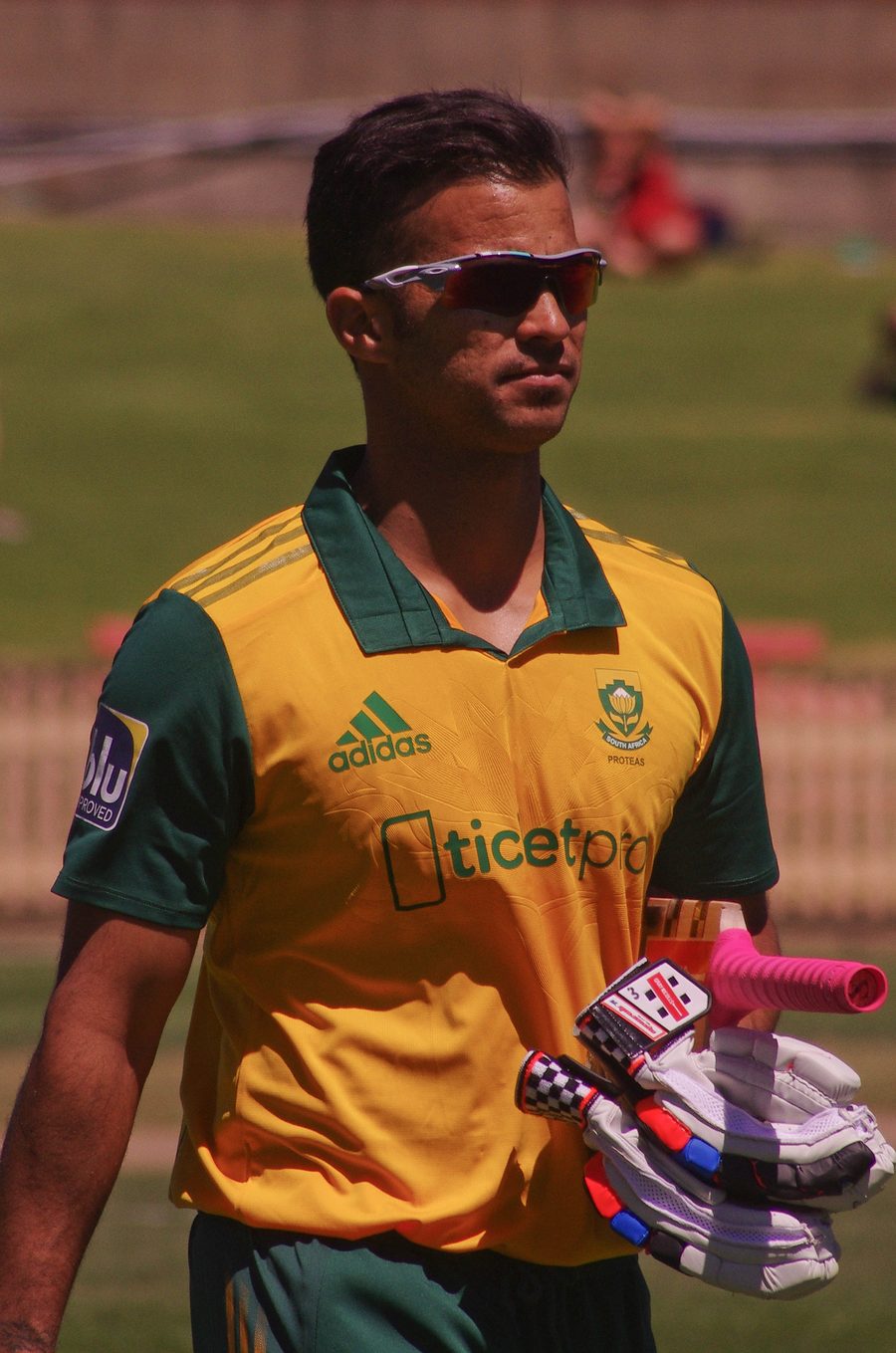
There is a category of cricketer the statistics are built to under-report, and JP Duminy is close to its purest example. Across eight IPL seasons he made 2,029 runs from 75 innings at an average of 39.78 — a figure only a handful of batters in the competition's history have beaten over a comparable career. He also has no hundreds, fourteen fifties, a highest score of 78, and a strike rate of 124.02.
The number that connects those apparently contradictory facts is in the not-out column: 24 of his 75 innings ended with him unbeaten. Nearly one innings in three. That is not a statistical accident, and it is not the padding-out of an average that critics of the not-out convention usually complain about. It is a description of a job.
Duminy batted in the middle order for teams that needed somebody to still be there in the nineteenth over, and he was there more often than almost anybody. Whether that made him a good T20 batter is a genuine argument, and it is the argument his record forces.
The record, season by season
| Season | Team | Inns | NO | Runs | Avg | SR |
|---|---|---|---|---|---|---|
| 2009 | Mumbai Indians | 12 | 3 | 372 | 41.3 | 114.5 |
| 2010 | Mumbai Indians | 7 | 2 | 157 | 31.4 | 119.8 |
| 2011 | Deccan Chargers | 10 | 0 | 205 | 20.5 | 117.8 |
| 2012 | Deccan Chargers | 9 | 6 | 244 | 81.3 | 128.4 |
| 2014 | Delhi Capitals | 14 | 6 | 410 | 51.3 | 134.4 |
| 2015 | Delhi Capitals | 13 | 3 | 414 | 41.4 | 131.4 |
| 2016 | Delhi Capitals | 8 | 3 | 191 | 38.2 | 122.4 |
| 2018 | Mumbai Indians | 2 | 1 | 36 | 36.0 | 90.0 |
The 2012 line, from his second season at the now-defunct Deccan Chargers — nine innings, six not out, an average of 81.3 — is the extreme version and shows both what the role produced and why the average overstates it. Six unbeaten innings out of nine means he was very often the last man standing in an innings that ran out of overs, and an average calculated that way tells you almost nothing about how many runs he was worth.
The three Delhi seasons from 2014 to 2016 are the substantial part of the career: 35 innings, 1,015 runs, averages of 51.3, 41.4 and 38.2, and strike rates that finally rose into the 130s. He was 30 to 32 across those seasons, batting at four or five in a side that habitually needed rebuilding after a bad start.
The 2009 season, and the format's first years
Duminy's first IPL season is easy to underrate now and was not underrated then. In 2009 he made 372 runs from twelve innings at 41.3 for Mumbai Indians, striking at 114.5. In 2026 terms that rate looks close to unusable. In 2009 it was slightly above the tournament average for a middle-order batter, in a competition where a total of 160 usually won.
That context matters for reading his whole record. Duminy's career spans the period in which the IPL's scoring rates rose by something like thirty runs an innings, and his own rate rose by about fifteen points across it. He was moving in the right direction and losing ground, which is a common shape for a batter of his type and era, and it is the main reason his later seasons thinned out.
The South African career, where it made more sense
Fifty-over cricket was Duminy's format, and his international record is where the method was most valuable. He played 199 ODIs, 46 Tests and 81 T20Is for South Africa, scoring more than 9,000 international runs across the three and taking 132 wickets with his off-spin — an all-rounder's contribution that the IPL essentially never used.
He was, for a period in 2013, ranked the world's top T20I batter and was South Africa's leading run-scorer in the format. He captained the country at the 2014 T20 World Cup and played in each of the first six editions of the tournament. His most quoted ODI achievement is a partnership record: 256 not out for the fifth wicket with David Miller, which remains among the highest stands for that wicket in one-day international history.
The Test career was the weakest of the three and he retired from it in 2017 after 46 matches. He retired from all international cricket in 2019, after the World Cup in England, having played 326 times for South Africa.
The case against
It should be made properly, because the criticism of Duminy's T20 batting was persistent and not unreasonable.
A middle-order batter striking at 124 over a whole career is, by any modern standard, slow. His job was to bat through and set up a finish, but the finish requires somebody hitting at 180 in the last four overs, and Duminy's own last four overs were usually not that. In 75 innings he hit 79 sixes — barely more than one a game — against 126 fours. The absence of a hundred in eight seasons is not a coincidence of chances missed; it reflects that he did not, in this format, play the kind of innings a hundred comes from.
The stronger version of the criticism is about the not-outs themselves. An unbeaten 30 from 28 balls at the end of an innings that finished on 150 is not obviously a contribution — it can equally be a description of a batter who did not take enough risk when risk was what the situation required. Duminy played a great many of those innings, and the average of 39.78 flatters them.
The case for
The defence rests on what the alternative looked like. The T20 middle order of 2009 to 2016 was, at most franchises, an area of chronic collapse. Sides were routinely 40 for 3 in the seventh over, and the value of a batter who could bat 40 balls in that situation without getting out was real, because the counterfactual was not a faster 30 — it was 90 all out.
The evidence that his employers believed this is in the selection. Three franchises used him across eight seasons, Delhi built a top order around him for three of them, and South Africa picked him in six consecutive T20 World Cups and made him captain for one. Those are not decisions made about a batter whose numbers merely look tidy.
There is also the bowling, which the IPL barely used and which was genuinely useful internationally: 132 international wickets from an off-spinner good enough to bowl in the middle overs of a World Cup semi-final.
What the record actually supports
Duminy's career is the best argument in the early IPL for a specific and now largely extinct role: the middle-order batter whose primary contribution is not getting out. He did that job better than almost anyone in the competition's first decade, and it earned him an average close to forty in a format where averages of forty are rare.
It is also the argument's own refutation, in the sense that the role has disappeared. No side in the IPL now selects a specialist middle-order batter who strikes at 124, because the scoring rates have made survival worth less than acceleration, and because the batting depth of a modern XI means a collapse at 40 for 3 is repaired by a hitter rather than an anchor.
That is not a criticism of Duminy so much as a dating of him. He was extremely good at a job the competition needed for eight years and then stopped needing, and his record — 2,029 runs, no hundreds, 24 not-outs — is the most complete surviving description of what that job was.
Sources and method
IPL season and career figures, including the not-out counts, are taken from official competition records and cross-checked against this site's own match dataset. International career totals, the 2014 T20 World Cup captaincy, the T20I ranking, the ODI partnership record with David Miller and the retirement dates follow Cricket South Africa and ICC sources and published career records. The characterisation of tournament-wide scoring rates across his career is descriptive rather than computed, and no figure here has been derived from ball-by-ball data.