

Michael Hussey: The Orange Cap at 38
Michael HusseyAustralia
By CricketTaken EditorialPublished Player analysis7 min read
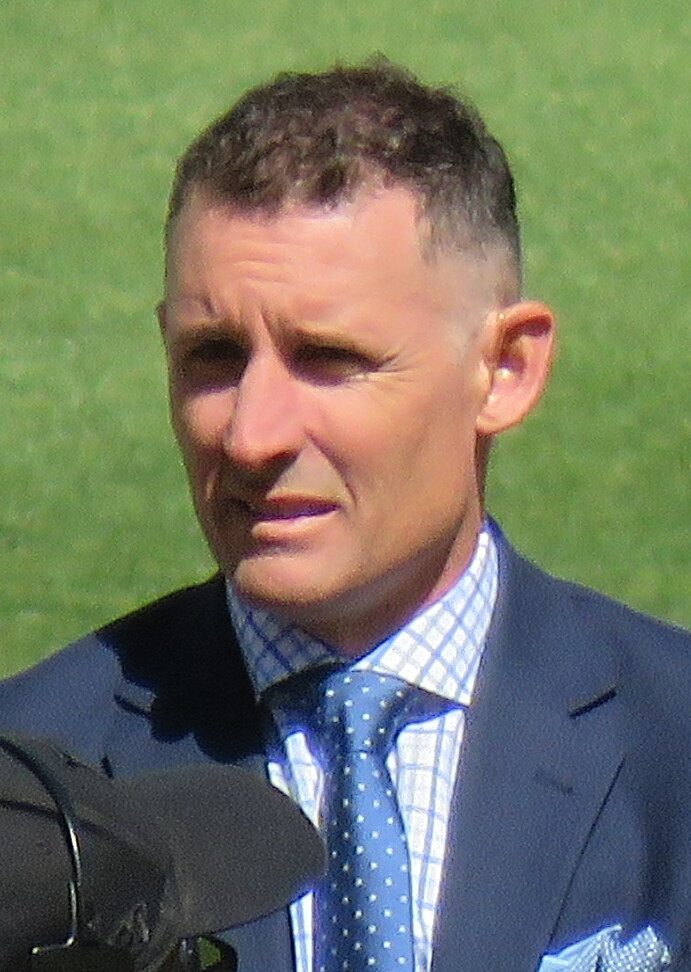
Michael Hussey was 32 when Twenty20 franchise cricket began and 38 when he won the IPL's leading run-scorer award. In between, the conventional wisdom about what the format required moved decisively away from everything he did. The consensus by 2013 held that T20 batting belonged to players who could hit a length ball for six from the first over, that the orthodox off-drive was a luxury, and that a batter over 35 could survive in the middle order but not at the top of it. Hussey opened for Chennai Super Kings that season, made 733 runs at an average above 50, and took the Orange Cap as the oldest recipient in the competition's history.
He is the strongest single piece of evidence against the idea that classical batting was made obsolete by the format. His whole IPL career struck at 122.64 — which by any modern standard is slow for a top-order batter — and he averaged 38.76 across 58 innings, which is very high. Nearly two thousand runs came at that combination, and two of his seven seasons produced almost half of them.
The 116 that opened the account
Hussey's first IPL innings of consequence came in the competition's second week, in 2008, and it was the least characteristic thing he ever did in the format. Against Kolkata Knight Riders he made 116 from 54 balls, with eleven sixes — a strike rate of 215 that he never went near again in any innings, in any season.
That innings is worth dwelling on because it is genuinely misleading. It made Hussey look, for a fortnight, like exactly the kind of player the new tournament was thought to need, and his subsequent career demonstrates that he was not. He played three innings in 2008 for 168 runs and then missed the 2009 season entirely. When he returned properly in 2011, at 35, he had settled on a completely different method.
| Season | Team | Inns | Runs | Avg | SR | 50s |
|---|---|---|---|---|---|---|
| 2008 | Chennai Super Kings | 3 | 168 | 84.0 | 168.0 | 0 |
| 2010 | Chennai Super Kings | 3 | 37 | 18.5 | 84.1 | 0 |
| 2011 | Chennai Super Kings | 14 | 492 | 41.0 | 118.8 | 4 |
| 2012 | Chennai Super Kings | 8 | 261 | 32.6 | 110.6 | 2 |
| 2013 | Chennai Super Kings | 17 | 733 | 52.4 | 129.5 | 6 |
| 2014 | Mumbai Indians | 9 | 209 | 23.2 | 114.8 | 2 |
| 2015 | Chennai Super Kings | 4 | 77 | 19.3 | 110.0 | 1 |
What he was actually doing
The method Hussey settled on was, in essence, fifty-over batting applied to the first ten overs of a T20 innings. He hit 198 fours in his IPL career and only 52 sixes — a ratio approaching four to one, and the inverse of what a modern powerplay batter produces. In 2013, the Orange Cap season, he hit 81 fours and 17 sixes.
The idea was straightforward and it depended entirely on the batter being very good. Hussey did not attempt to score from balls that were not there to be scored from. He worked the ball into gaps for two, took the boundary when the field allowed it, did not get out, and left the bulk of the acceleration to the men who followed. Chennai in that era had Suresh Raina at three and MS Dhoni at five or six, both of whom scored faster than Hussey ever did. What they needed was somebody to make sure they arrived at the tenth over with a platform and eight wickets standing, and Hussey did that better than almost anyone in the competition's first decade.
His 2013 season is the purest version: 733 runs in 17 innings, six fifties, no hundred, a highest score of 95. That distribution — lots of fifties, no century — is the signature of a batter whose job ends when the innings changes gear, not one who runs out of steam.
Why the 2013 season was tactically unusual
It is worth being clear about what CSK were doing, because it was a deliberate structural choice rather than an accident of having an ageing Australian on the books.
Most sides in 2013 opened with two batters who both intended to attack, accepting that one would probably fail. Chennai opened with Hussey and Murali Vijay — an anchor and a strokeplayer — and treated the powerplay as a phase to be used rather than exploited. The side reached the final, where they lost to Mumbai Indians by 23 runs. Hussey said afterwards that he would have traded the Orange Cap for the trophy, which is the sort of thing everybody says, but in his case the individual award genuinely was a by-product: the runs were a function of a role that asked him to be there in the twelfth over, and being there in the twelfth over means facing a lot of deliveries.
The approach worked because the rest of the order was built for it. When Chennai's middle order was less explosive, the same batting produced 261 runs at 110.6, as in 2012, and looked like a liability.
The international career it grew out of
The IPL record makes more sense read against the Test career, which is one of the more remarkable late-starting records in the game. Hussey did not play a Test until he was 30, having spent more than a decade accumulating first-class runs for Western Australia and in county cricket while the selectors looked elsewhere. He then made 6,235 runs at 51.52 across 79 Tests with 19 hundreds, and through his first nineteen Tests his average sat above 80.
That is the context for the IPL seasons: a batter whose entire professional identity was built on a first-class apprenticeship of exceptional length, who arrived in international cricket already technically finished and psychologically hardened, and who was still good enough to average 38 in T20 at 38. His nickname within the Australian side, Mr Cricket, was a joke about how much of it he had played and watched, and it was also an accurate description of the asset he brought to franchise cricket — a batter who had already seen every situation before it happened to him.
He was also part of Australia's 2007 World Cup winning squad and played in the 2011 tournament, and his one-day record — 5,442 runs at 48.15, struck at better than 87 — sits in the same shape as everything else: high volume, high average, unspectacular rate, and considerably more valuable than it looked.
The season that shows the limits
The honest counterweight is 2014, when Chennai did not retain him and he played nine innings for Mumbai Indians, making 209 runs at 23.2 with a strike rate of 114.8. He was 39, in a different batting order, without the specific structure that had made his method work, and the results were those of a slow opener who was no longer making enough runs to justify the rate.
That is the real vulnerability in the anchor role and it should be stated plainly. A batter striking at 115 is a net cost to his side unless he is averaging in the high thirties or better. Hussey's 2011 and 2013 seasons cleared that bar comfortably. His 2010, 2012, 2014 and 2015 seasons did not, and in three of those four he struck at under 115 while averaging under 33. He returned to Chennai for four innings in 2015 and retired from the competition after it.
So the career divides into two seasons of exceptional value and five of mixed-to-poor value, which is a less flattering summary than the Orange Cap implies and a more accurate one.
What the record actually argues
The argument Hussey's record supports is not that orthodox batting is as good as power hitting. It plainly is not, and the competition's scoring rates since have settled that. The argument is narrower: that in a T20 innings there is a real job for a top-order batter who does not get out, and that the job is worth having if — and only if — the side around him is built to use it, and the batter is good enough to average close to forty while doing it.
Very few players have ever met both conditions. Hussey did, twice, in a five-year window at Chennai, and the second time he was 38 years old. Every subsequent argument about whether the IPL has room for an anchor — and the argument has recurred every few seasons since, most loudly about batters at the top of the order who strike in the low 130s — is being conducted on ground he mapped out.
His place in Australian cricket will always rest on the Test record and the 15,000 first-class runs that preceded it. But the franchise coda is the more surprising part of the career, because it happened in the format that was supposed to have no use for him, at an age when it was supposed to have no use for anybody.
Sources and method
IPL season and career figures are taken from official competition records and cross-checked against this site's own match dataset. The 2013 Orange Cap, the final result and Hussey's remarks about trading the award follow official tournament reporting. Test and one-day career figures, and the 2007 World Cup squad membership, come from published career records. The 2008 innings against Kolkata is drawn from the official scorecard. Nothing in this article has been computed from ball-by-ball data.