

Ravichandran Ashwin's Carrom Ball and Off-Spin Craft
Ravichandran AshwinIndia
By CricketTaken EditorialPublished Player analysis8 min read
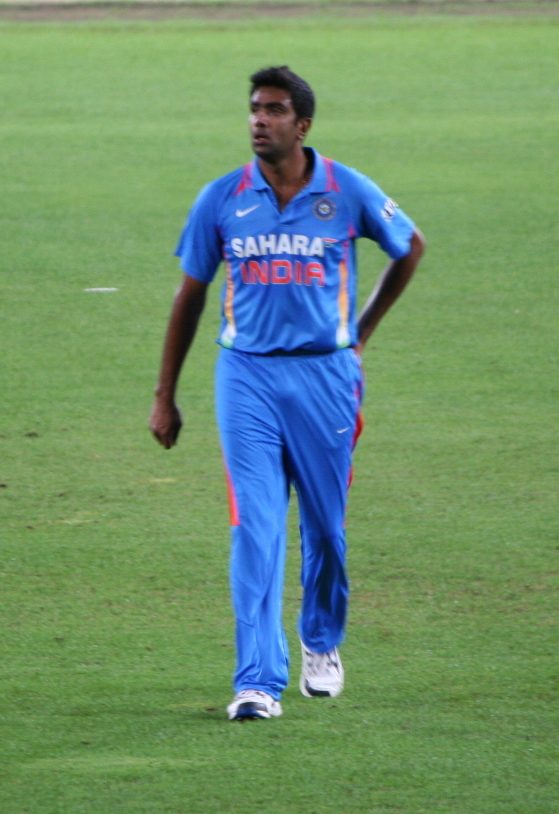
Most bowlers arrive with a method and spend a career defending it. Ravichandran Ashwin arrived with a method and spent a career dismantling it, over and over, in public, sometimes mid-series. To watch him closely across a decade was to watch a man treat off-spin not as a style to be preserved but as an open research question, and the purpose of this piece is to lay out what the research actually consisted of: the carrom ball, the mechanics of his stock delivery, the use of the crease, and the batting that made all of it affordable.
A batter who took up bowling, not the other way round
The order of events matters. Ravichandran Ashwin grew up in Chennai as a top-order batter, opening the innings through his school and junior cricket, and only committed to off-spin in his late teens. Bowlers who convert from batting tend to keep the batter's habit of thinking about the contest from the other end, and his entire approach rests on that inversion. He did not ask what his best ball was. He asked what the batter least wanted next, then worked backwards.
The conversion also explains his tempo. Career off-spinners groove a repeatable action young and protect it. Ashwin, arriving late, never developed that protectiveness, which is why he could rebuild his approach to the crease or his load-up in the middle of a season without apparent anxiety. What looked to outsiders like restlessness was closer to indifference about everything except the moment of release. Over the years he experimented with longer and shorter run-ups, altered where his front foot landed, and changed how high he carried the ball before delivery, and each remodel was greeted by commentary predicting his decline. The wickets kept arriving anyway, which suggests the remodelling was the point rather than the problem.
A flick learned on the streets, not from a coach
The carrom ball came out of Chennai's tennis-ball cricket, where a light ball on concrete rewards wrist-and-finger inventions that a coaching manual would forbid. The delivery is released not by rolling the fingers over the seam but by flicking the ball out between the thumb and a bent middle finger, the same snap a carrom player uses on the striker, and with a tennis ball it is easy. Doing it with a leather ball, at a full length, under match pressure, is not, and Ashwin spent years hardening the trick into a weapon before anyone filmed it.
He was not the first to bowl it. Jack Iverson and John Gleeson had used bent-finger flicks for Australia decades earlier, and Ajantha Mendis had startled international batting shortly before Ashwin's arrival. What distinguished Ashwin's version was its housing: Mendis was a mystery bowler whose threat faded as the mystery did, while Ashwin embedded the flick inside an orthodox off-spinner's repertoire, so that decoding it still left the batter with everything else to solve. The ball itself goes straight on or leaves the right-hander off the pitch, where his stock delivery turns in, and the two are near-identical from the hand.
Overspin, seam and the stock ball
The variations drew the attention, but professionals rated his ordinary off-break more highly. Ashwin bowled it with an unusually high degree of overspin, the revolutions tilted forward as well as sideways, and overspin is what makes a spinner's ball dip late and bounce steeply rather than arrive on the arc the batter first read. Tall for a spinner, he released from a height that added to the bounce, and batters who defended him comfortably off the pitch were often beaten in the air, a full stride out of position before the ball landed.
He also manipulated the seam's presentation deliberately, sometimes delivering with the seam upright to grip and turn, sometimes scrambled so the ball skidded on. Two deliveries with identical actions and identical flight could behave differently off the surface, and neither umpires' replays nor batters' footwork offered a reliable early warning. On responsive pitches this is how collapses happen: not one unplayable ball, but six an over that might each be two different balls.
The rest of the drawer: undercutters, leg-breaks, pace off
Beyond the carrom ball sat a wider set of options, most of them built around the same principle of disguised difference. The undercutter, delivered with the wrist tilted so the fingers cut underneath the ball rather than over it, took the revolutions off and made the delivery hurry straight on, a ball designed for slow pitches where batters wait for turn that grips. He used it heavily in T20 cricket and increasingly in Tests on worn surfaces, where the ball that does not turn is often the one that finds the edge or the pad.
There were also outright leg-breaks, bowled sparingly and usually to right-handers well set, less as a genuine wicket threat than as a tax on concentration; a batter who has seen one wrist-spun delivery must budget for another. And beneath all of it ran constant modulation of pace, from the mid-90s kilometres per hour down into the 70s, with the arm speed held constant so the change could not be read early. Individually none of these is remarkable. Held together in one over, from one action, they meant a batter facing Ashwin was never solving a bowler, only a sequence of separate problems.
The crease as part of the repertoire
Watch a sequence of his overs and the release point wanders: close to the stumps, then the widest legal point of the crease, then round the wicket entirely. Each shift redraws the geometry a batter has just committed to memory, changing the angle into the pitch and therefore what any given amount of turn will do. Wide of the crease, an off-break must turn more to hit the stumps, so the batter is invited to play for turn that may not come. From round the wicket to a left-hander, the rough outside off stump becomes a target and the lbw comes into play in both directions.
None of this is unique to him; what was unusual was the rate of adjustment. Most spinners change their crease position between spells. Ashwin changed it between balls, treating each delivery as a fresh proposition rather than an instalment of a plan, and paired it with wide variation in pace and trajectory. The cumulative effect on batters was less any single dismissal than a steady confiscation of certainty.
Runs at seven and eight: the other half of the craft
The batting never left him. He finished with more than 3,500 Test runs and six hundreds, the first of them coming in his debut series in November 2011, and the best of them a decade later: 106 against England at Chepauk in February 2021, made against a turning ball in a match where he also took a five-wicket haul. Doing both in the same Test is among the rarest feats in the game, and doing it at home, in front of a crowd that had watched him grow up, gave that week a rounded quality few careers manage.
The runs had a structural value beyond their number. A lower order containing Ashwin and Ravindra Jadeja let India field five bowlers without thinning the batting, which shaped selection for a decade and is a large part of why India's home record in that era was what it was. His method with the bat mirrored his method with the ball, unhurried, technically orthodox in defence, and quick to identify which bowler in an attack could be scored off safely.
There was a defensive version of the same skill. Some of his most valuable innings produced few runs at all: long rearguard occupations on final days, batting time rather than scoring, using the pad and the forward press against opposing spinners with a specialist's understanding of what they were attempting. A bowling all-rounder who can be trusted to bat four hours changes how a captain declares, how a side chases, and how much risk the top order can afford earlier in the match.
The engineer's habit of mind
The biography usually gets compressed to a single line, that he took a degree in information technology before playing professionally, and the line is true but incomplete. What the engineering training actually shows up as is process: he speaks about bowling in terms of testable hypotheses, release parameters and error margins, reviews his own footage the way a developer reads logs, and has always been willing to discard a technique that stopped returning results, however long it took to build. Press conferences with him regularly turned into seminars, and opponents read them for information.
The same habit made him an early and vocal adopter of whatever the laws allowed. The run-out of a non-striker backing up too far, executed against Jos Buttler in 2019 and examined at length in the account of his IPL career, was of a piece with everything above: a rule existed, an advantage was being taken by the other side, and sentiment was not, in his view, a cricketing argument.
Where the method was stress-tested
White-ball cricket was his laboratory, and the Indian Premier League in particular, where powerplay overs against attacking openers punished any variation that was not fully engineered. Deliveries trialled in April frequently surfaced in Test matches in November. The international white-ball record has its own landmarks: he played in the quarter-final of the 2011 World Cup that India went on to win, was central to the unbeaten run through the 2013 Champions Trophy in England, and appeared at the 2016 and 2022 T20 World Cups, the latter including the Melbourne match against Pakistan in which his calm final over with the bat helped close out a famous win.
Those tournaments also demonstrate the method's limits and adaptations. In England in 2013 he bowled flatter, faster and straighter than he ever would at home, because dip and drift matter more than turn on true surfaces. The willingness to be a different bowler in different conditions, rather than an exported version of the home one, is itself a craft decision, and one plenty of touring spinners never make.
What the craft passed on
Every generation of Indian off-spinners now bowls some version of the carrom ball, and Washington Sundar, another Chennai off-spinner who bats, is the most direct inheritor of the template. The deeper inheritance is harder to copy. Harbhajan Singh before him and Graeme Swann alongside him were great off-spinners of settled method; Ashwin's contribution to the game's history was to show that the method itself could be a moving target, revised weekly, without the bowler losing his identity.
The record that all of this produced, the wickets, the averages and the arguments about home and away, is set out in the companion piece on his Test bowling record. This piece has a narrower claim to make. Plenty of bowlers have taken more wickets than most of their contemporaries. Very few have left the discipline itself different from how they found it, and off-spin after Ashwin, faster-thinking, more varied, less apologetic, is not quite the trade it was before him.