

Ravichandran Ashwin's IPL Career: CSK Titles, Five Teams
Ravichandran AshwinIndia
By CricketTaken EditorialPublished Player analysis9 min read
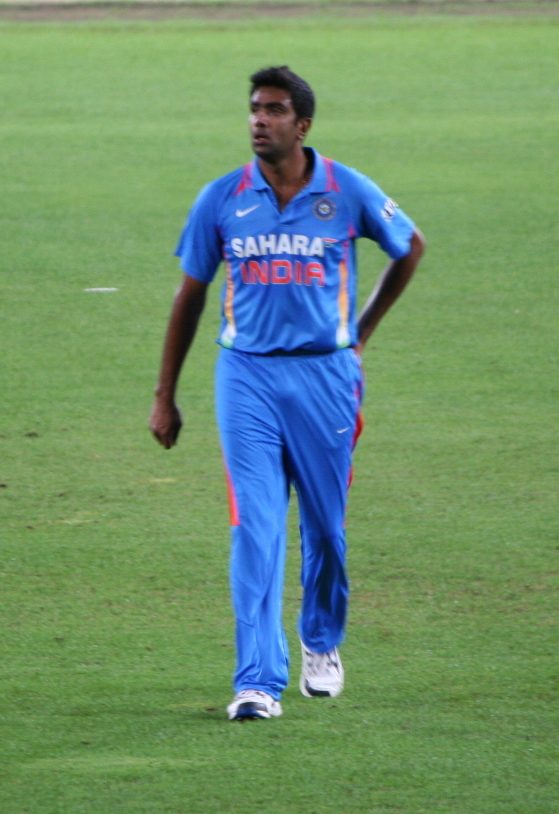
Ravichandran Ashwin bowled 3,502 deliveries in the Indian Premier League, conceded 4,120 runs off them, and took 142 wickets. The economy rate those figures produce, 7.06, is the number that matters most, because it was earned largely in the hardest overs a spinner can be given. Across sixteen seasons and five franchises he was, before anything else, the man his captains trusted with the new ball while the field was up. He collected two winners' medals in his first two full seasons and then spent the following fourteen years never adding a third, which gives the career a lopsided shape that the bowling itself never had.
A trial run in 2009, a title by 2010
Ravichandran Ashwin joined Chennai Super Kings as a local signing and barely featured at first. His 2009 amounts to a single innings with the bat and a handful of overs in South Africa. The breakthrough came the following year, when he forced his way into a star-heavy XI midway through the campaign and stayed in it because MS Dhoni discovered what he could do inside the first six overs.
Chennai won the 2010 tournament, beating Mumbai Indians by 22 runs in the final at the DY Patil Stadium, 168 for 5 playing 146 for 9, with Suresh Raina named player of the match. Ashwin, still uncapped in Tests, was by then a first-choice bowler in the champion side, and Chennai added the Champions League title later that year. His international career effectively grew out of that season: the selectors picked him for India's white-ball sides on the strength of what Dhoni had been using him for.
Back-to-back, and the Chepauk final of 2011
The defence was more emphatic than the original. In the 2011 season Chennai reached a home final and put up 205 for 5 at the M. A. Chidambaram Stadium, then held Royal Challengers Bangalore to 147 for 8 for a 58-run win, with Murali Vijay taking the match award. Ashwin's contribution through that campaign was the template piece: overs one to six against opening batters instructed to attack, bowled at a cost his captain could plan around.
Two titles in two seasons before his twenty-fifth birthday is the sort of start that distorts expectations. It is worth stating clearly that he never won the competition again, and that no version of the rest of the career quite matched the simplicity of those two years, when he was a young bowler in a settled, dominant side with nothing to carry except his own overs.
The powerplay problem, and his answer to it
The tactical idea that defines his league career deserves its own explanation. Twenty-over cricket punishes spin bowled at the wrong pace, and the opening six overs, with two fielders out, are supposed to belong to the batting side. Dhoni's wager was that a thinking off-spinner could invert that: a hard new ball skids rather than grips, so batters looking to hit through the line against pace found themselves instead facing changes of speed, a scrambled seam, and a bowler who treated every batter as a fresh puzzle. Left-handed openers, in particular, kept finding the ball leaving them.
The wager paid for fifteen years. An economy of 7.06 over 161 matches, most of it in powerplays and against set batters, held its value even as the league's scoring rates climbed steeply around it. Ashwin took wickets too, 142 of them at 29.01, but wickets were never really the assignment. The assignment was to make the most expensive overs cheap, and the record says he did.
The idea outlived him as a novelty. Within a few seasons of Chennai's early titles, nearly every franchise carried a spinner earmarked for the first six overs, and the sight of an off-break opening an innings stopped drawing comment. That is usually the fate of a genuine tactical advance: it works, it spreads, and the person who proved it workable stops getting credit for it.
Finals lost, and a franchise suspended
The middle Chennai years were a run of near things. The side lost the 2012 final to Kolkata Knight Riders, the 2013 final to Mumbai, and the 2015 final to Mumbai again, so that by the time Ashwin left he had played in five finals for two wins. Then the franchise itself was removed from the equation: Chennai were suspended from the competition for two years in the aftermath of the 2013 betting case, and their players were dispersed through a draft.
Ashwin went to Rising Pune, and his single season there, 2016, was spent in a team that finished near the bottom. He then missed the whole of the 2017 tournament with the sports hernia that also interrupted his international year. When he next bowled in the league he was thirty-one, and everything about his circumstances had changed: new team, new role, and the captaincy.
Captain of Punjab, 2018 and 2019
Kings XI Punjab, as the franchise was then called, bought him at the 2018 auction and made him captain immediately, an unusual decision for a side that had churned through leaders for a decade. Both of his seasons in charge followed the same curve: a strong first half, a collapse after the halfway mark, and no playoff place. That pattern predated him at Punjab and outlasted him, which is probably the fairest context for judging the stint.
The captaincy changed his batting. Freed to promote himself and swing, he made 102 runs at a strike rate of 143.7 in 2018, with five sixes, comfortably his most productive season with the bat to that point. As a leader he was what everyone expected, inventive to a fault, happiest when a match could be turned into a chess problem, and entirely unsentimental about how a wicket might be obtained. Which brings the record to Jaipur.
Jaipur, 25 March 2019
In Punjab's second match of the 2019 season, against Rajasthan Royals at the Sawai Mansingh Stadium, Jos Buttler had reached 69 and was carrying the chase when Ashwin, in his delivery stride, stopped, waited, and removed the bails at the non-striker's end with Buttler out of his ground. The on-field umpires referred it, the third umpire gave it out under the law as it then stood, and Buttler left. Rajasthan lost their way afterwards and Punjab won by 14 runs.
The reaction consumed the tournament for a fortnight. The MCC's first statement questioned whether the delay in the delivery was within the spirit of the relevant law; a revised statement days later accepted that the decision was correct as the law was written. Ashwin's own position never moved: the non-striker had left early, the law provided a remedy, and he had used it. In 2022 the MCC relocated the dismissal from the unfair-play section of the laws to the run-out law itself, which is roughly the outcome he had argued for all along. Whatever view a spectator takes, the dismissal was legal when it happened and is unambiguously legal now.
Delhi, and the closest miss of the later years
Punjab traded him to Delhi Capitals before the 2020 season, where he slotted into a strong bowling unit rather than leading one. Delhi reached their first final that year, in Dubai, and lost it: Mumbai Indians chased down 156 for 7 with five wickets in hand, Trent Boult taking the match award. It was the fifth losing final of Ashwin's league career and the only one he played for a team other than Chennai.
The 2021 side was arguably better, topping the league table before falling in the playoffs. His two Delhi years produced tidy, unspectacular returns, and when the 2022 mega auction arrived, the Capitals let him go. He was thirty-five, and a reasonable observer might have assumed the interesting part of his franchise career was over.
Rajasthan, a fifty, and a first for the tournament
Rajasthan Royals bought him for the 2022 season and got three years of late-career reinvention. The side reached the final, their first since the inaugural year, and lost it to Gujarat Titans, 133 for 3 against 130 for 9 in Ahmedabad, which made it six final defeats in Ashwin's ledger against the two wins. He formed a full-time spin partnership with Yuzvendra Chahal and, more surprisingly, became a genuine lower-order batting weapon.
The 2022 numbers with the bat were unlike anything he had produced before: 191 runs at a strike rate of 141.5, including his only IPL half-century, an unbeaten 50 that remains his highest score in the competition. That same season he became the first player in IPL history to be retired out, walking off by prearranged design against Lucknow Super Giants so a bigger hitter could face the death overs. It was treated as an oddity at the time and has since become an accepted tactic, a familiar pattern with his innovations.
The return to Chennai, and the full ledger
Chennai brought him home for the 2025 season, sixteen years after his first appearance in yellow, and the circle closed in a struggling side rather than a champion one. The batting record by season, computed from ball-by-ball data, traces the whole journey:
| Season | Team | Inns | Runs | SR |
|---|---|---|---|---|
| 2009 | Chennai Super Kings | 1 | 8 | 53.3 |
| 2010 | Chennai Super Kings | 6 | 30 | 75.0 |
| 2011 | Chennai Super Kings | 2 | 2 | 33.3 |
| 2012 | Chennai Super Kings | 5 | 18 | 120.0 |
| 2013 | Chennai Super Kings | 5 | 35 | 71.4 |
| 2014 | Chennai Super Kings | 5 | 45 | 100.0 |
| 2015 | Chennai Super Kings | 6 | 52 | 162.5 |
| 2016 | Rising Pune Supergiants | 6 | 41 | 107.9 |
| 2018 | Punjab Kings | 8 | 102 | 143.7 |
| 2019 | Punjab Kings | 6 | 42 | 150.0 |
| 2020 | Delhi Capitals | 5 | 37 | 108.8 |
| 2021 | Delhi Capitals | 5 | 44 | 104.8 |
| 2022 | Rajasthan Royals | 12 | 191 | 141.5 |
| 2023 | Rajasthan Royals | 9 | 67 | 131.4 |
| 2024 | Rajasthan Royals | 8 | 86 | 116.2 |
| 2025 | Chennai Super Kings | 4 | 33 | 110.0 |
The batting totals come to 833 runs at 13.02, with 64 fours and 29 sixes, numbers that undersell a player whose value with the bat was situational rather than statistical. The bowling totals, 142 wickets at 29.01 and that economy of 7.06, are the durable part.
Set against the giants of the league's history, Ashwin's franchise record reads as a craftsman's rather than a superstar's: no purple cap, one fifty, two titles won before the halfway point of his first decade. What it documents instead is longevity in the least forgiving role T20 cricket offers a spinner, and a willingness to be unpopular in service of an idea. How the ideas themselves worked is covered in the companion piece on his carrom ball and off-spin craft, and the longer story of his bowling sits in the account of his Test wicket record.