

Ravichandran Ashwin's 537 Test Wickets and the Away Argument
Ravichandran AshwinIndia
By CricketTaken EditorialPublished Player analysis8 min read
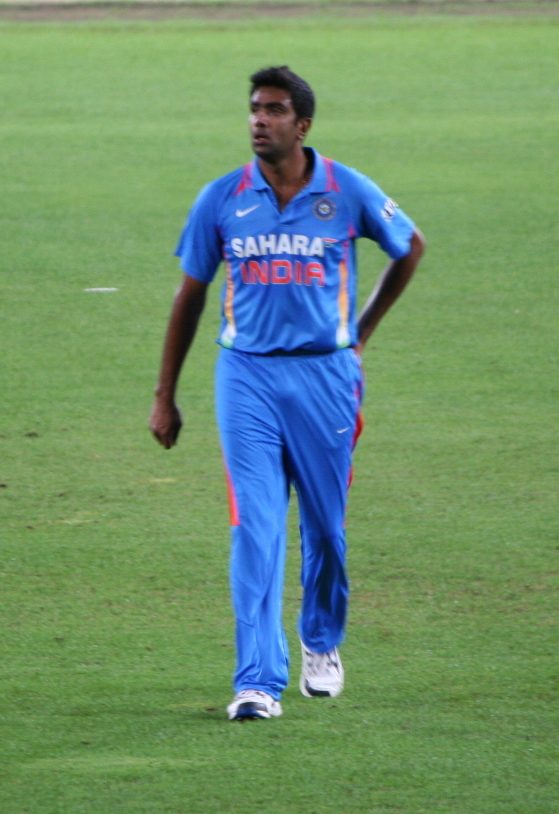
Ravichandran Ashwin finished with 537 Test wickets. One India bowler has more, and nobody else is within reach. That figure carries the whole record, and most of what has been argued about him since he stopped playing has been an attempt either to qualify it or to defend it, usually drawing on exactly the same evidence.
An engineer who reached Test cricket at twenty-five
Ravichandran Ashwin was born in Chennai on 17 September 1986 and did not play a Test until November 2011. He had taken an engineering degree first, a detail that gets repeated more often than it explains, though the instinct to take a problem apart before attempting it does show in how he bowled. He came to off-spin late, having started out as a batter, and that route left him with an unusually complete idea of what a batter is trying to do at the other end.
The debut series went about as well as a debut series can. West Indies at Delhi, then two more Tests, and he was named player of the series in his first appearances for India. He also made a hundred at Mumbai in the same series. Very few cricketers introduce themselves that comprehensively, and the effect was that he was never afterwards treated as a specialist in the narrow sense.
The late start matters for the arithmetic. A career of 106 Tests spread across thirteen years is a heavy workload but not an unusually long one, and the wickets had to arrive at a rate that no India spinner had previously managed. They did. He reached 250, 300 and 350 Test wickets in fewer matches than any India bowler before him, which is the statistic that best captures the middle of his career.
The shape of the record
Thirty-seven five-wicket hauls in 106 Tests works out at roughly one every three matches. Eight of those turned into ten-wicket returns. The average sat around 24 across the whole career, which for a spinner bowling long spells in the fourth innings is a low number rather than a merely good one.
He also scored more than 3,500 Test runs with six hundreds, and the batting is dealt with elsewhere on this site, but it belongs in any summary of the bowling for a practical reason. It is why India could pick two frontline spinners at home without shortening the batting order, and therefore why Ashwin bowled as many overs in his career as he did. A bowler who bats at seven or eight gets picked in conditions where a pure specialist would not.
Home dominance, and the argument that follows it
The great majority of the wickets came in India. That is not in dispute, and pretending otherwise helps nobody. The away record is markedly worse, and he was frequently left out of overseas XIs, notably in England and in Australia, when a team management wanted an additional seamer or preferred Ravindra Jadeja as the single spinner.
Two readings of this have run in parallel for a decade. The first is straightforward: a bowler who takes most of his wickets on surfaces built to help him has an inflated record, and the fourth-innings collapses he engineered in Chennai or Nagpur would not have happened at Lord's. The second is a matter of opportunity. A spinner who is dropped from overseas Tests accumulates neither wickets nor the rhythm that produces them, and the away sample is thin partly because selection kept it thin. Both readings are true. Neither cancels the other.
What can be said flatly is that Ashwin took wickets on turning pitches at a rate that his contemporaries did not, on the same surfaces, in the same matches. Visiting off-spinners had access to identical conditions and rarely came close. Home advantage explains why the wickets were available; it does not explain who took them.
There is a third point that gets lost. India played an unusual quantity of home Test cricket during his career, and the sides they beat there were frequently the strongest in the world at the time. A record built on those matches is not a record built on nothing. It is simply a record built in one place.
The problem he posed to left-handers
Ashwin was unusually effective against left-handed batters, and the effect was large enough that it altered how opposition teams organised themselves. Batting orders were reshuffled to avoid exposing a left-hander to him early. Selection decisions in India were made with the match-up in mind. Very few bowlers in the modern game have distorted an opponent's planning that far.
The mechanics are not complicated. To a left-hander, the off-break turns away from the bat and towards the slips, which is the direction every dismissal wants to travel. From round the wicket he could aim at the rough outside off stump and make an ordinary defensive shot difficult. Against the same batter the carrom ball spins back in and threatens the pads and the stumps, so there is no safe stride to make. He worked in that space for a decade, and the numbers are not published here because the pattern is more useful than a decimal point: sides that batted several left-handers in the top seven against India were, by and large, choosing a harder afternoon.
Three World Test Championship cycles
The championship gave his career an accounting structure it had not previously had. In the 2019-2021 cycle he was the leading wicket-taker with 71, and India topped the standings on 72.2 per cent of available points, ahead of New Zealand on 70.0 and Australia on 69.2. Marnus Labuschagne was the cycle's leading run-scorer with 1,675.
The final at Southampton did not follow the form line. New Zealand won by eight wickets. Kyle Jamieson was player of the match and dismissed Virat Kohli in both innings, on a pitch and in weather that suited tall seam bowling rather than finger spin. Ashwin bowled well enough in the match. It made no difference to the result, and a two-year body of work was settled in six days by conditions that had nothing to do with the two years.
| Cycle | Final | Leading wicket-taker | Leading run-scorer |
|---|---|---|---|
| 2019-2021 | New Zealand beat India at Southampton | Ashwin, 71 | Marnus Labuschagne, 1,675 |
| 2021-2023 | Australia beat India | Nathan Lyon, 88 | Joe Root, 1,915 |
| 2023-2025 | South Africa beat Australia | Pat Cummins, 80 | Joe Root, 1,968 |
The second cycle ended the same way, with a final lost to Australia, and this time the wicket-taking honours went to Lyon with 88. The third was still running when Ashwin stopped. South Africa won it, beating Australia in the final, with Cummins on 80 wickets and Root again at the top of the batting on 1,968. India appeared in the first two finals and neither of the trophies. For a bowler whose best work was compressed into the group stage of a competition decided by a single match in England, that is a hard shape to argue with.
Brisbane, and an exit with the series still live
Ashwin retired from international cricket on 18 December 2024, in the middle of the tour of Australia, immediately after the drawn Test at the Gabba. There were matches still to play. He walked into a press conference alongside his captain and said he was finished, and the tour continued without him.
Retirements are usually managed. A farewell Test is arranged, a home ground is chosen, and a player is given an afternoon. This was the opposite of that: a decision taken mid-series, announced within hours of a match ending, in a country where he had spent much of his career being left out. It read as a man who had concluded that the picture was not going to change and saw no reason to spend another six months confirming it.
There is a case that he had more left. He was still, on Indian pitches, the most likely bowler in the world to take five wickets in an innings. The counter-case is that a spinner who cannot be certain of selection abroad has a diminishing role in a calendar that no longer favours long home seasons, and that leaving on a decision of his own is preferable to leaving on somebody else's.
Second to Kumble, and the names above that
Anil Kumble finished on 619 Test wickets and remains India's leading bowler. Ashwin is second, and the gap of eighty-two is smaller than it looks given that Kumble played eighteen years and Ashwin thirteen. Harbhajan Singh, the off-spinner Ashwin effectively replaced, is a long way behind both.
Among all bowlers, Ashwin sits inside the top ten. Muttiah Muralitharan on 800 and Shane Warne on 708 are out of range for anyone now playing. The more instructive comparison is Nathan Lyon, an off-spinner of the same era with a career of similar length and a very different distribution of work: fewer wickets per match, more of them away from home, and a role in his side's plans that never came under selection pressure the way Ashwin's did. Which of those two records you prefer depends almost entirely on how much weight you give to venue.
What the record settles, and what it leaves open
It settles the matter of quality at home. No spinner in the game's history has taken wickets on Indian pitches at a comparable rate over a comparable period, and the run of five-wicket hauls between roughly 2013 and 2021 is the single most productive sustained stretch by an India bowler. The history of Indian cricket has produced several great spinners and none who did that.
It does not settle the overseas question, and the honest position is that it cannot be settled. The evidence needed does not exist, because the matches that would have generated it were not played. Anyone insisting that he was underused abroad is speculating; so is anyone insisting the selectors were right. What is on the record is 537 wickets, 37 five-fors, and a career whose defining tension was never resolved by anybody, including the player, who was more articulate about it than most and no more conclusive.
The last of those wickets came in Australia, on a ground where he was not certain of a place. That is a reasonable summary of the whole thing.