

Ishan Kishan: A Record Double Century, Then What?
Ishan KishanIndia
By CricketTaken EditorialPublished Player analysis6 min read
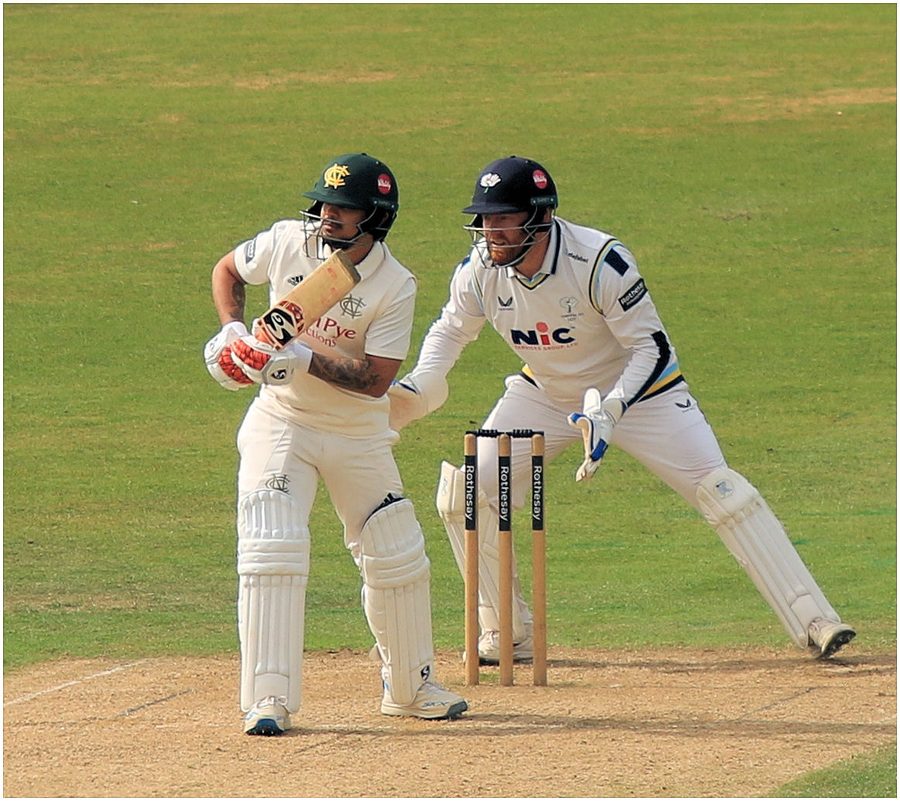
Ishan Kishan has done something no other batter in the history of one-day international cricket has done. In Chittagong in December 2022, at twenty-four, he made 210 from 131 balls against Bangladesh — the fastest double century the format has produced, beating Chris Gayle's mark by seven deliveries, and the youngest by some distance. He added 290 for the second wicket with Virat Kohli. It should have been the innings that made a career.
Fourteen months later, the Board of Control for Cricket in India left him out of its list of centrally contracted players, citing his unavailability for domestic cricket. That decision, rather than the double hundred, has shaped everything since. Kishan's career is the clearest recent example of an Indian cricketer whose fate has been settled less by what he scores than by where he agrees to play.
The innings itself, and why it does not tell you enough
The 210 was extraordinary and it was also, in an important sense, misleading. Chittagong that day was a flat surface, the opposition attack was depleted, and Kishan was set free at the top of the order in the third match of a series India had already lost. He hit twenty-four fours and ten sixes and gave a demonstration of what his game looks like when nothing constrains it: a compact left-hander who plays straight and through the covers, with a bat swing quick enough to hit a length ball over midwicket.
But an innings played in ideal conditions against a tired attack cannot settle whether a batter belongs at international level. What it did establish is his ceiling, and the ceiling was high enough that everything afterwards was measured against it. He has not been a regular in the one-day side since 2023, and his record in the format — a small number of matches at a modest average — carries that single innings as most of its weight.
The Mumbai years, and one very good season
The franchise record is more substantial and more revealing. Kishan came into the Indian Premier League with Gujarat Lions in 2016 and 2017, then moved to Mumbai Indians, where he spent seven seasons.
The season that made his name was 2020, in the United Arab Emirates. He scored 516 runs in fourteen matches, top-scored for a Mumbai side that won the title, and hit more sixes than anyone else in the competition. Batting mostly at three, he did the specific job Mumbai's order was built to accommodate — take on the middle overs, which in the 2020 tournament was the phase most sides treated as a holding pattern.
That season bought him the second-most expensive Indian purchase at the 2022 auction, 15.25 crore, and it also bought him a problem. A batter paid that much is expected to be a top-order match-winner every year, and the returns across 2022 and 2023 were reasonable rather than emphatic. The strike rate stayed healthy, the aggregates did not grow, and the criticism that attached to him — that he starts fast and stops at thirty — was fair often enough to stick.
The contract, and the argument underneath it
On 28 February 2024 the BCCI announced its central contracts and Kishan was not on the list, alongside Shreyas Iyer. The board said simply that the two had not been considered in that round of recommendations, and restated its position that players should give precedence to domestic cricket when not on national duty. Kishan had opted out of Jharkhand's Ranji Trophy campaign after taking a break from the game.
He did play the IPL that year, which is the fact that gave the decision its force. The inference the board left hanging, without quite saying it, was that a player who had time for franchise cricket but not for four-day cricket had made a statement about his priorities.
There are two defensible readings of this and it is worth setting both out rather than picking one. The board's case is that a national system depends on its best players turning up for the state sides that develop the next generation, and that a wicketkeeper-batter with Test ambitions who does not play four-day cricket is not preparing for the job. Kishan's case, never made publicly in those terms, is that he had played almost continuously across formats, that the mental-health reasons for a break were accepted at the time by the board itself, and that the punishment — removal from a contract list, and effectively from selection — was disproportionate to skipping one domestic season.
What is not in dispute is the effect. He returned to Ranji cricket for Jharkhand later in 2024, captaining the state early in that season, and both he and Iyer were restored to the contract list the following year. But the selection consequences did not reverse with the contract. He has not re-established himself in the India side, and his Test career remains the single match he played against West Indies in Trinidad in July 2023.
The Hyderabad reset
Mumbai released him ahead of the 2025 season and Sunrisers Hyderabad bought him, which turned out to be a better fit than the price tag suggested. Hyderabad had rebuilt around the most aggressive powerplay batting in the competition, with Travis Head and Abhishek Sharma opening, and needed a left-hander who could keep that tempo going at three or four without needing to settle first.
He made his maiden IPL hundred in his first season for the franchise, and stood in as captain during Pat Cummins' absence in 2026. Both facts are worth noting because they indicate how he is valued inside a dressing room, which is a different question from how he is valued by selectors. A franchise that hands a batter the captaincy in an injury emergency has made a judgment about his cricket brain.
The T20 international record, and the crowded room
His Twenty20 international career began well — 56 from 32 balls on debut against England in Ahmedabad in March 2021, Player of the Match — and then hit the standard obstruction. India's wicketkeeping options across the following five years included Rishabh Pant, KL Rahul, Sanju Samson and Jitesh Sharma, and its opening slots were taken by batters with better records in the role.
Kishan's difficulty is structural rather than technical. He is a left-handed opener who also keeps wicket, in a side whose first-choice opener is a left-hander who also opens, and whose first-choice keeper is a left-hander who bats in the middle order. There is a version of every India XI that contains him and a version of almost every India XI that does not, and the selectors have generally chosen the second.
What the record actually supports
The honest summary of Kishan at twenty-eight is that he is a very good T20 batter with one of the great one-day innings on his record and no settled international career. The IPL aggregate — around 3,600 runs across eleven seasons at a healthy strike rate — describes a solid professional rather than a franchise cornerstone. The 210 describes a ceiling he has reached once.
What makes his case interesting rather than merely unlucky is the contract episode, because it is the moment Indian cricket stated a rule out loud. For twenty years the tension between the domestic system and the franchise calendar had been managed informally. In February 2024 the board made it explicit, and the two players it made the point with were an established Test batter and a wicketkeeper who had made the fastest double hundred in ODI history. Whether that was proportionate is arguable. That it was clear is not.
Kishan's career from here depends on which verdict holds — the one delivered in Chittagong or the one delivered in a BCCI press release. Both are on his record, and in the structure of Indian cricket the second has proved the more powerful. Career figures are on the Ishan Kishan profile.
Sources and method
Match figures, dates and aggregates are taken from published scorecards and official BCCI and IPL records, cross-checked against contemporary reporting of the matches and the February 2024 central-contract announcement. The two readings of the contract dispute are set out as competing positions rather than settled fact; no private statement by the player or the board is attributed here.