

James Anderson's Lord's Farewell: The Last Test, July 2024
James AndersonEngland
By CricketTaken EditorialPublished Player analysis6 min read
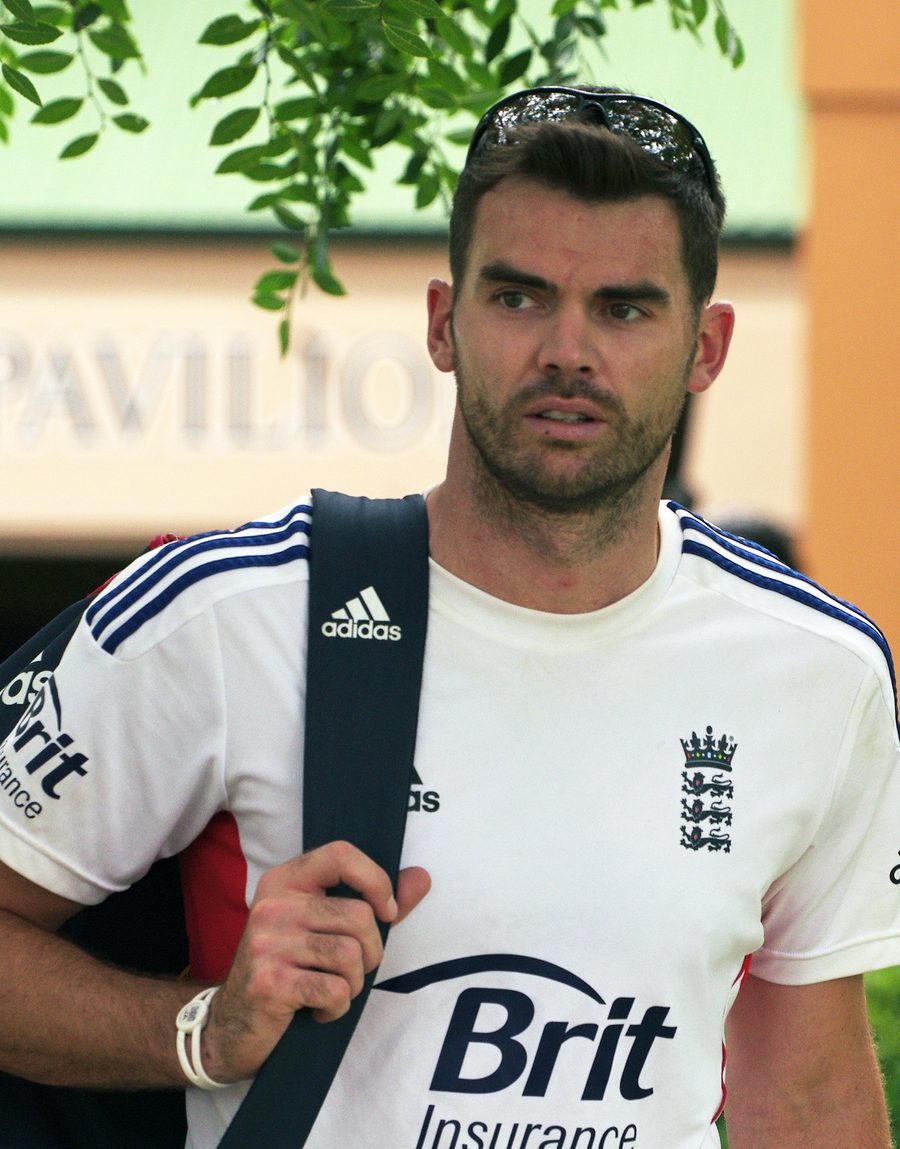
Sporting farewells are usually messy. Form collapses before the player admits it, or selectors act first and the ending happens in absentia, a name quietly missing from a squad list. James Anderson was granted the rarer version: a final Test announced in advance, at Lord's, against West Indies in July 2024, at the ground where he had made his debut twenty-one years earlier. It was stage-managed, unashamedly so, and it worked.
A decision made for him
The honest part of the story is that Anderson did not choose the timing. In April 2024, England's management — Ben Stokes, Brendon McCullum and the director of cricket, Rob Key — met him and told him the summer's first Test would be his last. The reasoning was structural rather than personal. England had an Ashes tour coming in 2025-26 and a bowling attack that needed rebuilding around younger fast bowlers; every Test Anderson played was a Test in which a successor wasn't learning the job. He was 41, still fit, still among their most reliable bowlers, and that was precisely the problem. There would never be a natural moment, so an artificial one was created.
Anderson made no secret of the fact that he would have carried on. He had said for years that he intended to play until his body stopped him, and his body had stubbornly declined to do so. But he accepted the decision publicly and without rancour, which set the tone for the send-off: a celebration rather than a wake. The contrast with Stuart Broad's exit a year earlier was often drawn — Broad chose his own ending mid-series at the Oval, Anderson had his chosen for him — and the two farewells, twelve months apart, closed England's greatest bowling partnership in the country's Test history.
The match itself
The Test began on 10 July 2024 and did not reach a fourth day. West Indies, a young side missing several senior players, were dismantled by an England attack in transition, and the week's genuinely significant cricket came from the other end of the age scale: Gus Atkinson, making his debut at 26, took twelve wickets in the match — among the best debut figures England have ever had — and rather neatly demonstrated the succession the management had been planning for. England won by an innings and 114 runs.
Anderson's own contribution was modest and tidy: wickets in each innings, economical spells, one final entry in the book to finish on 704 Test wickets. Nobody had come for the figures. The crowd stood every time he was thrown the ball, his daughters brought out the drinks, and the third morning built towards the moment the last West Indies wicket fell and the players funnelled him off through a guard of honour. He led the team off at the end, as he had at the start of the match when the side gave him the field alone for a moment. It was as close to a scripted ending as Test cricket allows.
What 188 Tests looked like from the last one
The farewell invited the retrospectives, and the retrospectives kept circling the same improbability: the span. A player who debuted against Zimbabwe in 2003 finished against a West Indies side whose captain had been a child when Anderson first played. He had bowled at three generations of batters. His first Test wickets came before Twenty20 cricket existed as a professional format; his last came two years after England had reorganised their entire Test method around it. The deeper numbers belong in the record piece, but the farewell week put the span itself on display: former team-mates from four distinct England eras were in the ground, from the 2005 generation to the Bazball one.
Lord's was the right venue beyond sentiment. Anderson's Test debut there in May 2003 had produced a five-wicket haul and his name on the honours board; his best innings figures, 7-42 against West Indies in 2017, came at the same ground. The circularity was unforced — the fixture list simply fell that way — but it gave the week its shape: the same pavilion, the same slope he had used expertly for two decades, one last time.
The reaction beyond England
The tributes from opponents were, if anything, warmer than the domestic ones. Virat Kohli, whose battles with Anderson across four series had been the defining bowler-batter contest of the era, spoke of him as the finest challenge of his career in English conditions. Australians who had spent years on the receiving end — and years pointing out his lesser record in their conditions — acknowledged the scale of 704 without the usual asterisks. Pat Cummins, by then leading the attack Anderson's England would no longer face, called the longevity close to inexplicable for a fast bowler.
There was also a quieter thread of appreciation from bowlers around the world for the craft itself — the swing, the wobble seam, the disguise, the technical inheritance he was leaving behind. Anderson had always been generous with the details of his method, and the generation now carrying it includes bowlers on every Test team.
From player to mentor, without leaving the building
The strangest feature of the retirement is that it barely was one. Within days of the Lord's Test, Anderson was back with the England squad in a newly created role as a bowling mentor for the remainder of the home summer, working with the seamers who would tour Australia in the next Ashes cycle. He was, by common consent, a natural at it — he had been informally coaching England's younger quicks for years — and the arrangement continued into subsequent series.
Nor did he stop playing. He returned to Lancashire in 2025, took county championship wickets at the age of 42 with his average intact, and entered short-format cricket's marketplace for the first time in over a decade, making himself available for the Hundred — a competition that had not existed for most of his Test career. The body that England's management had been so certain needed retiring simply carried on working. He never suggested the Test decision had been wrong; he also never quite conceded it had been necessary.
What the farewell settled
Endings shape reputations, fairly or not. Anderson's could easily have gone the other way: a slow fade through a losing Ashes, a dropped catch of a career trailing off in an empty stadium somewhere. Instead the last image is Lord's full, an innings victory, a guard of honour and a 41-year-old walking off with the fast-bowling wicket record safely out of reach. For a player whose case had always rested on accumulation rather than single spectacular days — no 10-wicket match hauls, famously — the farewell gave the career the one thing the scorecards never quite had: a defining scene.
England's succession, the actual point of the exercise, broadly worked. Atkinson's debut was the start of a genuine Test career; the attack that toured Australia the following winter was younger and faster, as designed; and the model of retiring a great player one series before decline rather than one series after it became, briefly, the most argued-about idea in English cricket. Whether it was brave planning or unnecessary haste is a question the next few Ashes cycles will answer. What is settled is the ledger it closed: 188 Tests, 704 wickets, 2003 to 2024, and no fast bowler anywhere near any of those numbers.