

James Anderson's 704 Test Wickets and Record Longevity
James AndersonEngland
By CricketTaken EditorialPublished Player analysis7 min read
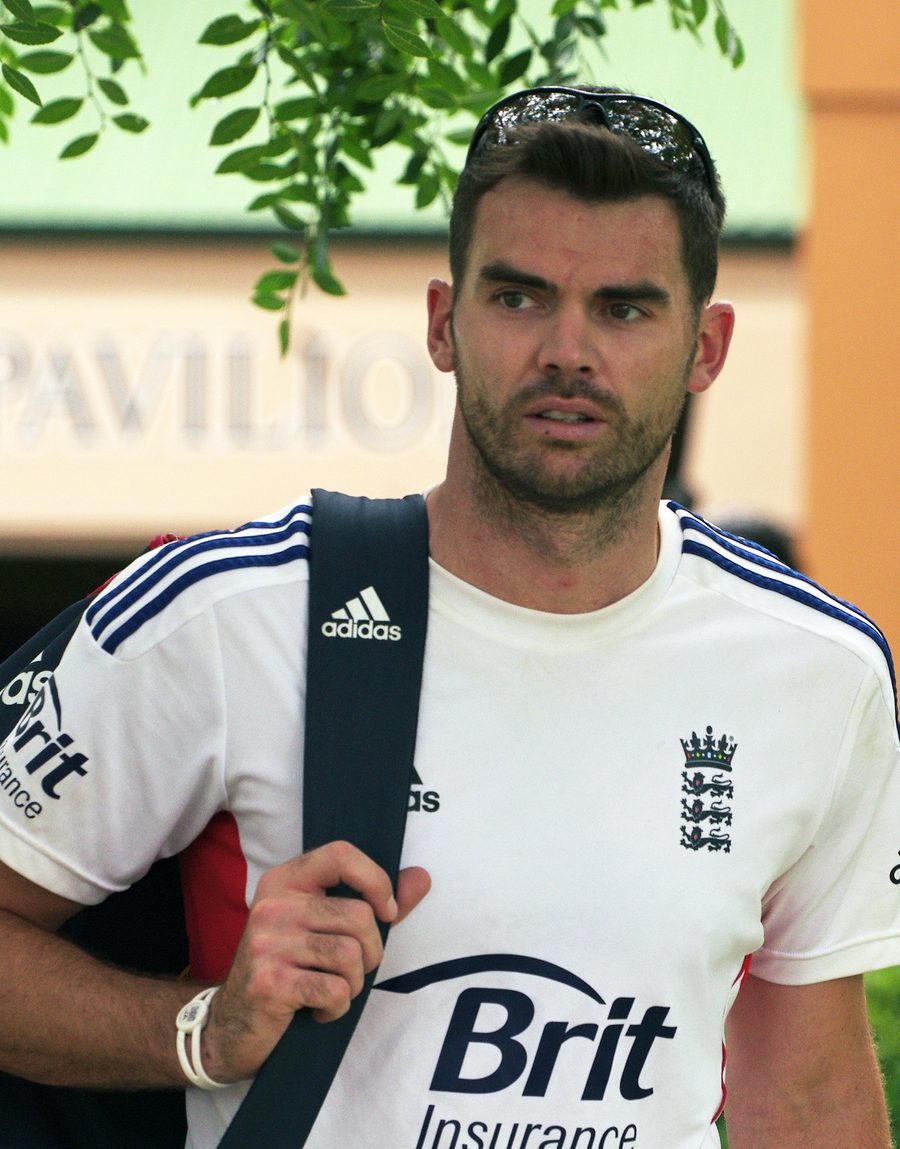
No fast bowler has taken more Test wickets than James Anderson, and it is reasonable to think none ever will. The final count was 704, gathered across 188 Tests and a little over twenty-one years, and only two men in the history of the game sit above him: Muttiah Muralitharan with 800 and Shane Warne with 708, both spinners, both retired years before Anderson was done. Spin is kind to ageing bodies. Fast bowling is not, which is why the record matters more than the raw number suggests. Everyone who bowls quick breaks down eventually. Anderson simply kept not breaking down.
A debut nobody planned for
Anderson arrived in international cricket almost by accident. Lancashire had a twenty-year-old from Burnley who swung the ball at a lively pace, and England, short of bowling on the 2002-03 tour of Australia, called him into the one-day squad before he had played a full season of county cricket. He made his ODI debut at the MCG in December 2002 with his name misspelt on the back of his shirt, and by the summer of 2003 he was opening the bowling in a Test match at Lord's against Zimbabwe. He took five wickets in the first innings. The story looked simple from there, and it was anything but.
The early years were volatile. Anderson at twenty-one had a whippy, slingy action, genuine pace and no real idea where the ball was going. He was in and out of the side, suffered a stress fracture of the back, and spent a period in the mid-2000s having his action remodelled by England's coaching staff before quietly reverting to something closer to the original. He was on the fringe of the 2005 Ashes squad without playing a Test in it, and when he did tour Australia in 2006-07 the results were grim. Five years into his international career, his Test bowling average was in the high thirties and there was a serious argument that he would end up as a one-day bowler only.
The 2008 turn
The career divides cleanly at 2008. When Andrew Flintoff and the senior bowlers of the 2005 generation began to fall away through injury, England rebuilt the attack around Anderson and a tall young bowler named Stuart Broad, and the pairing lasted fifteen years. Anderson learned to bowl within himself, gave up chasing the speed gun, and turned control into his weapon. From 2008 onwards his average fell steadily, decade after decade, which is the opposite of what fast bowlers' averages do.
The partnership with Broad became the most prolific new-ball pairing Test cricket has seen, with more than a thousand wickets between them in matches they played together. They were complementary rather than similar: Anderson full and swinging it, Broad hitting the pitch harder from a greater height, each covering the conditions the other found difficult. England's home record through the 2010s was built on the two of them operating in tandem on green-tinged pitches, and a fuller account of what that meant for English cricket has to start with the pair rather than either man alone.
What the record actually contains
| Measure | Figure |
|---|---|
| Tests | 188 |
| Wickets | 704 |
| Five-wicket hauls | 32 |
| Best innings figures | 7-42 |
| Span | May 2003 – July 2024 |
The 7-42 came against West Indies at Lord's in 2017, in his mid-thirties, which tells you something about the shape of the career: many of the best performances arrived late. He passed Glenn McGrath's 563, the previous record for a fast bowler, at the Oval in September 2018, bowling Mohammed Shami with the delivery that ended the match against India. He reached 600 against Pakistan at Southampton in 2020, and 700 in Dharamsala in March 2024, dismissing Kuldeep Yadav in his final Test on Indian soil. Each milestone was supposed to be the last, and each time he carried on.
The distribution of the wickets is the part critics fasten on. Anderson was substantially better in England than away, as almost every swing bowler is, and his early away record in Australia was poor. But the away numbers improved dramatically in the second half of his career. The 2010-11 Ashes, in which he took 24 wickets in a series England won 3-1 in Australia, is the obvious exhibit; the 2021 and 2024 performances in India, in his late thirties and early forties, on pitches offering him nothing, are the quieter ones.
The 2014 series and the batters he owned
Certain match-ups defined him. Virat Kohli's 2014 tour of England, in which Anderson dismissed him repeatedly and held him to 134 runs across ten innings, remains the most complete working-over of a great batter in the modern era, and the respect between the two afterwards was genuine — Kohli has said more than once that Anderson in England was the hardest examination he faced. Left-handers in general suffered: the ball angled in and leaving late is the hardest delivery in cricket to a left-hander, and Anderson bowled it for two decades.
There was also, improbably, the batting. Anderson was a genuine number eleven for most of his career, yet at Trent Bridge in 2014 he made 81 against India, sharing a last-wicket stand of 198 with Joe Root that remains among the largest tenth-wicket partnerships in Test history. He also holds a less welcome distinction, having been dismissed more times without scoring than any other England Test player, a statistic he wore with reasonable humour.
Why the longevity happened
Three things explain a fast bowler lasting to 41, and none of them is luck alone. The first is the action: Anderson's matured into one of the most repeatable in the game, economical enough that each delivery cost his body less than it costs most quicks. The second is workload intelligence. He gave up ODI cricket after the 2015 World Cup and never played at the T20 World Cup after 2010, effectively converting himself into a single-format bowler for his final decade while contemporaries wore themselves out across three.
The third is that he never stopped adding. The wobble-seam delivery he refined in the early 2010s gave him a method for flat pitches and old balls; the fuller examination of that craft belongs in its own piece. The point for the record is that a bowler whose entire early reputation rested on the swinging Dukes ball in English conditions found ways to take wickets in Chennai, Colombo and Sydney at an age when most of his generation were in commentary boxes.
The late years and the manner of the ending
Anderson played through the entire first cycle of the World Test Championship and into the third, and adapted once more when Brendon McCullum and Ben Stokes took over in 2022 and asked their bowlers for attacking lengths rather than containment. He was 40 when the new regime began and still opening the bowling. The 2023 Ashes was a quiet series for him by his standards, and that, more than any collapse in form, is what set the ending in motion: England's management decided in early 2024 that the attack had to be rebuilt before the next Ashes cycle, and told him so.
The farewell came at Lord's in July 2024, against West Indies, at the ground where it had started twenty-one years earlier. England won inside three days and Anderson walked off with 704 wickets, the full story of that week being its own subject. He moved almost immediately into a mentor role with the England bowlers, which surprised nobody who had watched him coach younger seamers informally for years — and then, rather more surprisingly, kept playing for Lancashire into 2025, taking county wickets at 42 and briefly turning himself into a Twenty20 free agent, with a stint in the Hundred draft to follow.
Where the record sits
Longevity records in cricket usually fall eventually. This one has unusual protection. The modern schedule pushes fast bowlers towards franchise leagues and away from the 188-Test volume Anderson accumulated; central contracts now manage quicks in short bursts; and the players with the skill to take 700 wickets increasingly lack the incentive to try. Of active bowlers, none is within 350 wickets of him, and the youngest of the realistic chasers are already past thirty.
The comparison that flatters him most is not with other fast bowlers but with the format itself. Test cricket changed shape twice during his career — the ascendancy of home advantage in the 2010s, then the tempo revolution of the 2020s — and he was a leading wicket-taker on both sides of each change. Whatever cricket's long history eventually makes of the era, its most durable fast bowler is settled. The number is 704, and it is not in any foreseeable danger.