

Jason Holder: The T20 Bowler He Became at 28
Jason HolderWest Indies
By CricketTaken EditorialPublished Player analysis7 min read
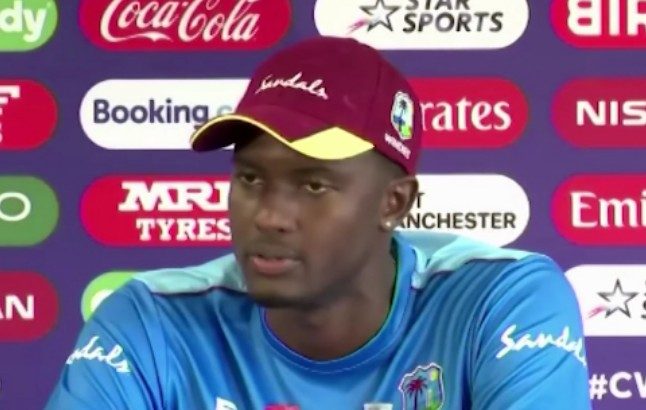
Jason Holder played his first Indian Premier League match in 2013 and, across three scattered seasons over four years, took five wickets from 216 deliveries at an average of 57. On that evidence he was a Test cricketer who did not have a Twenty20 game, which was a perfectly common thing to be and a description a great many good bowlers never escaped.
Then, from the 2020 season onwards, he took 65 wickets from 1,009 deliveries at an average around 19. Same bowler, same height, same pace. The change is one of the most complete mid-career reinventions the tournament has recorded, and it happened when he was already 28 and already the number one ranked Test all-rounder in the world.
The two halves, side by side
Computed from the ball-by-ball archive of every IPL match played through the 2026 season:
| Season | Franchise | Balls | Wkts | Econ | Avg |
|---|---|---|---|---|---|
| 2013 | Chennai Super Kings | 120 | 2 | 8.40 | 84.00 |
| 2014 | Rajasthan Royals | 18 | 1 | 11.67 | 35.00 |
| 2016 | Kolkata Knight Riders | 78 | 2 | 7.92 | 51.50 |
| 2020 | Sunrisers Hyderabad | 168 | 14 | 8.32 | 16.64 |
| 2021 | Sunrisers Hyderabad | 191 | 16 | 7.76 | 15.44 |
| 2022 | Lucknow Super Giants | 249 | 14 | 9.42 | 27.93 |
| 2023 | Rajasthan Royals | 171 | 4 | 9.96 | 71.00 |
| 2026 | Gujarat Titans | 230 | 17 | 7.57 | 17.06 |
The break between the 2016 line and the 2020 line is total. Before it he was a bowler being given occasional overs and being hit; after it he was, in three of five seasons, taking wickets at better than eighteen apiece.
The 2023 row is the exception and should not be smoothed over: four wickets at 71 for Rajasthan Royals is a bad season by any standard. The 2026 return of 17 wickets at 17.06 for Gujarat Titans, at an economy rate of 7.57, is his best combined figures in the competition, delivered at 34.
What changed
The mechanical answer is that he stopped bowling like a Test bowler. Holder is six foot seven and his natural asset is the angle a very tall bowler gets into a length ball — the delivery hits the pitch harder and higher than a batter expects, which in a Test match produces edges over several overs and in a T20 produces a boundary over midwicket, because the batter is already moving and the ball is sitting up at a hittable height.
The T20 version of him bowls fuller and slower. His career phase split shows where the runs and the wickets ended up.
| Phase | Balls | Runs | Wkts | Econ | Avg |
|---|---|---|---|---|---|
| Overs 1-6 | 360 | 528 | 9 | 8.80 | 58.67 |
| Overs 7-15 | 531 | 691 | 28 | 7.81 | 24.68 |
| Overs 16-20 | 334 | 532 | 33 | 9.56 | 16.12 |
The powerplay average of 58.67 is the residue of the early years, when he was given the new ball because he was tall and quick and it did not work. The death figures — 33 wickets at 16.12 from 334 deliveries — are the bowler he became. That average is among the better death-overs returns in the competition and comes from a very specific delivery: a slower ball from a great height, angled across the batter, which arrives at a length and a pace that makes clean hitting through the line close to impossible.
The middle-overs numbers, 28 wickets at 24.68 and 7.81 an over, are the other half of the reinvention. A tall seamer who can bowl cutters into the pitch in the middle overs is a genuine asset in Indian conditions, and it is a role that did not really exist as a specialism when he started.
Hyderabad, where it happened
| Franchise | Balls | Wkts | Econ | Avg |
|---|---|---|---|---|
| Sunrisers Hyderabad | 377 | 31 | 8.20 | 16.61 |
| Gujarat Titans | 230 | 17 | 7.57 | 17.06 |
| Lucknow Super Giants | 249 | 14 | 9.42 | 27.93 |
| Chennai Super Kings | 120 | 2 | 8.40 | 84.00 |
| Rajasthan Royals | 171 | 4 | 9.96 | 71.00 |
Two seasons at Sunrisers Hyderabad in 2020 and 2021 produced 31 wickets at 16.61, and that is where the change is located. He joined mid-tournament in 2020 as a replacement signing and became a first-choice bowler almost immediately.
The most instructive spell of that period came at Abu Dhabi in October 2021: 4 for 52 against Mumbai Indians, which is a return that shows both halves of him — four wickets and 52 runs in four overs, the wicket-taking and the risk in the same figures. His best economy performance is more recent: 4 for 24 against Punjab at the Narendra Modi Stadium in May 2026, and 3 for 12 at Jaipur a week later.
The Test career, which is the larger achievement
None of the above is the most impressive thing about Jason Holder, and it would be a distortion to leave it there.
He played 69 Tests, taking 162 wickets at 30.39 and scoring 3,073 runs at 29.83. In January 2019 he was ranked the number one all-rounder in the ICC Test rankings — the first West Indian to hold that position since Garfield Sobers in 1974. That fact deserves stating slowly. Between Sobers and Holder, West Indies produced some of the greatest fast bowlers in the history of the game and a long line of outstanding batters, and no player who did both well enough at the same time to reach the top of that list.
His 202 not out against England in January 2019 is the third-highest score by a number eight in Test history. A double century from the eighth position is a strange and rare thing, and it came in a series West Indies won.
He also captained West Indies in Tests from 2015 to 2020, taking the job at 23 in a period when the side was at a low ebb, players were in dispute with the board, and the strongest available team was frequently not the team on the field. Five years of that is a heavier assignment than the results record suggests, and his personal figures across the period held up while he was doing it.
Why the reinvention took so long
The honest reading is that Holder's Test skills and his early T20 failures came from the same place. Everything that made him a good Test bowler — the height, the seam movement, the willingness to bowl a probing length outside off — is a liability in the first six overs of a T20 innings, where the batter is looking for exactly that ball.
What took him time to acquire was not fitness or pace but a second method: slower balls, changes of angle, a fuller length at the death, and the tactical judgement about when to use which. Those are learned skills rather than natural ones, and they are learned by playing a lot of T20 cricket. Holder spent his twenties captaining a Test side and playing across formats for a board with limited resources, which is not the schedule that builds a franchise specialist.
The comparison that clarifies it is with the West Indian contemporaries who went the other way. Andre Russell and Kieron Pollard built their whole careers inside the T20 economy and were expert in it early; neither had a Test career of any substance. Holder took the other path, and the franchise expertise arrived a decade later than theirs because he was doing something else first.
What the record shows
Sixty-five wickets at around 19 across five seasons in the world's hardest T20 competition, achieved between the ages of 28 and 34, is a genuinely good record. Placed beside 162 Test wickets, 3,073 Test runs, a world number one all-rounder ranking and five years of captaincy, it is a footnote to something considerably larger.
The reason it is worth an article of its own is what it demonstrates about the format. There is a persistent assumption that T20 aptitude is innate — that a player either has the game for it or does not, and the ones who do reveal it young. Holder's record is the clearest available counter-example. He was, by any measure, bad at it for three seasons and then good at it for five, without any change in his physical ability. What changed was that he learned it.
For the full career figures across formats and franchises, see the Jason Holder profile. The phase, season and franchise splits here were computed from the ball-by-ball archive covering every IPL match through the 2026 season, counting only wickets credited to the bowler; his Test, ODI and T20I figures are published career totals.