

Marcus Stoinis: The All-Rounder Who Stopped Bowling
Marcus StoinisAustralia
By CricketTaken EditorialPublished Player analysis8 min read
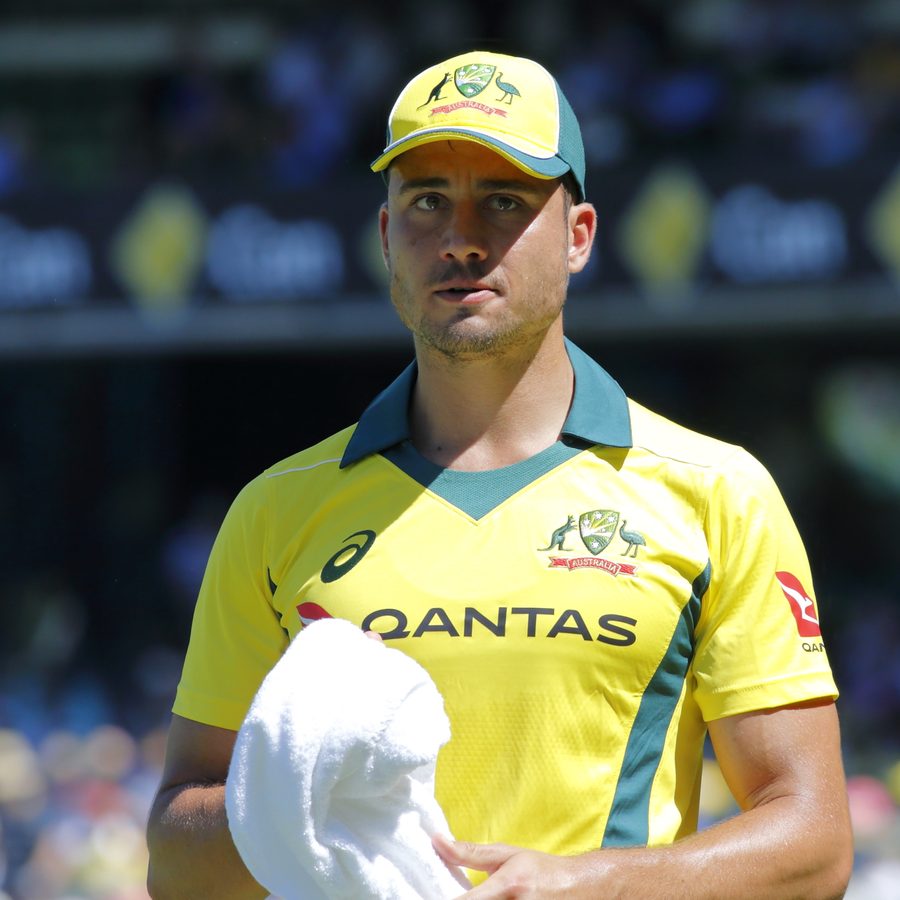
Marcus Stoinis has played eleven IPL seasons for four franchises. In that time he has bowled 191 deliveries — fewer than eight overs a season, and in most of those seasons none at all. He has 13 wickets at an economy of 9.58, which is a rate no captain would voluntarily use again.
That is a strange record for a player whose entire market identity, when the franchises started buying him in 2016, was fast-medium bowling all-rounder. Australia picked him in that role for a decade. His county and Sheffield Shield careers were built on it. Every auction listing described him that way. And in the competition where he has made his living, he essentially stopped doing the thing he was bought for, and got better paid as he went.
The interesting question is what he replaced it with, because "he became a batter" is not sufficient. Plenty of bowling all-rounders lose their bowling and disappear. Stoinis found a specific job — a middle-order hitter with the ball-striking of a finisher and the temperament to bat fifteen overs when required — and the four seasons in which he did it best came after he turned 33.
The record in two halves
| Season | Team | Inns | Runs | Avg | SR | 6s |
|---|---|---|---|---|---|---|
| 2016 | Punjab Kings | 5 | 146 | 36.5 | 135.2 | 4 |
| 2017 | Punjab Kings | 3 | 17 | 5.7 | 70.8 | 0 |
| 2018 | Punjab Kings | 7 | 99 | 24.8 | 130.3 | 4 |
| 2019 | Royal Challengers Bengaluru | 10 | 211 | 52.8 | 135.3 | 10 |
| 2020 | Delhi Capitals | 17 | 352 | 25.1 | 148.5 | 16 |
| 2021 | Delhi Capitals | 7 | 89 | 22.3 | 123.6 | 1 |
| 2022 | Lucknow Super Giants | 10 | 156 | 19.5 | 147.2 | 13 |
| 2023 | Lucknow Super Giants | 15 | 408 | 31.4 | 150.0 | 27 |
| 2024 | Lucknow Super Giants | 14 | 388 | 32.3 | 147.5 | 16 |
| 2025 | Punjab Kings | 11 | 160 | 26.7 | 186.0 | 15 |
| 2026 | Punjab Kings | 9 | 216 | 36.0 | 180.0 | 11 |
Read down the strike-rate column and the shape of the career is unmistakable. For his first four seasons Stoinis struck in the 130s or worse. From 2020 he has not gone below 147 in any season he played more than seven innings, and in his two Punjab seasons at 35 and 36 he struck at 186.0 and 180.0.
His career figures are 2,242 runs from 108 innings at 28.74, struck at 147.5, with 117 sixes. The average is unremarkable and the not-out column explains why it is not worse: 30 of those 108 innings ended with him unbeaten, which is the signature of a batter who is regularly still there at the end.
The innings that defines him
On 23 April 2024 at Chepauk, Lucknow Super Giants were set 211 by Chennai Super Kings and were 88 for 3 after eleven overs. Stoinis made 124 not out from 63 balls, with thirteen fours and six sixes, and Lucknow won by six wickets with three balls to spare. He needed 17 from the final over and took a six and three fours off it.
It was the highest individual score in a successful IPL chase at the time, passing a mark that had stood since 2011, and the highest successful T20 chase at that ground. It was also his maiden IPL hundred, in his ninth season.
What makes it representative rather than just spectacular is the shape of it. Stoinis came in with the required rate above eleven and eight overs left — the situation in which a middle-order batter either wins the game or is blamed for losing it — and he did not accelerate gradually. He batted at roughly two runs a ball for the entire innings, without a settling period, which is exactly the job he had spent four years learning to do at Delhi Capitals and Lucknow.
Why the bowling went, and why it did not matter
The bowling did not disappear through choice. Stoinis suffered repeated side and hamstring problems across his thirties, and a fast-medium bowler who cannot be relied upon for four overs is worse than no bowler at all in a T20 XI, because the captain has to plan an over he may not get.
The economy figures show the other half of it. At 9.58 across his IPL career, Stoinis's bowling was expensive even when available — he was a bowler who offered a seam-up option and hard length but neither the pace to hurry good batters nor the variations to survive at the death in an era when the death-overs standard rose sharply. Franchises worked this out at roughly the same rate his body did.
What is genuinely unusual is that his value went up anyway. Between 2020 and 2026 he was retained or bought by three different franchises as a batter first, and his 2025 and 2026 seasons at Punjab Kings — 376 runs from twenty innings at strike rates of 186 and 180 — are the most efficient hitting of his career. In a competition that prices all-rounders at a premium precisely because they fill two slots, Stoinis kept his place by being good enough at one.
The Australian career, which tells the same story differently
Stoinis's international record has the same structure, and it opens with the best argument the all-rounder description ever had. In only his second ODI, at Eden Park in January 2017, he made 146 not out from 117 balls with eleven sixes and took 3 for 49 — the first Australian to make a hundred and take three wickets in the same one-day international. Australia had been 67 for 6 chasing 287. He farmed the strike with Josh Hazlewood for the last wicket and was seven runs short when Hazlewood was run out by a direct hit from Kane Williamson. New Zealand won by six.
That is as complete an all-rounder's performance as the format allows, and it bought him years of selection on the promise that the bowling would come good.
It largely did not, and his most valuable international work came later and in a narrower role: middle-order hitting in T20, including in Australia's 2021 T20 World Cup winning campaign, where he was used almost purely as a batter who might bowl an over. He lost his Cricket Australia central contract at one point in his thirties and continued to be selected for white-ball squads anyway, which is a reasonable summary of how his career worked: never quite indispensable, never quite replaceable.
He also retired from ODI cricket in 2025 ahead of a Champions Trophy campaign, keeping himself available for T20 — the same narrowing, made explicit.
The honest limits of the argument
Stoinis's record has real holes and they should not be smoothed over.
His average of 28.74 is modest for a batter who has faced 1,520 balls in the competition, and in five of his eleven seasons he averaged under 27. Three of his seasons — 2017, 2021 and 2022 — were close to worthless: 262 runs in twenty innings between them. He has one hundred in eleven years and ten fifties, which for a batter who has played 108 innings is a low conversion rate and reflects a career spent arriving late in innings.
And the reinvention argument has a limit. Stoinis is not a top-order batter and never became one; he is a specialist for overs twelve to twenty, which is a role sides fill with two or three players and which is more replaceable than either an opener or a genuine all-rounder. The reason his career has lasted is partly that he does it very well and partly that the supply of players who do it well is short.
What the record actually supports
The claim his career supports is about the market rather than about him. Franchise cricket is bought and sold on job descriptions — bowling all-rounder, finisher, powerplay bowler, spin-hitter — and the auction assumes those descriptions are stable. Stoinis's record shows how thoroughly they are not. He was bought as one thing, became another inside four years, and the second thing turned out to be worth more in the IPL than the first had ever been.
That is not a small observation for anyone reading a squad list. The most useful version of a cricketer at 35 is frequently not the version the auction paid for at 26, and the sides that do best out of the market are the ones that notice the change first. Lucknow noticed in 2022 and got two 400-run seasons and the highest score in a chase in the competition's history. Punjab noticed in 2025 and got the fastest scoring of his career.
Stoinis will not finish with the record of a great Australian cricketer, and the bowling all-rounder Australia thought it was developing in 2015 never really existed. What exists instead is a specialist who was good enough at a narrow job to make eleven seasons out of it, which in a competition this ruthless is its own kind of achievement.
Sources and method
IPL season and career figures, including the bowling record, are taken from official competition records and cross-checked against this site's own match dataset. The 124 not out against Chennai Super Kings on 23 April 2024 and the 146 not out against New Zealand at Auckland in 2017 follow official scorecards and match reports. The 2021 T20 World Cup role, the ODI retirement and the central-contract details are drawn from Cricket Australia statements and contemporary reporting. The injury history is described in general terms from published reporting rather than any medical source, and nothing here is computed from ball-by-ball data.