

Why Quinton de Kock Quit Test Cricket at 29
Quinton de KockSouth Africa
By CricketTaken EditorialPublished Player analysis7 min read
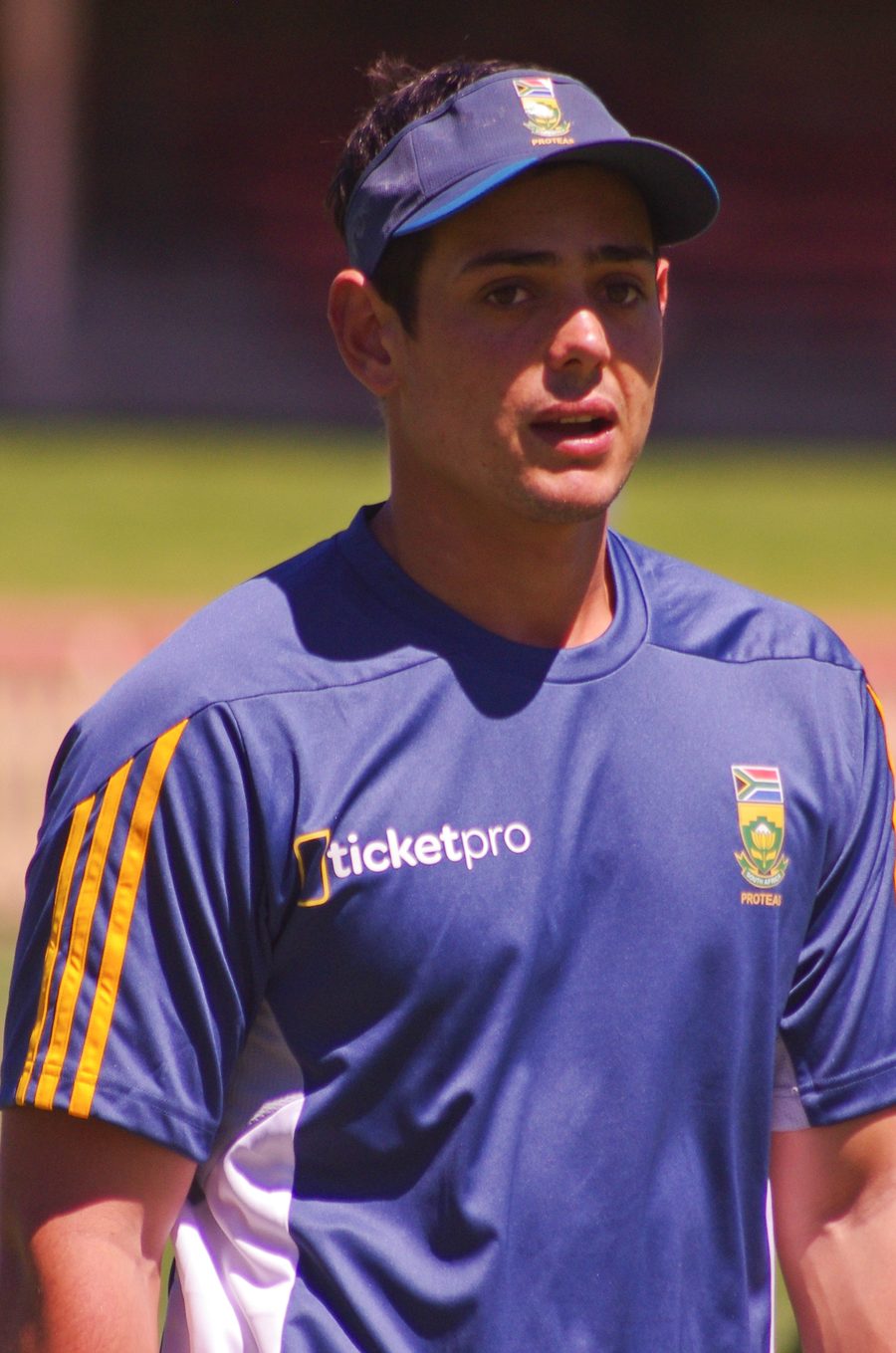
On 30 December 2021, in the middle of a home Test series against India, Quinton de Kock announced he was finished with the format. He was twenty-nine. He had 3,300 Test runs at 38.82 with six hundreds, and he had reached 200 Test dismissals faster than any wicketkeeper in the game's history, Adam Gilchrist included. Nobody had asked him to go, and South Africa had no obvious replacement.
Test retirements at twenty-nine are usually read as a symptom — of burnout, of money, of a board that has lost its players. Some of that applies here. But the four years since have made a narrower and more interesting case: that de Kock made an accurate assessment of where his own value lay, and that a wicketkeeper-batter who plays three formats is being asked to do something the modern calendar no longer permits.
What the Test career actually was
It is worth resisting the temptation to file the Test record as unfinished business. An average of 38.82 for a wicketkeeper across fifty-four Tests is a good return, and it was compiled largely in a difficult period for South African batting, on home surfaces that had stopped being the run-scoring paradise of the Amla and Kallis years and in a side that had lost most of its senior players at once.
The keeping is the part of the record that argues hardest. Fastest to 150 dismissals, in thirty-five Tests; fastest to 200, in forty-seven; more than 230 dismissals in total. His 141 not out against West Indies in June 2021 took him past 3,000 Test runs as a South African wicketkeeper, a mark only Mark Boucher had reached before him.
Against that: the hundreds came in clusters and then stopped, and the last two years of the Test career produced long stretches of thirties. Any honest reading has to allow that the format was going less well for him than the aggregate suggests, and that a player good enough to know it might reasonably decide to spend his remaining years where the returns were higher.
The 2021 T20 World Cup, and the day he did not play
Any account of de Kock has to deal with October 2021, because it is the one episode that shaped how he was seen. On the morning of South Africa's match against West Indies in Dubai, Cricket South Africa issued a directive that all players would take the knee before matches. De Kock withdrew from the game rather than comply and gave no immediate explanation.
The reaction was severe and largely justified in its severity. What followed was a statement in which he apologised, said he supported the anti-racism cause and objected to being instructed at short notice on how to demonstrate it, and explained something of his own family background. He took the knee for the remaining matches of the tournament.
Two things are true about the episode. The first is that a directive issued hours before a World Cup match was poor administration, and CSA's own subsequent handling accepted as much. The second is that a senior player choosing that morning to make a point about process, on the one gesture in world sport least amenable to a procedural objection, was a serious misjudgment. The episode did not end his international career, but it is why a very good cricketer spent a period being discussed mostly as a controversy.
What the retirement bought
The white-ball case for the decision is straightforward, and the 2023 World Cup is the proof. De Kock had said before the tournament that it would be his last in the fifty-over format. He scored more than 500 runs — the first batter to pass 500 in that edition — with four centuries: 100 against Sri Lanka, 109 against Australia, 174 against Bangladesh and 114 against New Zealand.
Two of those numbers are worth pausing on. The 174 was the highest score any specialist wicketkeeper had made in a World Cup match. And no South African had previously scored three hundreds in a single edition, let alone four. He also took six catches in a match against Afghanistan, matching a World Cup record held by Gilchrist and Sarfaraz Ahmed. It was, by a distance, the best tournament any South African wicketkeeper has had, and it was played by a man in the last of the four years he had freed up by leaving Test cricket.
The wider one-day record supports the same conclusion: more than 7,000 ODI runs at 46.55 with twenty-three hundreds, and the fastest South African to a thousand runs in the format, reaching it in twenty-one innings. Seven of those hundreds have come against India, matching the most any batter has made against a single opponent in the format.
The early sequence, and what it established
The talent was never gradual. In December 2013, at twenty-one, de Kock scored 135 at Johannesburg, 106 at Durban and 101 at Centurion in successive one-day internationals against India — three consecutive ODI centuries, a feat only a handful of batters have managed.
That sequence set the pattern of his career, which is that de Kock scores in bursts. He is not a batter who accumulates steadily across a series; he is one who produces two or three innings that decide it. The method explains both the peaks and the troughs: a left-hander who plays early and square of the wicket, who scores heavily when the ball is coming on and can look ordinary when it is not.
The franchise career, and a role that kept moving
His Indian Premier League record is a long one — thirteen seasons across six franchises, more than 3,400 runs. He was the leading run-scorer for Mumbai Indians in their title-winning 2019 season, opening with Rohit Sharma, which is the tidiest expression of what he offers a T20 side: a keeper who can bat in the powerplay without needing protection.
The single innings people cite is his 140 not out from 70 balls for Lucknow Super Giants against Kolkata Knight Riders in May 2022, in a match Lucknow had to win to stay in contention. He added a 97 not out for Kolkata against Rajasthan in 2025. Across the franchise game he has also played in the SA20 for Durban's Super Giants, in the Caribbean Premier League for Barbados Royals, and in the Big Bash — the standard portfolio of a specialist white-ball professional, which is what the 2021 decision turned him into.
The argument the career makes
South Africa has produced a specific kind of cricketer for thirty years: the wicketkeeper-batter who is expected to keep in all three formats, open in two of them, and captain when asked. Boucher did it. AB de Villiers was asked to do it and gave the gloves up and took them back more than once. De Kock did it for eight years, captained in all three formats between 2019 and 2021, and then declined to keep doing it.
The case that he was right rests on what happened next: the best World Cup by a South African keeper, seven years of high-volume white-ball run-scoring, and a career that at thirty-four is still producing hundreds against India. The case against is simply the counterfactual — sixty more Tests, and a keeping record nobody would have caught. There is no way to settle it, and the honest position is that South African cricket lost something real and de Kock's own record gained something real.
What is not arguable is that his decision was early rather than eccentric. In the years since, multiple leading players across the game have made the same choice about the format that pays least and costs most, and de Kock was among the first to make it while still in his prime and first-choice. That, more than any individual innings, is what his career will be cited for: the wicketkeeper who worked out what the calendar was doing to his trade and acted on it.
The rest of the record sits alongside South African cricket's long line of keeper-batters, from Boucher through de Villiers to Heinrich Klaasen. In the history of the South African game, de Kock's chapter is the one where the job stopped being a three-format job. Career figures are on the Quinton de Kock profile.
Sources and method
Career aggregates, dismissal records, match figures and dates are taken from published records and official ICC, Cricket South Africa and IPL sources, cross-checked against contemporary reports of the matches and tournaments described. The account of the October 2021 T20 World Cup episode follows the public statements made at the time by the player and the board. Assessments of the retirement decision are the author's.