

Rahul Dravid's Coaching Career and the 2024 T20 World Cup
Rahul DravidIndia
By CricketTaken EditorialPublished Player analysis9 min read
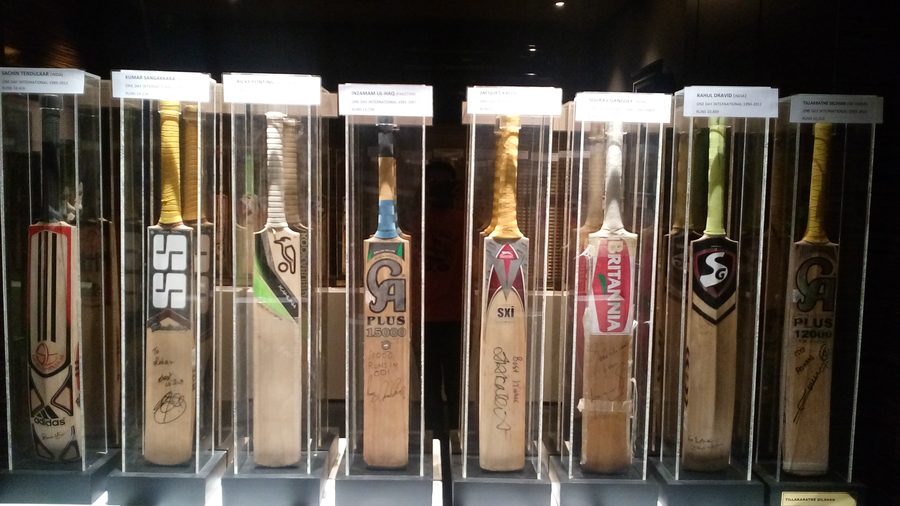
Retired batters usually go into commentary. Rahul Dravid went into the National Cricket Academy and spent eight years working with players nobody outside domestic cricket could name, before taking the senior India job at forty-eight and giving it up thirty-one months later on the night he won a World Cup. The sequence is unusual enough to be worth setting out in order, because the ending only makes sense in the light of the middle.
The Rajasthan years, and a first look at building a side
Dravid's franchise career began at Royal Challengers, where he captained the side in the inaugural 2008 season and made 371 runs at a strike rate of 124.5, the best of his three years there. He moved to Rajasthan Royals in 2011 and led them in 2012 and 2013.
His full record with the bat in the competition is modest by the standards of what came later, and entirely consistent with the format as it was played between 2008 and 2013.
| Season | Team | Inns | Runs | Avg | SR | HS | 50s |
|---|---|---|---|---|---|---|---|
| 2008 | Royal Challengers | 14 | 371 | 28.5 | 124.5 | 75 | 2 |
| 2009 | Royal Challengers | 12 | 271 | 22.6 | 115.8 | 66 | 1 |
| 2010 | Royal Challengers | 11 | 256 | 28.4 | 128.6 | 52 | 1 |
| 2011 | Rajasthan Royals | 12 | 343 | 31.2 | 109.2 | 66 | 1 |
| 2012 | Rajasthan Royals | 16 | 462 | 28.9 | 112.1 | 58 | 2 |
| 2013 | Rajasthan Royals | 17 | 471 | 29.4 | 110.8 | 65 | 4 |
| Total | 82 | 2174 | 28.23 | 115.52 | 75 | 11 |
Two hundred and sixty-eight fours and twenty-eight sixes across six seasons is a striking ratio, and it tells you exactly what sort of Twenty20 batter he was: a placer of the ball who ran hard, in an era when that was still viable at the top of an order.
The captaincy is the more interesting part. Rajasthan under Dravid were the least expensively assembled squad in the competition and reached the playoffs in 2013 with a side built around uncapped Indian players and one or two overseas specialists. Pravin Tambe, a leg spinner who had never played first-class cricket, made his debut at forty-one under him. Dravid retired from playing after that season and stayed on as the franchise's mentor, which was the first job in which his employment depended on other people's runs rather than his own.
The under-19 and India A apprenticeship
In 2015 he took charge of India's under-19 and A sides. It was not an obvious appointment. The role has usually gone to former domestic coaches, and it involves long tours to Australia, South Africa and the Caribbean with squads that change every eighteen months.
He treated it as a selection and development brief rather than a results brief, and said so publicly. At the 2016 under-19 World Cup his side reached the final and lost to West Indies. Two years later India won the tournament in New Zealand. More significant than either result was the policy he applied to the age-group squads: every member of the squad who was fit had to play, regardless of what it did to the balance of the eleven, on the reasoning that an under-19 tournament exists to expose players rather than to be won.
He also reportedly asked for his own performance bonus after the 2018 title to be distributed among the support staff. That story circulated widely at the time and is consistent with everything else about how he ran the programme.
The output is easier to see now than it was then. Rishabh Pant, Shubman Gill, Prithvi Shaw, Washington Sundar, Yashasvi Jaiswal and a long list of others came through the under-19 or India A structure while he was running it, and several of them arrived in the Test side having already made hundreds abroad in A-team cricket. That was the point of the exercise. India's away record in the 2010s improved partly because the players who toured had toured before.
He became head of the National Cricket Academy in 2019, which gave him responsibility for the whole pathway, including rehabilitation for injured internationals. It is an administrative job and he did it for two years without generating a single quotable line, which by then was recognisable as method.
Taking the senior job in November 2021
Dravid succeeded Ravi Shastri after the 2021 T20 World Cup, where India had gone out at the group stage. He had turned the job down before, in 2019 and again in 2021, and the reasons he eventually gave were about the volume of travel and the effect on his family rather than about the cricket.
The circumstances were not gentle. His first eighteen months contained the end of Virat Kohli's captaincy across all three formats, a split-captaincy debate the board never quite resolved in public, and the handover to Rohit Sharma — a sequence of transitions that had unseated coaching regimes before. Dravid's method through it was to say as little as possible and to make the dressing room boring in the most useful sense: selection meetings ran on evidence, dropped players were told why in person, and no camp story leaked. Players who worked under both regimes described the change less as tactical than atmospheric. The coach who had been the least quotable great player of his era ran the least quotable dressing room in international cricket, and in an Indian media environment that treats silence as a vacuum to be filled, that was a daily achievement rather than a passive one.
The tenure divides cleanly. In bilateral cricket India were dominant, particularly at home, and the depth of the squad meant that second-string sides won series abroad while first-choice players rested. In global tournaments the side kept reaching the last stage and losing it.
- The 2022 T20 World Cup ended with a ten-wicket semi-final defeat to England at Adelaide, in which India were bowled out of the powerplay and never recovered.
- The 2021-2023 World Test Championship final at The Oval was lost to Australia by 209 runs, India's second consecutive defeat in that final.
- The 2023 World Cup produced ten wins out of ten and a defeat in the final at Ahmedabad, to Australia, by six wickets.
Against the tournament near-misses sits a bilateral ledger that was consistently strong and occasionally emphatic. India won home Test series against New Zealand, Sri Lanka and then Australia, taking the Border-Gavaskar series 2-1 in early 2023, and finished the tenure by beating England 4-1 at home in early 2024 — a series England's much-discussed attacking method was widely expected to make close, and which turned instead on a rookie Indian batting order out-scoring the visitors on turning pitches. The away blemish that lingered was the rescheduled Edgbaston Test of July 2022, where England chased down 378, at that point the highest successful fourth-innings pursuit in their history, to level a series India had led since the previous summer.
The white-ball bilateral record was stronger still, inflated by depth: second-string squads sent to Ireland, Zimbabwe and elsewhere kept winning, which was itself a product of the pathway Dravid had spent the previous decade building. And in September 2023, weeks before the World Cup, India won the Asia Cup in Colombo, the only senior trophy of the tenure before Barbados.
The 2023 tournament is the one that hurt. India had been the best side in every phase of it, Virat Kohli made 765 runs and Mohammed Shami took 24 wickets, and the batting failed for the only time on the day it mattered. Dravid's contract expired with that match. He was persuaded to extend it by seven months to cover one more tournament.
Barbados, June 2024
India went through the 2024 T20 World Cup unbeaten. The final at Kensington Oval against South Africa was the closest thing to a proper contest they faced. India made 176 for 7, with Kohli scoring 76 from 59 after the innings began at 34 for 3. South Africa needed 30 from 30 with six wickets standing and lost by seven runs, Jasprit Bumrah and Hardik Pandya bowling the last four overs between them.
Bumrah was player of the tournament. Kohli was player of the match and retired from the format at the presentation. Rohit Sharma did the same. Dravid's contract ended that night and he did not seek another.
Two things about the campaign are worth recording. The first is selection: India picked four frontline spin options for a tournament in the Caribbean and the United States, which was a departure from how they had approached the previous two editions, and the pitches in New York and the eastern Caribbean rewarded it heavily. The second is that Dravid, who had spent a playing career being conspicuously undemonstrative, was carried around the ground by the squad and looked as pleased as anyone there has ever looked. It was the only global trophy of his career in either role.
What the record actually shows
The scorecard on his coaching tenure reads: one World Cup won, two global finals lost, a home Test record close to unbeaten, and a squad that got noticeably deeper. That last item is the part that will matter longest. India used more than thirty players in international cricket across some of those years, largely because of the workload management he had helped design at the academy, and the second-choice sides kept winning.
The criticisms were real. India's approach in the middle overs of one-day cricket was conservative for most of 2022 and early 2023, and it was changed only after a run of poor results. There was a period in 2022 where rotation had gone far enough that few people could name the first-choice Twenty20 eleven. Dravid's answer, when he gave one, was usually a version of the argument he had made about under-19 cricket: that the point of a two-year cycle is to arrive at a tournament with options.
Back to Rajasthan, and what comes next
He returned to Rajasthan Royals as head coach for the 2025 season, twelve years after captaining them, which closed a loop that had opened in 2011. The franchise had spent a decade recruiting the kind of uncapped domestic player he had spent his second career developing.
The wider point is about what a coaching career can look like in Indian cricket. The conventional route is retirement, commentary, a franchise job, and eventually the national side if the results align. Dravid took the age-group route, which pays less, generates no publicity and is usually a terminal posting, and arrived at the senior job with eight years of knowledge about players the selectors were still arguing over. Anyone looking at the structures behind Indian cricket over the past decade will find his fingerprints on the pathway more than on any single result.
For the playing career that preceded all of this, see his Test batting record and the away wins he built.