

Rahul Dravid's Test Record and the Making of the Wall
Rahul DravidIndia
By CricketTaken EditorialPublished Player analysis8 min read
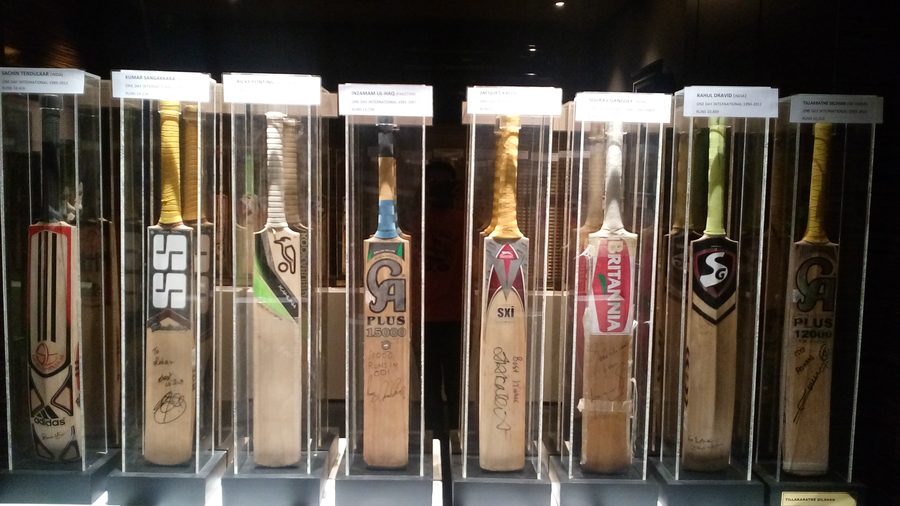
The nickname was accurate and unfair at the same time. Calling Rahul Dravid the Wall described what he did to bowling attacks over five days and said nothing about how he did it, which was mostly by scoring runs rather than by refusing to. A wall does not make 270 in Rawalpindi. It does not have a cover drive that people still describe from memory a quarter of a century later. The label stuck because Indian cricket in the late 1990s badly needed somebody who could survive, and Dravid could, and the surviving was more novel than the scoring.
Lord's, June 1996, and the batter who arrived fully formed
Dravid's first Test innings lasted more than five hours. He came in at Lord's in the second Test of the 1996 tour, with India three down and struggling, and was out for 95, caught behind off Chris Lewis. Sourav Ganguly, also on debut, made 131 at the other end and got the headlines. Dravid got the reputation, which turned out to be the more durable currency.
What is striking about that innings, watched back, is how little his method changed afterwards. The head position, the late playing of the ball under the eyes, the willingness to leave for long periods outside off stump: all of it was already there at twenty-three. He had come out of a Karnataka system that produced technically orthodox batters as a matter of habit, and out of a long apprenticeship in first-class cricket where he had been scoring heavily for four seasons before India picked him. Almost nothing in his subsequent career required him to rebuild anything.
The first hundred took eleven Tests, which was longer than it should have been. He passed fifty repeatedly in that period without converting, and the conversion problem was solved permanently in Johannesburg in December 1996, where he made 148 in an innings that lasted the best part of a day on a pitch that had been unplayable at both ends of the match. From that point the record is essentially uninterrupted for fifteen years.
The volume, and what the volume cost the opposition
The headline figures are these. Dravid played 164 Tests and scored more than 13,200 runs at an average above 52, with 36 hundreds and 63 fifties. Only a handful of batters in the game's history have finished with a larger aggregate. But the number that explains him best is not the runs. It is the deliveries: he faced more than 31,000 balls in Test cricket, more than any batter had before him, and roughly 4,000 more than Sachin Tendulkar despite playing fewer innings.
That gap is the whole argument. Two players of the same generation, in the same order, and one of them stayed at the crease for four thousand more deliveries. Every one of those balls was an over a bowling attack spent not getting a wicket, on legs that had to bowl again after tea. India's away record improved in the early 2000s for several reasons, and one of them was that the opposition's fourth and fifth bowlers were being used far earlier in an innings than they were designed to be.
He also held 210 catches, the most by any outfielder in Test cricket at the time he retired, almost all of them at first slip. The two records are related. A batter who watches the ball onto the bat for thirty thousand deliveries is a batter with a good idea of where it goes when it takes an edge.
Number three, and the job nobody wants
Dravid batted at three in Tests for the bulk of his career, and it is worth being clear about what that position asks. If the opening pair fails, the number three walks in against a new ball in the fourth over with the field up. If they succeed, he waits ninety minutes with his pads on and then comes in to a soft ball and a set field. He has to be able to do both, and the two jobs require opposite instincts.
India had never really solved the position before him. The order was built around Tendulkar at four, which meant somebody had to absorb the new ball's second wave and get him in with the shine off. Dravid did that for a decade, and the arrangement was so stable that its cost went unremarked: he was routinely walking in at 20 for 1 in Durban or Perth while the batter who took most of the credit came in at 90 for 2.
His highest scores show what happened when the job went well.
| Score | Opposition | Venue | Year |
|---|---|---|---|
| 270 | Pakistan | Rawalpindi | 2004 |
| 233 | Australia | Adelaide | 2003 |
| 222 | New Zealand | Ahmedabad | 2003 |
| 217 | England | The Oval | 2002 |
| 180 | Australia | Kolkata | 2001 |
Three of those five were made abroad, and two of them in matches India won from behind. The away wins of that period are a separate story, but they were built on this record rather than alongside it.
Partnerships as a specialism
Dravid is the batter other batters made runs with. He was involved in more Test partnership runs than anyone, and the two biggest stands of his career are both in the record books for different reasons. The 376 he added with VVS Laxman at Eden Gardens in 2001 turned a follow-on into a win. The 410 he put on with Virender Sehwag at Lahore in January 2006 was for the first wicket, in a match where he had gone up the order, and remains one of the largest opening stands in Test history.
The mechanism was not complicated. Dravid ran hard between the wickets, called clearly, and almost never got a partner run out. He also had an unusual willingness to let the other batter take the strike against the bowler he was struggling with, which sounds obvious and is rare. Batters who scored quickly enjoyed batting with him because he removed the pressure to keep the scoreboard moving; he was already doing it in ones and twos.
The one-day record that gets misread
The received view is that Dravid was a Test player who tolerated one-day cricket. The record says otherwise. He finished with 344 one-day internationals, more than 10,800 runs at an average close to 40, and 12 hundreds. He was the leading run-scorer at the 1999 World Cup with 461 runs, including 145 at Taunton in a stand of 318 with Ganguly, which stood as the highest partnership in one-day international cricket for eleven years.
Then there is the wicketkeeping. From 2003 onwards Dravid kept in roughly seventy one-day internationals, not because he was good at it but because it let India play an extra batter. He was a competent gloveman rather than a specialist, and the arrangement worked well enough that India reached the final of the 2003 World Cup with a top order that ran six deep. Australia made 359 for 2 at the Wanderers and won by 125 runs, which was not a keeping problem.
Volunteering to keep is the single most revealing thing in his career. A batter with his record had every reason to refuse. He took it on for four years, damaged his own batting numbers in the process, and it is still occasionally described as a footnote.
Captaincy, briefly and awkwardly
He led India in 25 Tests between 2005 and 2007, and the record is better than the memory of it. India won a Test series in the West Indies in 2006, their first there since 1971, and won in England in 2007, their first there since 1986. Those are two of the more significant away results in the history of Indian cricket, and both came under his captaincy.
What ended the tenure was the 2007 World Cup, where India lost to Bangladesh in their opening match and to Sri Lanka in their third and went out at the group stage. The reaction at home was severe. Dravid resigned the captaincy in September 2007 and never gave a full public account of why, which was in character. The 2006 declaration at Multan, made with Tendulkar unbeaten on 194, had already established that he would take unpopular decisions and then decline to explain them at length.
The last year, and the second peak
Most long careers end quietly. Dravid's ended with the best batting he had done in five years. On the 2011 tour of England, in a side that lost all four Tests, he scored 461 runs at an average above 76, with three hundreds: an unbeaten 103 at Lord's when the next-highest score in the innings was 43, 117 at Trent Bridge, and 146 at The Oval. He also opened the batting in two of those matches because India ran out of fit openers, at the age of thirty-eight, in English conditions, against James Anderson and Stuart Broad with a Duke ball.
That series is the cleanest statement of what he was. The team was losing heavily, the tour was a shambles, and one batter kept making hundreds in the manner he had used since 1996 because nothing about it had ever depended on the ball being soft or the situation being comfortable.
He also, in August of that year, played the only Twenty20 international of his career at Old Trafford and hit three consecutive sixes off Samit Patel, having announced his retirement from limited-overs cricket the previous week. It is the one piece of showmanship in twenty years and he seemed embarrassed by it afterwards.
Where the record sits now
Dravid retired in March 2012 with a career that is easier to admire than to imitate. Batters who tried to copy the method usually got the leaving and not the scoring; Cheteshwar Pujara came closest, and even he did not have the range of shots Dravid could reach for when the situation changed. The style has since fallen further out of fashion, for reasons that have more to do with the Indian Premier League calendar than with anything Dravid did.
The Wall label survives because it is memorable. It is also the least useful description available. He averaged over 50 away from home as well as at it, made hundreds in every Test-playing country he visited, and scored at a rate that was unremarkable rather than slow. What he actually was is the batter India used to buy time, and India had never had one before.
For the innings that turned that ability into results, see the 2001 Kolkata Test and the away wins that followed, and for what he did after retiring, the coaching career that ended with a World Cup.