

Dravid at Eden Gardens 2001 and India's Away Test Wins
Rahul DravidIndia
By CricketTaken EditorialPublished Player analysis9 min read
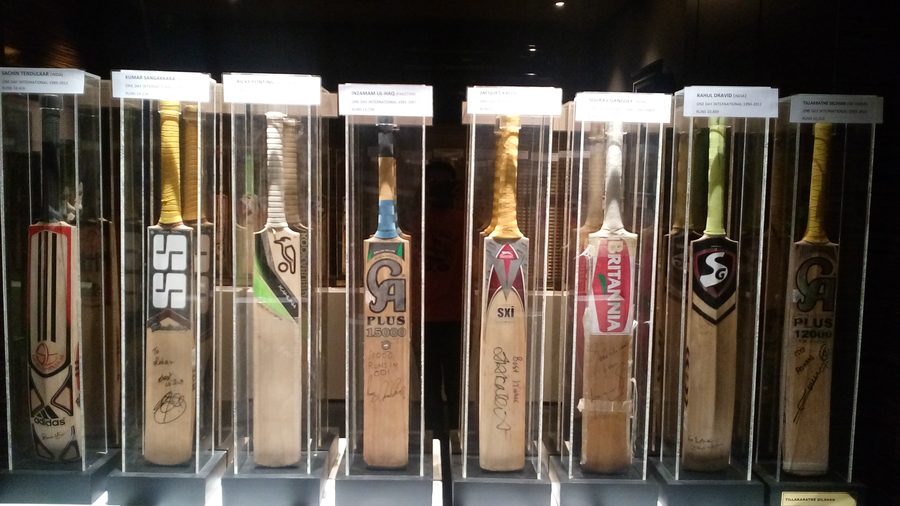
For most of the twentieth century India were a side that won at home and drew, at best, everywhere else. Between 1986 and 2000 they won three Tests abroad against sides other than Bangladesh and Zimbabwe. The change came quickly, between 2001 and 2007, and it was driven by a bowling attack that finally took twenty wickets abroad and a middle order that gave that attack something to bowl at. Rahul Dravid was the second half of that sentence, more consistently than anyone.
The follow-on at Eden Gardens
Australia arrived in India in early 2001 having won sixteen consecutive Tests. They won the first at Mumbai inside three days, then made 445 at Eden Gardens and bowled India out for 171. Steve Waugh enforced the follow-on. India, 274 behind, were 232 for 4 on the third afternoon with two days to play, which is a scoreline that ends in an innings defeat far more often than not.
What happened next is well known and worth restating precisely because the mythology has flattened it. VVS Laxman, promoted to three, and Dravid, dropped to six with a fever, batted through the entire fourth day. Not most of it. All of it: ninety overs, no wicket, 335 runs added between lunch on day three and the close of day four. Laxman made 281, Dravid 180, and their partnership of 376 for the fifth wicket is still the reference point for the format in India.
Dravid's contribution has always been the junior one in the retelling, and the arithmetic supports that up to a point. Laxman played the better innings and made a hundred more runs. But Laxman had been in for a session and a half by the time Dravid came in, and Dravid arrived with the innings still lost. He had made 25 runs in three previous innings that series and was being openly discussed as a candidate to be dropped. Batting for a full day in that state, against Glenn McGrath and Shane Warne, with a partner playing the innings of his life at the other end and no margin for a single error, is a harder thing than the scorecard suggests.
India declared at 657 for 7, set Australia 384, and Harbhajan Singh took six in the fourth innings to win it by 171 runs. The streak ended. India won at Chennai three weeks later to take the series 2-1.
What the fourth day did to a great attack
The bowling that partnership absorbed deserves its own paragraph, because the mythology tends to treat the runs as though they came against a tiring club attack. Australia's bowlers that day were McGrath, Warne, Jason Gillespie and Michael Kasprowicz, with the part-timers pressed into service as the day wore on — an attack from a side on a sixteen-match winning run, operating with a lead and a fresh ball available. Steve Waugh tried everything a captain can try: short spells, long spells, leg theory, both spinners' footmarks, fields with no name.
The two batters answered it in opposite registers, which is what made the day so hard to bowl through. Laxman used his wrists to take Warne from outside off stump through midwicket, against the spin, repeatedly and apparently without risk — treatment Warne received from nobody else in his career on that scale. Dravid meanwhile played the percentages at the other end, leaving on length, working the gaps, refusing every invitation. A bowling plan that worked on one batter was wrong for the other. By the final session Australia's fielders were visibly waiting for the declaration that did not come until the fifth morning.
There is one more detail worth restoring: Harbhajan had taken a hat-trick in Australia's first innings, the first by an Indian in Test cricket, and it had been almost forgotten within forty-eight hours. A match containing a landmark hat-trick, a 281 and a win after following on has too many stories for one scorecard, which is roughly the definition of a great Test.
Headingley, and batting first in August
The following year at Headingley, Sourav Ganguly chose to bat on a grey Leeds morning with the floodlights on, which was widely described at the time as reckless. Dravid made 148 in a little under eight hours, Sachin Tendulkar 193 and Ganguly 128. India declared on 628 for 8 and won by an innings and 46 runs, their first Test win in England for sixteen years.
Dravid's part was the opening act. He batted through the difficult first day, when the ball moved and the light never improved, and made the pitch look ordinary for everybody who came after him. This is the pattern that recurs: his major overseas innings tend to be the ones that come first in a match, and by the time the more attractive scores arrive the conditions have changed. That is an accident of batting position and a fact about how his method worked.
He had made 217 at The Oval earlier in the same series. Three hundreds in four Tests in England, in a summer where India's seamers took wickets in only two of the matches, and the series finished level.
Adelaide, and the first win in Australia in twenty-two years
The 2003-04 tour is the high point. India lost nothing in four Tests and drew the series 1-1, which does not sound remarkable until you note that they had not won a Test in Australia since 1981.
Australia made 556 in the first innings at Adelaide. India were 85 for 4 in reply. Dravid and Laxman put on 303 for the fifth wicket, Dravid made 233 from 446 balls, and India were bowled out for 523. Australia collapsed for 196 in the second innings, and India needed 230 to win. Dravid was there at the end, 72 not out, when the winning runs came with four wickets in hand.
It is the most complete performance of his career: 305 runs in the match, more than fourteen hours at the crease across the two innings, and both innings played in a game India would otherwise have lost. He was named player of the match, and the tour is the one that changed how Australian crowds regarded him.
The rest of the series held up. He contributed again at Melbourne, and at Sydney, where India declared twice and still could not force a result, and finished the four matches with 619 runs. The rivalry between India and Australia had been a one-sided affair for two decades. It stopped being one on that tour, and Dravid's runs are the main reason the scoreline reads 1-1 rather than 3-0.
Rawalpindi, 270, and the highest score of his career
India's tour of Pakistan in 2004 was the first for fifteen years and carried a good deal of political weight. The cricket was mostly one-sided. Virender Sehwag made 309 at Multan in the first Test, the first triple hundred by an India batter, and Dravid declared with Tendulkar unbeaten on 194, a decision that took him some years to live down.
At Rawalpindi in the third Test, with the series level at 1-1, he made 270. It took him twelve and a half hours and 495 balls. India made 600, bowled Pakistan out twice and won by an innings and 131 runs to take the series.
The context matters. Dravid was captaining the side in that match, standing in for an injured Ganguly. He had made the unpopular declaration a fortnight earlier and had been criticised heavily for it in the Indian press. The response was the longest innings of his life. It remains the highest score by an India captain and the highest by any visiting batter in Pakistan.
Sabina Park, 2006, and the last of the away wins
The most underrated of them is the smallest. In June 2006, at Sabina Park, West Indies were bowled out for 103 and India led by 97. In the second innings India collapsed to 121 for 6 on a pitch with variable bounce that had already produced two low totals. Dravid, now captain in his own right, made 81 out of 171.
India set 269. West Indies were bowled out for 219 and India won by 49 runs, their first Test series win in the Caribbean since 1971. Nobody else in the match passed fifty in the second innings. It is a small innings by his standards and the most valuable per run of any he played.
The following year India won at Trent Bridge and took the series in England 1-0. Two away series wins in successive years, in the two countries where India's record had been worst, under a captain who had spent a decade making the runs that convinced the side it could compete abroad.
The shape of the record abroad
Dravid's overseas Test average was higher than his home average, which is unusual and almost unheard of for an Indian batter of his generation. He made hundreds in every Test-playing country he toured. In the four away series that produced India's most significant results of the period, he was the leading run-scorer in three.
| Series | Result | Dravid's contribution |
|---|---|---|
| Australia, 2003-04 | Drawn 1-1 | 619 runs, including 233 and 72* at Adelaide |
| Pakistan, 2004 | Won 2-1 | 270 at Rawalpindi, series-deciding |
| West Indies, 2006 | Won 1-0 | 81 in the fourth-innings match at Sabina Park |
| England, 2011 | Lost 0-4 | 461 runs, three hundreds |
The last row is the outlier, and it is there because it shows the method surviving the team around it. India lost every Test on that 2011 tour. Dravid, at thirty-eight and by then opening the batting out of necessity, made three hundreds and averaged over 76.
Why the away record changed when it did
It is tempting to attribute the shift to one innings at Eden Gardens, and the shift is usually dated from there. That is convenient rather than accurate. Kolkata was a home Test. What it changed was the belief of a group of players who had spent their careers being told that Australia were unbeatable, and the following three years were spent testing that belief in Leeds, Adelaide and Rawalpindi.
The other half was bowling. Anil Kumble took wickets abroad in a way that had not been expected of an Indian leg spinner, Harbhajan gave the attack a second spinner who could hold an end, and Zaheer Khan arrived in 2000 as the first India left-arm quick who could reverse the ball in the second half of an innings. A batting order that occupied the crease for five sessions was what made those attacks usable.
Dravid was the least demonstrative member of the group and the one whose absence would have changed the results most. Trace any of the away wins of the period back to the innings that made them possible, in the long arc of Indian cricket, and he is standing at the start of it, usually having batted since the first hour.
For the technical record behind those innings, see his Test batting career in full. For what he did with the knowledge afterwards, the coaching years are the sequel.