

Sachin Tendulkar's 100 International Hundreds, Listed
Sachin TendulkarIndia
By CricketTaken EditorialPublished Player analysis7 min read
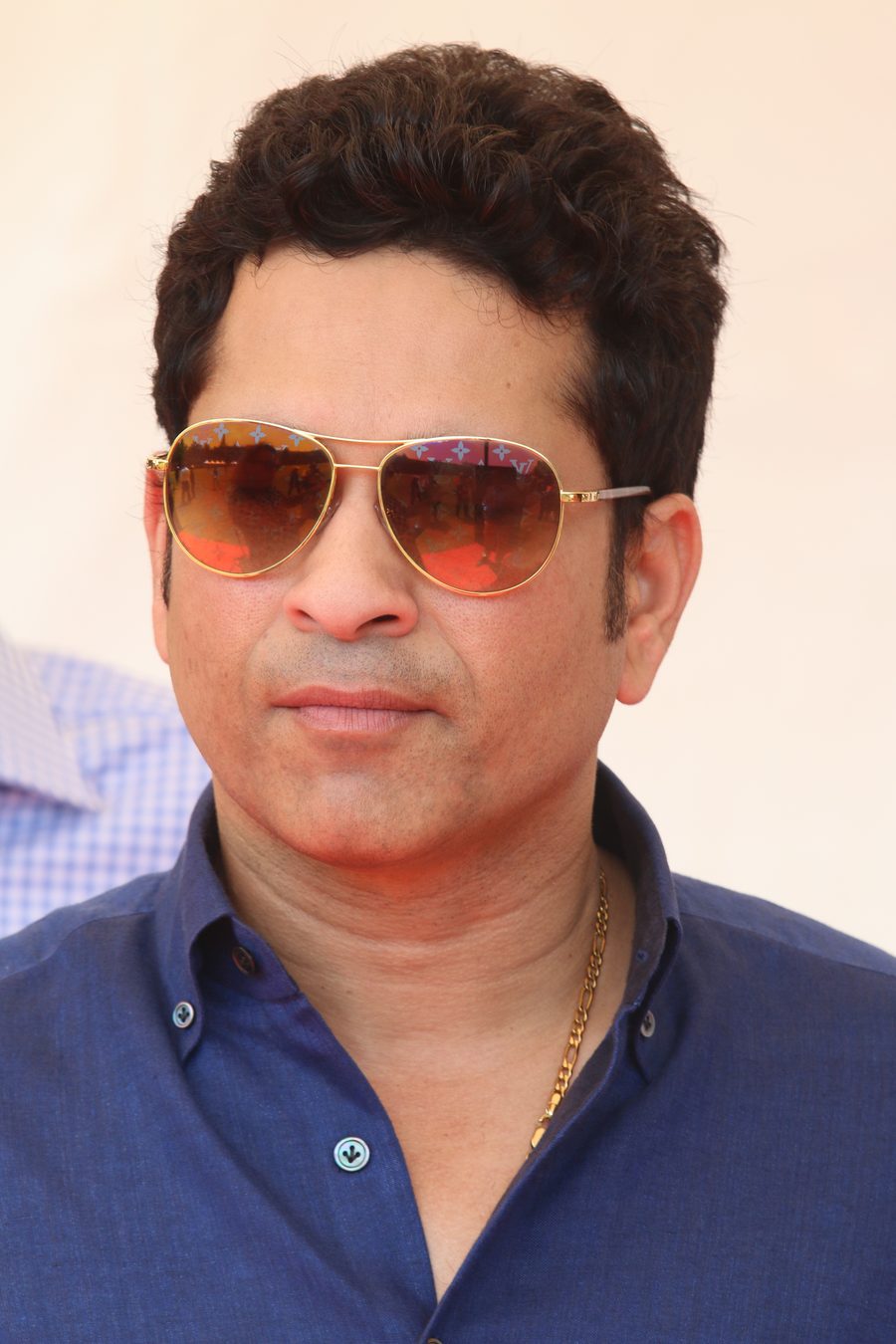
No batting record in cricket sits further out of reach than this one. Sachin Tendulkar finished with 100 international hundreds — 51 in Tests, 49 in one-day internationals — and the nearest active challenger, Virat Kohli, spent a decade of relentless scoring and still needed the better part of twenty more to threaten it. Most records are provisional. This one has begun to look structural, a product of a career that started at sixteen and ran for twenty-four years across two distinct eras of the game.
The number is worth taking apart rather than repeating, because the parts tell you more than the total does.
Sixteen years old at Karachi, and why the start matters
Tendulkar made his Test debut in November 1989 at Karachi, against a Pakistan attack containing Imran Khan and Wasim Akram, at sixteen years and 205 days. He was hit on the face by Waqar Younis in that series and batted on. The point of retelling this is not bravery but arithmetic: the length of the career is the foundation of every aggregate record he holds. A batter who begins at sixteen and remains good enough to be picked at forty has a runway nobody starting at twenty-two can match.
He was not an instant accumulator. The first Test hundred came at Old Trafford in August 1990, an unbeaten 119 that saved the match, made at seventeen. The first ODI hundred took far longer — 79 one-day innings passed before he reached three figures, against Australia at Colombo in 1994. That gap is one of the stranger facts of his career, and it turned on role. Once he was pushed up to open the innings in one-day cricket in 1994, the format changed for him entirely. The fielding restrictions gave him the field he wanted, and the hundreds began to arrive at a rate no opener of the era matched.
The shape of 51 Test hundreds
The Test record runs to 200 matches, 15,921 runs at an average of 53.78, and 51 centuries. All three figures remain records. The 200 Tests will probably stand longest, because the modern calendar simply does not offer that much red-ball cricket to any one player.
What distinguishes the centuries is their distribution. Tendulkar scored Test hundreds in every country he toured that staged Test cricket, and his away average held up alongside his home one — the mark of a method built on judgement of length rather than on conditions. He made hundreds against pace on fast pitches at Perth and Bloemfontein, and against spin of the highest class in Chennai and Colombo. Contemporaries tended to have a gap somewhere. Ricky Ponting never quite solved India; Brian Lara was streakier by design, capable of bigger single scores but longer droughts. Tendulkar's record has almost no holes in its map.
There is one soft spot worth naming, because his admirers rarely do. His conversion of hundreds into daddy scores was modest: six double hundreds, a highest of 248 not out, and no triple. Lara made 375 and 400 not out; Sehwag made two triples in less than half the career. Tendulkar's genius was frequency, not enormity. He got to hundred more often than anyone who has ever played, and then, more often than the greats around him, got out before turning it into something monstrous.
The one-day record, and the invention of a role
The ODI ledger — 463 matches, 18,426 runs, 49 hundreds — is the half of the record that changed the sport rather than merely topping its charts. When Tendulkar first opened in one-day cricket in 1994, scores of 250 were competitive. He treated the first fifteen overs as an attacking opportunity rather than a survival exercise, and every one-day side in the world eventually reorganised its batting order around the template.
Two individual landmarks stand above the rest. In February 2010 at Gwalior, against a South Africa attack led by Dale Steyn, he made 200 not out — the first double hundred in men's one-day international history, at thirty-six years old, in his twenty-first year of international cricket. And across six World Cups from 1992 to 2011 he scored 2,278 runs, still the tournament's career record, including 523 runs at the 1996 World Cup and 673 at the 2003 edition — the latter the highest aggregate anyone had managed in a single World Cup until Kohli passed it in 2023.
The 49 ODI hundreds stood as the format's record until November 2023, when Kohli reached his fiftieth in a World Cup semi-final at the Wankhede with Tendulkar watching from the stands. It was the first of the towering numbers to fall, and the manner of it — passed by an Indian, in Mumbai, in a World Cup — was about as fitting as these things get.
The hundredth hundred, and the year it took
The last of the hundred came harder than any of the others. Tendulkar reached his ninety-ninth international century in March 2011, during the World Cup. The hundredth did not arrive until 16 March 2012 — a full year in which every innings he played was reported as a countdown, and in which he repeatedly reached the sixties and seventies before falling. When it finally came, at Mirpur in the 2012 Asia Cup, it was an oddity: 114 against Bangladesh, his only international hundred against that opponent, in a match India lost.
He said afterwards that the milestone had become a burden, and the innings itself supported him — it was careful, slow by his standards, the batting of a man completing something rather than building it. Critics noted the strike rate and the result. Both observations were fair, and neither dented the aggregate fact: nobody else has reached ninety.
Records that are less famous but harder
A few entries in the ledger say more than the headline numbers. He was named Wisden's Leading Cricketer in the World and won the ICC's Cricketer of the Year award in 2010, at thirty-seven — a peak arriving two decades after his debut. Between 1990 and 2012 he scored an international hundred in twenty-three consecutive calendar years. He played 664 international matches, a workload no current player will approach, and faced more balls in international cricket than anyone in the game's history.
| Record | Figure |
|---|---|
| Test matches | 200 |
| Test runs | 15,921 |
| Test hundreds | 51 |
| ODI runs | 18,426 |
| ODI hundreds | 49 |
| World Cup career runs | 2,278 |
The IPL chapter was a coda rather than a pillar, but it had substance: 2,334 runs for the Mumbai Indians at a strike rate just under 120, including 618 runs in the 2010 season, which won him the Orange Cap at thirty-seven. His only Twenty20 hundred, an unbeaten 100 against Kochi in 2011, came in the same colours.
What the records could not measure
Two absences shaped how the career was argued about while it ran. Tendulkar captained India in two stints in the late 1990s and was demonstrably worse for it — the team lost heavily, his own scoring dipped, and he gave the job up with something close to relief. The great accumulator was not a leader of that kind, and India's best years arrived under Sourav Ganguly and later MS Dhoni, with Tendulkar as the senior professional rather than the figurehead.
The second absence was a World Cup, which lasted until his sixth attempt and is covered properly in the 2011 story. Until Mumbai in April 2011, the standard case against the record was that it lacked a defining team triumph. After it, the case had nothing left to stand on.
Where the aggregate stands now
Since his final Test in November 2013, exactly one of the major marks has fallen — the ODI hundreds record, to Kohli. The rest are receding rather than approaching. Test cricket's shrinking share of the calendar means no active player is on course for 200 caps or 15,921 runs; the fifty-over game has thinned to the point where 18,426 ODI runs would require a career of a length the format no longer offers. Rahul Dravid, his partner in so many of those Test innings, finished more than 2,700 Test runs behind him, and Dravid is second on India's all-time list by a distance.
The likeliest survivor of all, oddly, is the least glamorous number: 100 international hundreds. Kohli's pursuit made the gap legible — a batter as good as any of his generation, in an era with more matches in the shorter formats, needed fifteen years to get within reach of it. Nobody younger is close.
For a sense of what those numbers meant beyond the scorecards — the crowds, the sound a stadium made when he walked out, the way Indian cricket's history bends around him — the statistics are the wrong instrument, and the story of his method and his battles with Australia is a better one. But the ledger deserves its own telling, because it is the part that will outlast the memories. Every batting conversation for two decades ran through him. The numbers are why it still does.