

Irfan Pathan's IPL Record: Nine Seasons, Five Franchises
Irfan PathanIndia
By CricketTaken EditorialPublished Player analysis7 min read
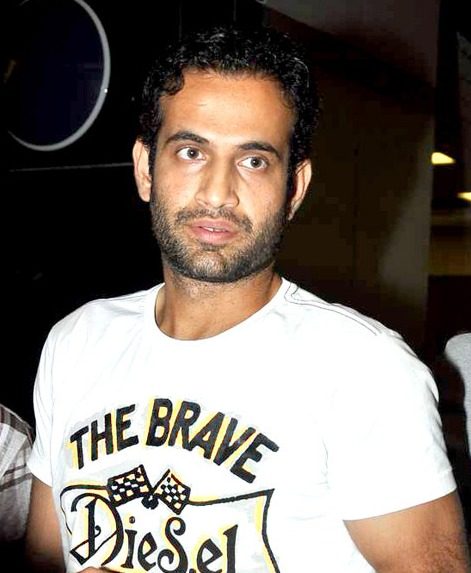
Irfan Pathan played nine seasons of the Indian Premier League for five different franchises and was a first-choice selection for about four of them. That is a fairly ordinary shape for an Indian all-rounder of his generation, and it is worth setting out properly, because the aggregate figures do not describe what he was actually asked to do in any given year.
Bought when nobody knew what the league was
The inaugural season opened in April 2008, six months after India had won the first World Twenty20 in South Africa and Pathan had taken three wickets for sixteen in the final. He was twenty-three, a current international, and a left-arm seamer who could bat. In a market where nobody had any data and everyone was guessing, that made him one of the more obviously valuable Indian players available. He joined Kings XI Punjab and stayed for three seasons.
The first of those was unremarkable with the bat: 131 runs from ten innings at a strike rate of 112.9, with a highest score of 40. Twenty20 batting in 2008 was a different discipline, and a strike rate around 110 from a lower-middle-order player was not the indictment it would be now. The bowling was the point of him, and the structure of the auction at that stage meant a franchise buying an Indian international was buying availability as much as ability.
Three seasons at Punjab, and one good one
2009 brought 196 runs at a strike rate of 124.1 and a similar workload. Then, in 2010, he had the best batting season of his IPL career: 276 runs from thirteen innings at an average of 34.5 and a strike rate of 148.4, with a highest score of 60. That fifty is the only one he made in the competition. Ten sixes and twenty-one fours in a season is a genuine finishing contribution, and it came in the year Punjab most needed one.
It was not repeated. Across the remaining six seasons his best strike rate was 139.7. What 2010 shows is that when he was given a settled position and enough deliveries, he could bat at a rate that justified a place on batting alone. The subsequent seasons rarely gave him either.
Delhi, 2011 to 2013
He moved to Delhi for the 2011 auction and had three seasons at the club, then Delhi Daredevils. The numbers went the wrong way almost immediately. In 2011 he made 150 runs in twelve innings at an average of 12.5 and a strike rate of 108.7. In 2012 the strike rate recovered to 139.7 but the volume did not. In 2013 he batted thirteen times for 142 runs at 93.4, which is the lowest strike rate of any season in his record.
The 2013 figure is the one that best illustrates the trap he was in. A player batting at seven or eight who faces twelve deliveries an innings and scores at under a run a ball is being used as a bowler who occasionally has to bat, and by then his bowling was no longer good enough to make that trade work. Delhi finished bottom of the table in 2013.
The full season-by-season record
Batting figures, computed from ball-by-ball data. He did not appear in the 2015 season.
| Season | Team | Inns | Runs | Avg | SR | HS | 50s |
|---|---|---|---|---|---|---|---|
| 2008 | Kings XI Punjab | 10 | 131 | 21.8 | 112.9 | 40 | 0 |
| 2009 | Kings XI Punjab | 12 | 196 | 19.6 | 124.1 | 39 | 0 |
| 2010 | Kings XI Punjab | 13 | 276 | 34.5 | 148.4 | 60 | 1 |
| 2011 | Delhi | 12 | 150 | 12.5 | 108.7 | 44 | 0 |
| 2012 | Delhi | 12 | 176 | 22.0 | 139.7 | 42 | 0 |
| 2013 | Delhi | 13 | 142 | 17.8 | 93.4 | 24 | 0 |
| 2014 | Sunrisers Hyderabad | 6 | 55 | 27.5 | 101.9 | 23 | 0 |
| 2016 | Rising Pune Supergiants | 3 | 11 | 3.7 | 84.6 | 7 | 0 |
| 2017 | Gujarat Lions | 1 | 2 | 2.0 | 66.7 | 2 | 0 |
| Total | 82 | 1139 | 19.64 | 120.4 | 60 | 1 |
He was not out twenty-four times in those eighty-two innings, hit 87 fours and 37 sixes, and faced 946 balls in total, which works out at fewer than twelve deliveries per innings across the whole career.
The bowling, which was the actual job
Pathan played 87 IPL matches and took 76 wickets at an average of 31.01, conceding 2,357 runs from 1,841 deliveries for an economy rate of 7.68. That is a little over three and a half overs a match, which tells you he was almost always the fourth seam option rather than a strike bowler with a guaranteed full allocation.
The economy rate is the interesting number, and it needs the era attached to it. Across the seasons Pathan played, from 2008 to 2017, a competition-wide economy of around 7.7 was close to par for a seamer and clearly better than par in the years he bowled at the top of the innings with a new ball. Judged against the rates of the 2020s, when eight and a half is respectable, it looks considerably better. Judged against what a genuine wicket-taker should return, an average of 31 is unremarkable.
The pattern within it matches the international career. Early on he was bowling in the powerplay, using swing, and taking top-order wickets. Later he was bowling one over up front and two at the death, which is the hardest combination in the format and the one that inflates a bowler's economy fastest.
Hyderabad, Pune, and the last two appearances
He signed with Sunrisers Hyderabad for 2014 and played a partial season, batting six times for 55 runs. He did not appear at all in 2015.
The final two seasons are curiosities of the league's own administration. Chennai Super Kings and Rajasthan Royals were suspended for two years over the 2013 betting case, and two replacement franchises were created to fill the gap. Pathan played three innings for Rising Pune Supergiants in 2016 and one for Gujarat Lions in the 2017 season, scoring eleven and two respectively. Both clubs were dissolved at the end of 2017. It is an odd way for a career in the competition to finish: two seasons at two teams that no longer exist, playing four innings in total.
What the numbers do and do not show
Reading the record cold, you see an all-rounder who averaged under twenty with the bat, struck at 120, and took wickets at 31 with a decent economy rate. That is a squad player, and for most of his IPL career that is exactly what he was.
The counterargument is about role rather than output. In 2008 and 2009 he was one of the more sought-after Indian cricketers in the market. By 2013 he was batting at eight and bowling two overs. The decline in his bowling pace, which began around 2006 and is documented at length elsewhere, removed the thing that had made him a powerplay option, and once a bowling all-rounder loses his first six overs he has to justify selection on batting alone. A strike rate of 120 does not do that.
There is also a workload point that the seasons conceal. Pathan spent 2008 to 2012 alternating between international cricket, franchise cricket and domestic cricket for Baroda, with recurring back problems, at a time when nobody in Indian cricket was managing bowling loads systematically. That is not an excuse for the numbers. It is part of the explanation for their trajectory.
The wider franchise generation
Pathan and his brother Yusuf Pathan arrived in the IPL from the same background and had almost opposite experiences of it. Yusuf, a batter who bowled off spin, played more than 170 matches, won titles at Rajasthan and Kolkata and was a genuine franchise asset for a decade. Irfan, a bowler who batted, was a headline signing in 2008 and a fringe pick by 2013.
The difference is largely about which skill ages well in the format. Twenty20 has been ruthless with medium-fast bowlers who depend on movement and generous to power hitters who can hold an end with the ball. Both brothers were shaped by the same competition and by the same shift in Indian cricket's economics; the results were not symmetrical.
After the playing career
Pathan continued in domestic cricket well past his last IPL appearance, captaining Baroda and then transferring to Jammu and Kashmir as a player and mentor for the 2018-19 season. He retired from all cricket in January 2020 and has since worked in broadcasting and, briefly, in film. He has also been unusually candid in public about the technical and selectorial decisions that shortened his prime, which is not the standard behaviour of a retired Indian international.
For the complete career figures across formats and franchises, see the Irfan Pathan profile, and for the club he began with, the Punjab Kings record covers the years in which he was one of their most-used players.