

Irfan Pathan's Swing Bowling and the Karachi Hat-Trick
Irfan PathanIndia
By CricketTaken EditorialPublished Player analysis8 min read
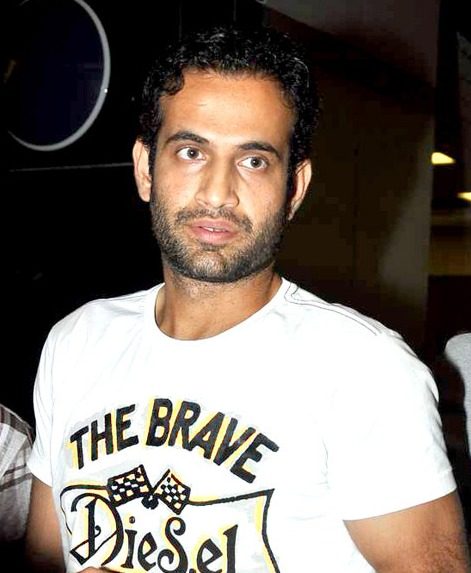
On the morning of 29 January 2006 at the National Stadium in Karachi, Pakistan won the toss, chose to bat, and were nought for three after six deliveries. Salman Butt was leg before to the fourth ball of the match, Younis Khan edged the fifth to slip, and Mohammad Yousuf was trapped in front by the sixth. No bowler had taken a hat-trick in the opening over of a Test before. Twenty years on, none has taken one since.
The delivery the whole career was built on
Irfan Pathan bowled left-arm at around 135 kilometres an hour in his early years, which by the standards of international fast bowling is unremarkable. The wickets came from what the ball did after it left his hand. He swung it away from the right-hander, late, from a wrist position that gave nothing away, and he was willing to pitch it full enough that the movement had somewhere to go.
That combination is rarer than it sounds. Plenty of bowlers can shape a ball away; most of them do it at a length that lets a batter play from the crease with the full face. Pathan's stock ball attacked the top of off stump and the swing began roughly two-thirds of the way down. A right-hander playing that line either commits early and edges it or leaves it and is bowled. Both happened often enough between 2003 and 2006 to make him India's first-choice new-ball bowler at twenty.
He also had an inswinger, and this is the part that gets underplayed. Left-armers who move the ball away from right-handers are common in the subcontinent; left-armers who can bring it back in from the same action, at the same pace, on the same length, are not. The Karachi over used both. Butt and Yousuf were undone by the one that came in; Younis by the one that went away.
Adelaide, at nineteen
The Test debut came at Adelaide in December 2003, on India's tour of Australia, and it was a strange match to be introduced in. He was nineteen, playing on a fast surface against a batting order that had been dismantling attacks for a decade, and India won the Test. His figures were modest. The selection itself was the statement: a teenaged left-arm seamer picked ahead of more experienced options because the selectors believed he could swing the ball in conditions where India had historically had nothing to offer.
For the next two and a half years the belief was repaid. He formed a new-ball pair with Zaheer Khan and, when fit, Ashish Nehra, in a period when India's seam attack was more capable away from home than at any point before it. At the 2004 Asia Cup he took fourteen wickets, more than any other bowler in the tournament, at nineteen. He was named ICC Emerging Player of the Year the same year.
What actually happened in that over
The hat-trick is usually presented as an isolated freak, and the surrounding numbers make that reading understandable. Pakistan recovered from nought for three, made a competitive first-innings total and went on to win the Test comfortably. Karachi in January is not a seaming pitch. The ball did what it did for perhaps forty minutes and then stopped doing it.
But the over itself was not luck. All three dismissals were the same plan executed three times: a full length just outside off, angled in, with the seam upright. Butt played across it. Younis, who had scored heavily against India for years, was drawn into a drive he did not need to play. Yousuf missed a straight one. A bowler with a genuine two-way threat forces a batter to play at deliveries that a one-way bowler would let him leave, and in the first over of a Test, before anyone has seen the ball move, that advantage is at its largest.
Whether the wicket was worth the effort is a separate question. India lost that match and the series, and the India-Pakistan rivalry was in one of its rare functioning phases, with three Tests and five one-day internationals played in six weeks. Pathan's over is the piece of that tour that has survived.
The batting promotion, and the argument it started
The turn in his career is generally dated to 2006 and 2007, and the shorthand for it is that he was asked to bat higher and stopped bowling well. The full picture is less tidy but the shorthand is not wrong.
Pathan could bat. He was a genuine lower-order left-hander with a straight bat and enough range to make thirties and forties at Test level, and he made runs in one-day cricket opening the innings when India needed a left-hander at the top. The coaching staff of the period, under Greg Chappell, saw a player who might become an all-rounder of the first rank and moved him up the order accordingly. In Test matches he batted as high as number three. In one-day internationals he opened.
The problem is what that does to a fast bowler's week. Batting high means padding up early, spending sessions off the field, and arriving at a bowling spell with different legs. It also changes what a player practises. Pathan's technical work shifted towards batting at exactly the age most quick bowlers spend their entire net time on repeating an action. Between 2006 and 2008 his pace fell, from the mid-130s to something closer to the low 120s, and the swing that had depended on getting the ball to the batter quickly enough to matter became a much less dangerous thing.
He has said since, and others have said for him, that the promotion was a mistake. It is worth being fair to the reasoning. India in 2006 had no settled seam-bowling all-rounder and had lost several matches to a long tail, and a nineteen-year-old who could already do both jobs looked like the obvious answer. The cost only became visible when the bowling did not come back.
The mechanics of losing it
There is a more technical account, and it is the one bowling coaches tend to prefer. Pathan's action in 2004 was front-on enough to generate outswing but braced hard on the front leg, which is what produced the pace. Over the following two seasons the brace softened, the delivery stride shortened and the wrist position at release became less consistent. The ball still moved. It moved from a length and at a speed that international batters could account for.
Once that happened the whole method unwound, because his wicket-taking had never depended on beating a batter for pace. Take four or five kilometres an hour off a bowler whose margin is late movement and you have not made him slightly worse; you have removed the thing that made him different. This is the standard risk in the swing bowling tradition and it has ended more careers than injury has.
Perth, 2008
There was one substantial return. In January 2008 at the WACA, on the fastest pitch in Australia, India won a Test in the middle of a fractious series and Pathan was named player of the match. He took wickets in both innings and made runs from the lower middle order in a game India had to win to keep the series alive. It remains the strongest single argument that the all-rounder plan had something in it.
It did not last. He played little Test cricket after that season, and although there were one-day recalls over the following four years, he was by then a fourth or fifth seamer rather than a new-ball bowler. His final international appearances came in 2012, when he was twenty-seven.
The record, and what it does not say
He finished with 29 Tests and 100 wickets, which is a neat number and a small sample. The one-day record is larger and better, built mostly in the first four years, and includes a substantial contribution with the bat from the top of the order. His Twenty20 international career was short and included the 2007 World T20 final, where he took three wickets for sixteen and won the match award.
What the aggregate hides is the shape. Roughly two-thirds of Pathan's international wickets were taken before his twenty-second birthday. Very few bowlers have a career distributed that way, and the ones who do usually have an injury to point at. He did not, particularly. He had a technical change, an expanded job description and a slow erosion of the one attribute that had made him worth picking.
Afterwards
He kept playing domestic cricket for a decade. He captained Baroda, then moved to Jammu and Kashmir as a player and mentor in 2018-19, a transfer that had as much to do with developing a weak side as with his own runs and wickets. He retired from all forms of the game in January 2020 and moved into broadcasting, where he has been notably direct about what happened to his own career.
His brother Yusuf Pathan had a longer franchise career and a shorter international one, and the two of them played together for India in the 2007 World T20 final. Both are part of the wider story of how cricket in India began drawing on players from outside the traditional metropolitan academies, which is a change that predates the IPL and was accelerated by it.
The counterfactual
The interesting question about Pathan is not whether he was mismanaged. Most people who have looked at it, including several who were in the dressing room, think he was. The question is what the ceiling was. A left-arm swing bowler at 135 kilometres an hour who can move the ball both ways is a genuinely rare asset, and India have had almost nobody like him since. Even a conservative reading of his 2004 and 2005 form suggests a bowler who could have taken three hundred Test wickets rather than one hundred.
Against that, fast bowlers who rely on swing rather than speed tend to age badly, and the ones who last do so by adding pace or by adding a seam-up wicket-taking ball. There is no version of the argument in which the 2004 method survives to 2014 untouched. What is not in dispute is that it was gone by the time he was twenty-three, and that in Karachi, for six balls, it was as good as left-arm swing bowling has ever looked. For the full career record, see the Irfan Pathan profile.