

Virender Sehwag's IPL Record for Delhi and Punjab
Virender SehwagIndia
By CricketTaken EditorialPublished Player analysis7 min read
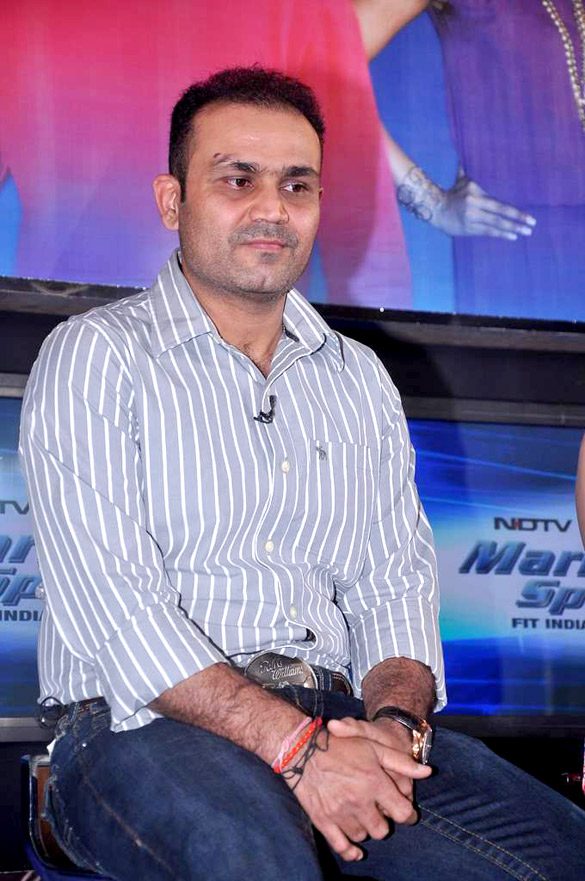
The Indian Premier League arrived when Virender Sehwag was twenty-nine, which meant the format got him at the right time and for the wrong duration. Eight seasons produced 2,728 runs from 104 innings at a strike rate of 155.44, with two hundreds and sixteen fifties. The average, 27.56, is the number sceptics point at. The strike rate is the number that mattered, because in the tournament's first five years almost nobody else was scoring at that tempo from the top of the order, and the openers who were tended not to sustain it across a whole season.
He never won the competition. Delhi kept falling short in playoffs, and the one team he took to a final lost it. The individual record, though, is a clean expression of a method he had spent a decade refining in longer formats: see the ball early, hit it hard, and treat the scoreboard as somebody else's problem.
Delhi's first captain, and the 2008 semi-final
Sehwag led Delhi in the inaugural season and was immediately the tournament's most watchable opener. His 406 runs came from 220 balls, a strike rate of 184.5 that he never approached again over a full campaign, with a highest score of 94 and three fifties. He opened with Gautam Gambhir, who outscored him that year, and the pair gave Delhi the most dangerous first six overs in the league.
Delhi reached the semi-finals, where Rajasthan Royals beat them on the way to the title. It set a pattern. In the 2009 season, played in South Africa, Delhi topped the league table and then lost their semi-final to Deccan Chargers, who went on to win the trophy. Sehwag's own year was quieter, 198 runs from eleven innings, though the strike rate stayed above 143 on pitches that suited nobody who liked the ball coming on.
The captaincy passed to Gambhir for 2010 and Sehwag's batting recovered its shape: 356 runs at a strike rate of 163.3, with a highest score of 75. Delhi did not qualify. Their problem in those middle years was rarely the top of the innings and almost always what happened after it.
The captaincy again, and a hundred against Deccan Chargers
The 2011 auction broke up the Delhi side. Gambhir left for Kolkata Knight Riders and the captaincy came back to Sehwag, who responded with the best sustained hitting of his franchise career. His 424 runs in 2011 came at a strike rate of 176.7 and included his first IPL hundred, 119 from 56 balls against Deccan Chargers in Hyderabad, an innings played at very nearly the pace of his 2008 season but carried through to three figures. Delhi still finished near the bottom, because a batting order that read Sehwag and then a long pause was not a batting order at all.
The 2012 season was the closest his Delhi years came to converting individual form into a trophy. David Warner, who had been at the franchise since 2009, gave him a second destructive opener; Kevin Pietersen contributed a hundred in the middle of the season; and Sehwag made 495 runs, his largest IPL aggregate, at a strike rate of 161.2 with five fifties. Delhi finished top of the league table. Then they lost both playoff matches without ever being in front, first to Kolkata and then to Chennai Super Kings, and the best league campaign in the franchise's early history produced nothing.
In 2013 the side finished last, Sehwag's returns fell to 295 runs at a strike rate of 126.6, and the six-year association ended when Delhi released him ahead of the 2014 auction. He was thirty-five, out of the Indian Test side, and widely assumed to be finished as a force in the format.
Season by season: the full record
The complete batting record, computed from ball-by-ball data. The site lists his franchises under their current names, Delhi Capitals and Punjab Kings; he played for them as the Daredevils and Kings XI.
| Season | Team | Inns | Runs | SR | HS | 100s | 50s |
|---|---|---|---|---|---|---|---|
| 2008 | Delhi | 14 | 406 | 184.5 | 94 | 0 | 3 |
| 2009 | Delhi | 11 | 198 | 143.5 | 50 | 0 | 1 |
| 2010 | Delhi | 14 | 356 | 163.3 | 75 | 0 | 3 |
| 2011 | Delhi | 11 | 424 | 176.7 | 119 | 1 | 2 |
| 2012 | Delhi | 16 | 495 | 161.2 | 87 | 0 | 5 |
| 2013 | Delhi | 13 | 295 | 126.6 | 95 | 0 | 1 |
| 2014 | Punjab | 17 | 455 | 144.4 | 122 | 1 | 1 |
| 2015 | Punjab | 8 | 99 | 117.9 | 47 | 0 | 0 |
| Total | 104 | 2728 | 155.44 | 122 | 2 | 16 |
Across those 104 innings he hit 334 fours and 106 sixes, and was not out five times. The overall strike rate of 155.44 was, for the period in which he played, an outlier among openers with a comparable volume of runs. Batting like that at the top of a Twenty20 innings is common now. It was not common between 2008 and 2013, when a powerplay of fifty was considered a flying start.
Punjab in 2014, and a season nobody predicted
Kings XI Punjab signed him for the 2014 season as a senior batter for a side that had never reached an IPL final. What followed was the best team campaign of his franchise career. Under George Bailey, and powered by Glenn Maxwell's extraordinary early-season hitting, Punjab won the first phase of the tournament in the United Arab Emirates almost unbeaten and finished top of the league table.
Sehwag's role changed through the year. His 455 runs from seventeen innings came at a strike rate of 144.4, modest by his own standards, and for long stretches he was the supporting act while Maxwell and Bailey took the risks. He passed fifty only twice all season. The second of those two scores is the reason the season is remembered.
The 122 against Chennai, and the run to the final
Qualifier 2, Wankhede Stadium, 30 May 2014. Punjab had lost the first qualifier to Kolkata and now had to beat Chennai Super Kings, twice champions and the most reliable knockout side the tournament had produced, to reach the final. Sehwag made 122 from 58 balls.
It was his highest IPL score, made at thirty-five, in a knockout match, against an attack that had spent seven seasons strangling exactly this kind of innings. Punjab reached 226 for 6. Chennai's reply was itself remarkable, Suresh Raina making 87 from 25 balls before being run out, and the 24-run margin felt narrower than the scorecard suggests. None of that dims the innings. A player written off a year earlier had produced the defining knock of a playoff campaign, and the shots were the old shots: the cut played late and square, the lofted drive over extra cover, the complete indifference to who was bowling.
The final, three days later in Bengaluru, went the other way. Punjab made 199 for 4, built on Wriddhiman Saha's unbeaten 115, the first hundred scored in an IPL final, and Kolkata chased it down with three wickets to spare. Sehwag's one IPL final ended in defeat, which puts it alongside a Champions League final and a fifty-over World Cup final on the list of near things in his career.
The last season, and the shape of the decline
The 2015 season was brief and unhappy: eight innings, 99 runs, a highest score of 47, a strike rate under 118. The bat speed was still there in flashes, but the early sight of the ball, the single faculty on which the whole method rested, had gone. Punjab finished near the bottom, he was in and out of the eleven, and in October 2015, on his thirty-seventh birthday, he announced his retirement from all cricket. There was no farewell season and no final lap. He simply stopped, which was in keeping with how he had batted.
What the franchise record actually shows
The temptation is to read Sehwag's IPL numbers as a footnote to the Test career, and the average of 27.56 makes that reading easy. It is the wrong reading. His strike rate of 155.44 across eight seasons anticipated the way the role would be played a decade later, when franchises stopped asking openers to bat twenty overs and started asking them to break the game open in six. Sehwag was doing that in 2008, in front of analysts who mostly recorded it as recklessness.
The record also carries the one consistent disappointment of his career in coloured clothing: proximity without a title. Two league-topping seasons with Delhi, a final with Punjab, and no trophy. The sides he played in were usually flawed somewhere he could not reach, in the death bowling or the middle order, and an opener only gets to influence the first act.
His Test record, covered in the account of his two triple centuries, is where the greatness argument lives. The fifty-over version of the method, including the 219 that briefly stood as the highest one-day score of all, is dealt with in his ODI record. The IPL years sit between them as the shortest-format proof that the approach was never format-specific. He batted one way. Every league eventually caught up to it.